Have you ever paused while writing and wondered if to use occurring or occuring? It is a common confusion because of the double letters in the word.
English spelling rules can feel tricky, especially when letters repeat. But once you understand the pattern, it becomes much easier to remember and use correctly.
Let’s break down occurring vs occuring so you can write with confidence.
Quick Answer
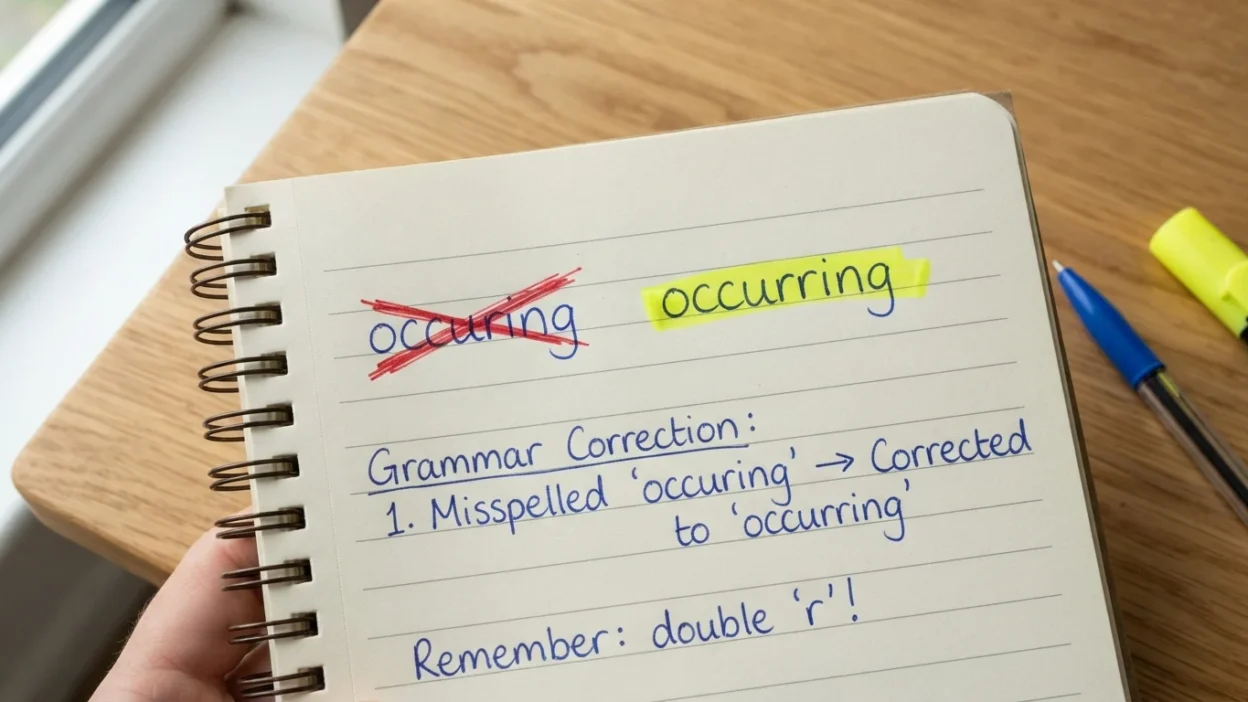
Occurring is the correct spelling.
Occuring is incorrect and not used in standard English.
The correct form uses a double c and a double r.
Why People Confuse It
This confusion happens because the base word occur already has double letters, and adding ing makes it look even more complex.
Common reasons:
- Forgetting to double the final consonant
- Trying to simplify the spelling
- Typing quickly without checking
But English has a clear rule here.
First Word: Occuring
Occuring is not a correct English word. It appears only as a spelling mistake.
Incorrect example:
The event is occuring now.
This should always be corrected.
Second Word: Occurring
Occurring is the correct spelling. It means something that is happening or taking place.
Examples:
- The event is occurring now.
- Changes are occurring rapidly.
- The issue is occurring frequently.
It is commonly used in both formal and everyday writing.
Comparison Table
| Feature | Occuring | Occurring |
|---|---|---|
| Correct | No | Yes |
| Usage | Incorrect | Standard |
| Meaning | None | Happening or taking place |
| Recommendation | Avoid | Always use |
When to Use Each
Use occurring when:
- Describing something happening
- Writing reports or formal content
- Talking about repeated events
Never use occuring in correct English.
Examples
Correct examples with occurring:
- The problem is occurring daily.
- Changes are occurring in the system.
- The meeting is occurring right now.
- Errors are occurring frequently.
- The event is occurring this week.
- Growth is occurring steadily.
- Issues are occurring during testing.
- The process is occurring slowly.
- Something unusual is occurring.
- The situation is occurring worldwide.
- Improvements are occurring over time.
Incorrect example:
- The problem is occuring often.
Common Mistakes
Writers often:
- Use only one r instead of two
- Forget the doubling rule
- Try to shorten the word
Always check the spelling carefully.
Memory Trick
Think of this:
Occur has double c and r, and occurring keeps them both
So:
Occur becomes occurring
American vs British English
Both American and British English use occurring. There is no difference in spelling.
Occuring is incorrect in both.
Similar Words
Here are similar examples:
- Refer becomes referring
- Begin becomes beginning
- Admit becomes admitting
They all double the final consonant before adding ing.
Final Verdict
The answer is simple. Occurring is correct and widely used.
Occuring is incorrect and should be avoided.
Using the right spelling keeps your writing clear and professional.
FAQs
Is occuring a real word
No, it is a spelling mistake and not used in standard English.
Why is occurring spelled with double r
Because the final consonant is doubled before adding ing.
Can I ever use occuring
No, it should always be corrected to occurring.
Is occurring used in formal writing
Yes, it is commonly used in both formal and informal contexts.
Do British and American English differ here
No, both use occurring.
What does occurring mean
It means something that is happening or taking place.
Conclusion
Understanding occurring vs occuring is simple once you know the rule. Small spelling mistakes like this are easy to fix and can improve your writing quality.
By using occurring correctly, your sentences become clearer and more accurate. With practice, these rules will become natural.
Remember This
Keep both double letters and write occurring.
Never use occuring in correct English.

Carol Amanda is a passionate writer and faith-driven author dedicated to sharing the wisdom of the Bible. At BiblyWord, she creates inspiring and meaningful content that encourages spiritual growth and daily reflection. Her work focuses on helping readers connect with God’s Word and find guidance, peace, and strength in their faith journey.