Have you ever stopped while writing and wondered if to use peices or pieces? This is one of the most common spelling mistakes in English because the letters ie and ei can be confusing.
Even experienced writers sometimes mix them up. The good news is that there is a simple rule that makes it easy to remember the correct form.
Let’s break down peices vs pieces so you never get it wrong again.
Quick Answer
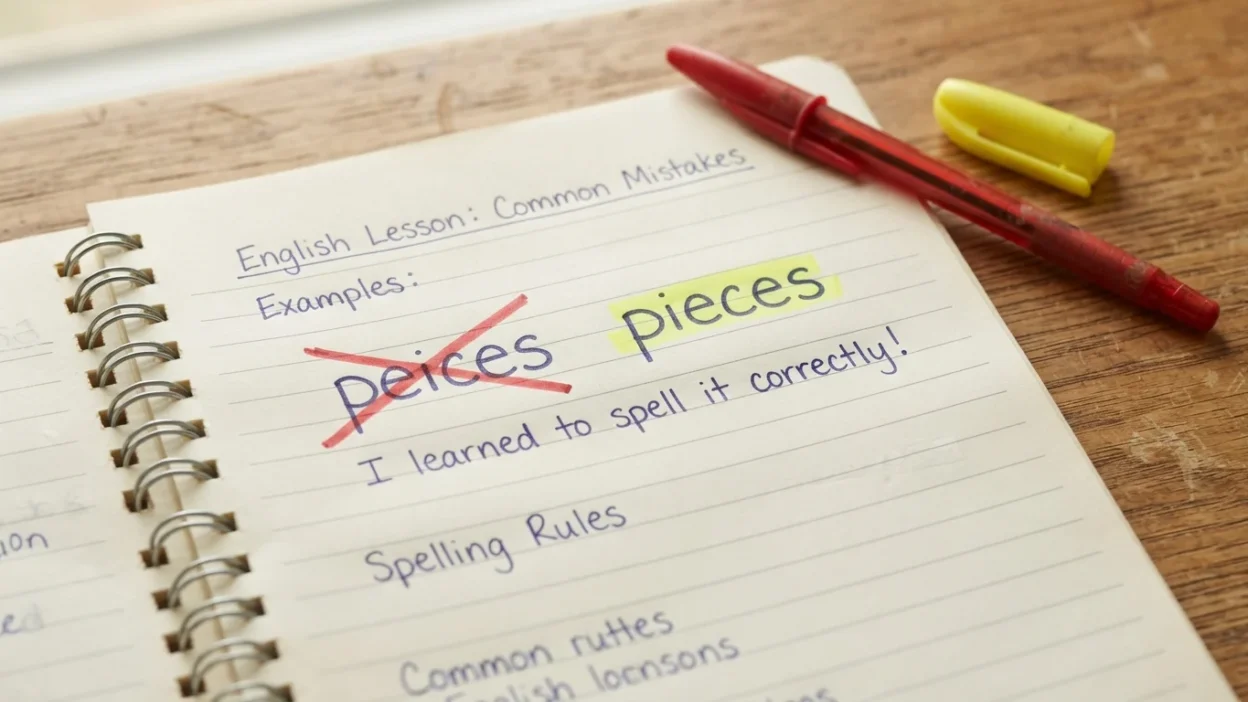
Pieces is the correct spelling.
Peices is incorrect and not used in standard English.
Always use pieces when referring to parts of something.
Why People Confuse It
The confusion comes from the order of the letters i and e.
Common reasons:
- Mixing up ie and ei patterns
- Spelling based on sound
- Forgetting the spelling rule
But there is a helpful trick to guide you.
First Word: Peices
Peices is not a correct English word. It appears only as a spelling mistake.
Incorrect example:
The puzzle has many peices.
This should always be corrected.
Second Word: Pieces
Pieces is the correct spelling. It means parts, sections, or portions of something.
Examples:
- The puzzle has many pieces.
- She cut the cake into pieces.
- The broken glass lay in pieces.
It is commonly used in everyday writing.
Comparison Table
| Feature | Peices | Pieces |
|---|---|---|
| Correct | No | Yes |
| Usage | Incorrect | Standard |
| Meaning | None | Parts or portions |
| Recommendation | Avoid | Always use |
When to Use Each
Use pieces when:
- Talking about parts of something
- Writing about objects, ideas, or sections
- Speaking or writing in daily communication
Never use peices in correct English.
Examples
Correct examples with pieces:
- He broke the bread into pieces.
- The painting was made of small pieces.
- She arranged the pieces carefully.
- The toy fell into pieces.
- The story has many interesting pieces.
- They picked up the pieces after the accident.
- The puzzle pieces are missing.
- The sculpture is made of metal pieces.
- The glass shattered into pieces.
- He put the pieces together.
- The project has many moving pieces.
Incorrect example:
- The puzzle has many peices.
Common Mistakes
Writers often:
- Reverse ie to ei
- Guess spelling based on sound
- Forget the common rule
Always double check the letter order.
Memory Trick
Think of this:
I before e except after c
So:
Pieces follows the rule
American vs British English
Both American and British English use pieces. There is no difference.
Peices is incorrect in both.
Similar Words
Here are similar words that follow the same pattern:
- Field
- Chief
- Belief
They also use ie in the correct order.
Final Verdict
The answer is clear. Pieces is correct and widely used.
Peices is incorrect and should be avoided.
Using the correct spelling improves clarity and professionalism.
FAQs
Is peices a real word
No, it is a spelling mistake.
Why is pieces spelled with ie
Because it follows the common spelling rule.
Can I ever use peices
No, it should always be corrected to pieces.
Is pieces used in formal writing
Yes, it is used in both formal and informal contexts.
Do British and American English differ here
No, both use pieces.
What does pieces mean
It means parts or portions of something.
Conclusion
Understanding peices vs pieces is simple once you know the rule. Small spelling mistakes like this can be fixed easily and improve your writing quality.
By using pieces correctly, your sentences become clearer and more natural. With practice, these patterns will become automatic.
Remember This
Write pieces with ie, not ei.
Never use peices in correct English.

Kevin Brian is a passionate author at BiblyWord, dedicated to sharing the message of the Bible through thoughtful and inspiring content. He focuses on creating clear and meaningful writings that help readers understand scripture, strengthen their faith, and find guidance in everyday life through God’s Word.