Have you ever paused while writing and wondered if to use thier, their, or there? You are not alone. These words sound similar, which makes them easy to mix up.
Even strong writers sometimes confuse them. But once you understand what each word means, choosing the correct one becomes simple and natural.
Let’s break down thier vs their vs there in a clear and easy way.
Quick Answer
Their shows possession
There refers to a place or position
Thier is incorrect and not a real word
Always use their or there depending on meaning, and avoid thier.
Why People Confuse It
These words sound almost the same when spoken. This leads to spelling mistakes in writing.
Common reasons:
- Same pronunciation
- Typing quickly
- Confusion between meaning and spelling
Understanding the meaning solves the problem.
First Word: Thier
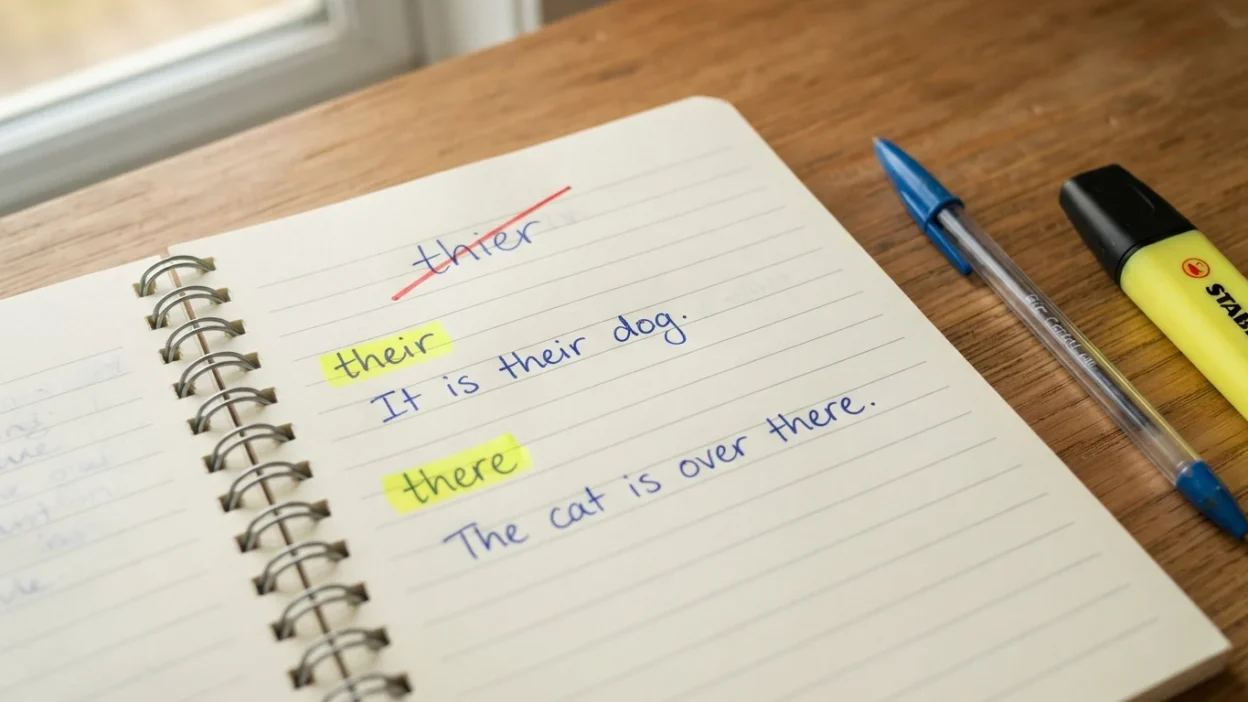
Thier is not a correct English word. It is a common spelling mistake.
Incorrect example:
Thier house is big.
Correct form:
Their house is big.
Always avoid using thier.
Second Word: Their
Their is a possessive word. It shows that something belongs to people.
Examples:
- Their house is beautiful.
- They forgot their keys.
- Their car is parked outside.
Use it when talking about ownership.
Third Word: There
There is used to talk about a place, position, or existence.
Examples:
- The book is over there.
- There is a problem.
- We will go there tomorrow.
It can also be used to introduce a sentence.
Comparison Table
| Feature | Thier | Their | There |
|---|---|---|---|
| Correct | No | Yes | Yes |
| Usage | Incorrect | Possession | Place or position |
| Meaning | None | Belonging | Location or existence |
| Recommendation | Avoid | Use correctly | Use correctly |
When to Use Each
Use their when:
- Talking about something that belongs to people
Use there when:
- Referring to a place
- Starting a sentence like “there is” or “there are”
Never use thier in correct writing.
Examples
Correct examples with their:
- Their friends are coming.
- They lost their tickets.
- Their dog is very friendly.
- Their school is nearby.
- They shared their ideas.
Correct examples with there:
- The keys are over there.
- There is a new shop in town.
- We met there yesterday.
- There are many options.
- She stood there quietly.
Incorrect example:
- Thier books are on the table.
Common Mistakes
Writers often:
- Misspell their as thier
- Use there instead of their
- Focus on sound instead of meaning
Always check what you want to say.
Memory Trick
Think of this:
Their has “heir” inside it, like ownership
There has “here” inside it, like a place
This makes it easy to remember.
American vs British English
Both American and British English use their and there the same way.
Thier is incorrect in both.
Similar Words
Here are similar confusing pairs:
- Your and you’re
- Its and it’s
- They’re and their
They also involve possession and contractions.
Final Verdict
The difference is simple:
- Their shows ownership
- There refers to a place
- Thier is incorrect
Using the right word improves your writing clarity.
FAQs
Is thier a real word
No, it is a spelling mistake.
What does their mean
It shows possession or belonging.
What does there mean
It refers to a place or introduces a sentence.
How do I remember the difference
Use their for ownership and there for location.
Can I use thier in informal writing
No, it should always be corrected.
Are there differences in British and American English
No, both use the same forms.
Conclusion
Understanding thier vs their vs there is simple once you know the meanings. Small spelling mistakes can affect your writing, but they are easy to fix.
By using their and there correctly, your writing becomes clearer and more professional. With practice, this will become second nature.
Remember This
Use their for ownership
Use there for place
Never use thier

Kevin Brian is a passionate author at BiblyWord, dedicated to sharing the message of the Bible through thoughtful and inspiring content. He focuses on creating clear and meaningful writings that help readers understand scripture, strengthen their faith, and find guidance in everyday life through God’s Word.