Have you ever stopped mid sentence and wondered whether to write minuscule or miniscule? You are not alone. This is one of the most common spelling confusions in English because both forms appear familiar.
Even confident writers mix these up. The difference is small, but using the correct spelling makes your writing more accurate and professional.
Let’s break down minuscule vs miniscule in a simple and clear way so you always choose the right word.
Quick Answer
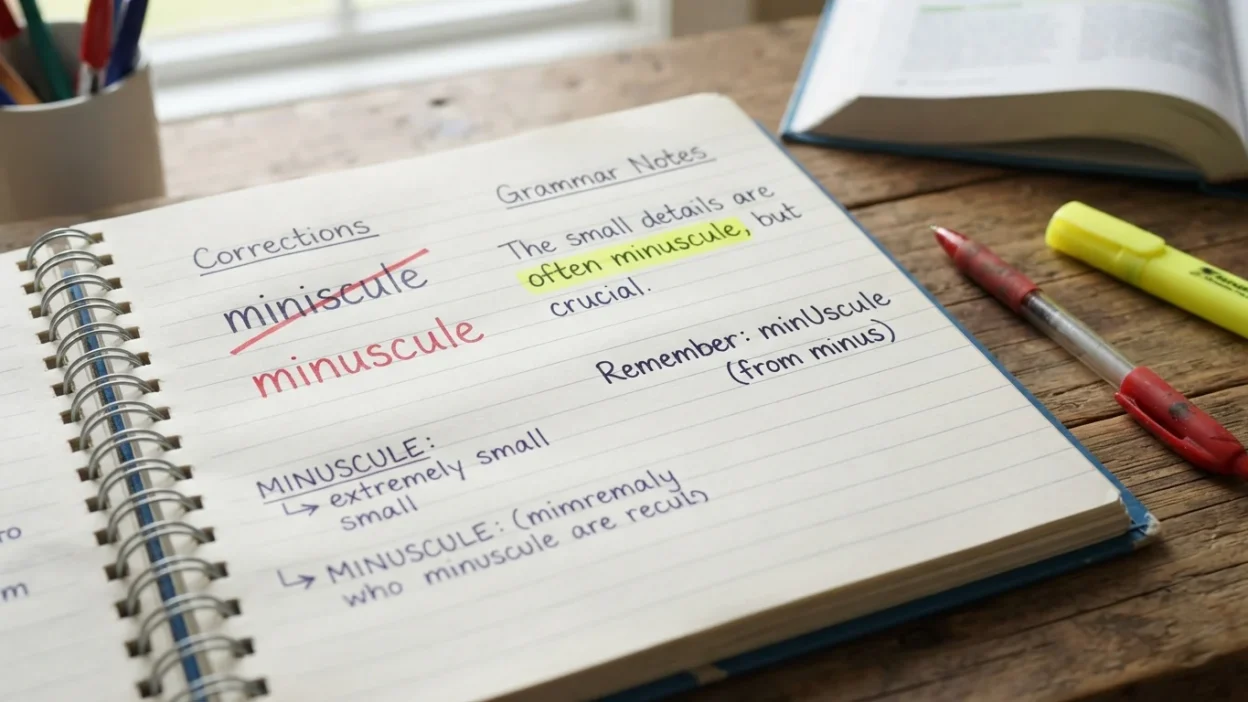
Minuscule is the correct spelling.
Miniscule is considered incorrect, though it is sometimes seen due to common misuse.
Always use minuscule when you mean something very small.
Why People Confuse It
The confusion comes from pronunciation. Many people say the word in a way that sounds like mini scule, which leads to the wrong spelling.
Common reasons:
- Mishearing the word
- Influence of the word mini
- Habit formed from incorrect usage
But the correct form has u, not i.
First Word: Miniscule
Miniscule is widely seen but considered a misspelling in standard English.
It appears because:
- People connect it to the word mini
- It sounds similar when spoken
Example of incorrect usage:
The difference is miniscule.
This should be corrected in formal writing.
Second Word: Minuscule
Minuscule is the correct spelling. It means extremely small or tiny.
Examples:
- The error was minuscule.
- There is only a minuscule chance of failure.
- The details are too minuscule to notice.
It is commonly used in both formal and informal writing.
Comparison Table
| Feature | Miniscule | Minuscule |
|---|---|---|
| Correct | No | Yes |
| Usage | Incorrect | Standard |
| Meaning | Intended same | Very small |
| Recommendation | Avoid | Always use |
When to Use Each
Use minuscule when:
- Describing something extremely small
- Writing academic or professional content
- Speaking or writing in daily communication
Avoid miniscule in correct writing.
Examples
Correct examples with minuscule:
- The chances are minuscule.
- He made a minuscule mistake.
- The insect was minuscule.
- The change was minuscule but important.
- There is a minuscule difference between the two.
- The text was written in minuscule letters.
- Her impact seemed minuscule at first.
- The cost increase was minuscule.
- It is a minuscule detail.
- The improvement was minuscule.
- The object looked minuscule from afar.
Incorrect example:
- The difference is miniscule.
Common Mistakes
Writers often:
- Replace u with i
- Connect the word with mini
- Spell based on sound
Always double check the spelling.
Memory Trick
Think of this:
Minuscule has “us” in the middle, like something small belongs to us
This helps you remember the correct form.
American vs British English
Both American and British English use minuscule. There is no difference in spelling.
Miniscule is considered incorrect in both.
Similar Words
Here are similar words related to size:
- Tiny
- Small
- Minute
- Microscopic
These all describe something very small.
Final Verdict
The answer is clear. Minuscule is correct and widely accepted.
Miniscule is a common mistake and should be avoided.
Using the right spelling improves clarity and credibility.
FAQs
Is miniscule a real word
It is widely used but considered a misspelling in standard English.
Why do people write miniscule
Because it sounds similar and is confused with the word mini.
What does minuscule mean
It means extremely small or tiny.
Can I use miniscule in formal writing
No, it is better to use minuscule.
Is minuscule used in British and American English
Yes, both use the same spelling.
Is miniscule ever accepted
It may appear informally, but it is not recommended.
Conclusion
Understanding minuscule vs miniscule is simple once you know the correct spelling. Small details like this can make a big difference in how your writing is seen.
By using minuscule correctly, your writing becomes clearer and more professional. With practice, these small spelling rules will become natural.
Remember This
Always use minuscule with a u.
Avoid miniscule in correct English.

Donald Andrew is a dedicated author at BiblyWord, passionate about sharing biblical teachings in a clear and inspiring way. He creates meaningful content that helps readers understand scripture, reflect on their faith, and apply God’s Word in daily life. His work supports spiritual growth, guidance, and a deeper connection with biblical wisdom.