Have you ever paused while writing and wondered whether to use indure or endure? It is a common confusion because both words sound similar. But only one of them is correct in standard English.
Spelling matters because it helps your message stay clear and professional. Using the wrong form can confuse your reader or change the meaning of your sentence.
Let’s break down indure vs endure in a simple and easy way so you always choose the right word.
Quick Answer
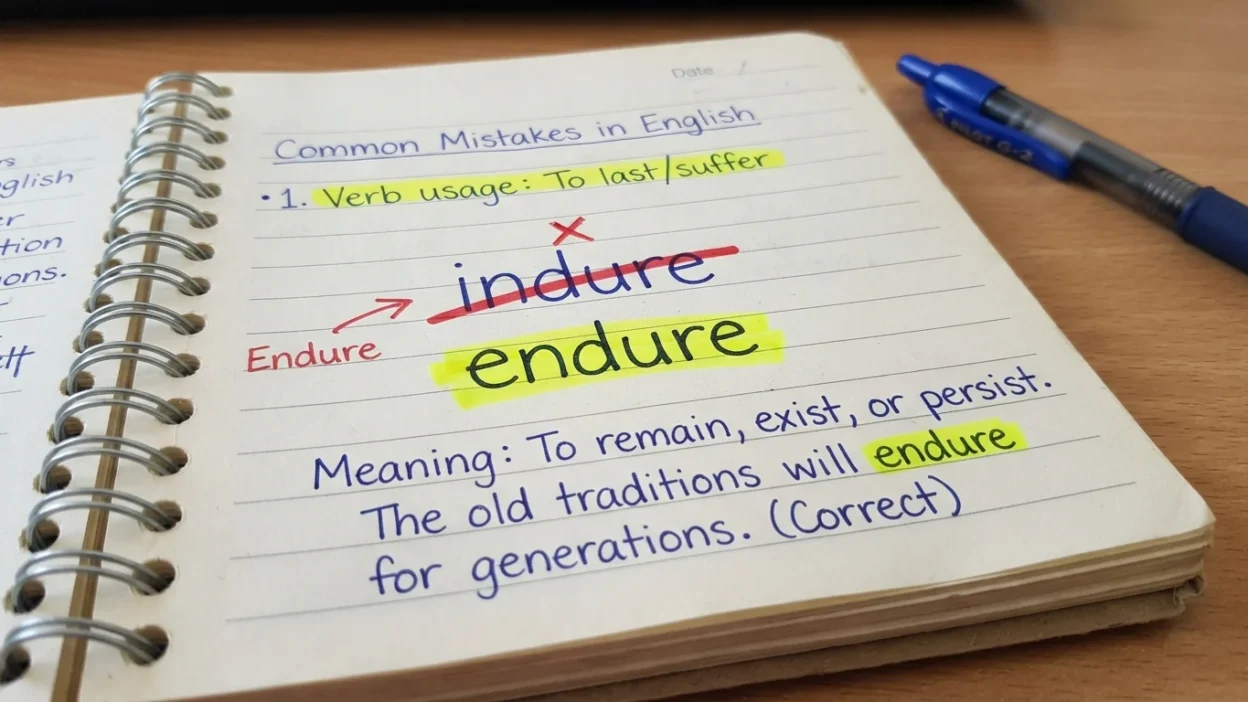
Endure is the correct spelling.
Indure is incorrect and not used in standard English.
Use endure when you mean to suffer patiently, last over time, or remain strong during difficulty.
Why People Confuse It
This confusion happens because of pronunciation. In fast speech, endure can sound like indure.
Common reasons:
- Similar sound in spoken English
- Guessing spelling from pronunciation
- Typing quickly without checking
But the correct spelling always starts with en.
First Word: Indure
Indure is not a real English word. It appears only as a spelling mistake.
Incorrect example:
She had to indure the pain.
This should always be corrected.
Second Word: Endure
Endure is the correct word. It means to remain strong, suffer patiently, or continue despite difficulty.
Examples:
- She endured a difficult time.
- We must endure challenges in life.
- His strength helped him endure pain.
It is commonly used in both everyday and formal writing.
Comparison Table
| Feature | Indure | Endure |
|---|---|---|
| Correct | No | Yes |
| Usage | Incorrect | Standard |
| Meaning | None | Suffer patiently or last |
| Recommendation | Avoid | Always use |
When to Use Each
Use endure when:
- Talking about patience during hardship
- Describing strength over time
- Writing formal or informal content
Never use indure in correct English.
Examples
Correct examples with endure:
- She endured years of hardship.
- We must endure tough times with faith.
- He endured the long journey.
- They endured the storm together.
- She endured pain with courage.
- The structure endured for centuries.
- He endured criticism without giving up.
- We endured many challenges.
- Her faith helped her endure.
- The team endured a difficult season.
- He endured the heat without complaint.
Incorrect example:
- He had to indure the struggle.
Common Mistakes
Writers often:
- Replace en with in
- Spell based on sound
- Skip proofreading
Always double check your spelling when unsure.
Memory Trick
Think of this:
Endure starts with “en” like energy you need to stay strong
This helps you remember the correct form.
American vs British English
Both American and British English use endure. There is no difference in spelling.
Indure is incorrect in both.
Similar Words
Here are related words:
- Tolerate
- Withstand
- Persist
- Survive
These all connect to the meaning of endurance.
Final Verdict
The answer is simple. Endure is correct and widely used.
Indure is incorrect and should be avoided.
Using the right spelling keeps your writing clear and professional.
FAQs
Is indure a real word
No, it is a spelling mistake and not used in standard English.
What does endure mean
It means to remain strong, suffer patiently, or last over time.
Why do people write indure
Because it sounds similar when spoken quickly.
Can I ever use indure
No, it should always be corrected to endure.
Is endure formal or informal
It can be used in both formal and informal writing.
Do British and American English differ here
No, both use endure.
Conclusion
Understanding indure vs endure is simple once you know the correct spelling. Small mistakes like this can be fixed easily and improve your writing quality.
By using endure correctly, your sentences become clearer and more natural. With practice, these small rules will become part of your everyday writing.
Remember This
Always use endure with “en”.
Never write indure in correct English.

Donald Andrew is a dedicated author at BiblyWord, passionate about sharing biblical teachings in a clear and inspiring way. He creates meaningful content that helps readers understand scripture, reflect on their faith, and apply God’s Word in daily life. His work supports spiritual growth, guidance, and a deeper connection with biblical wisdom.