
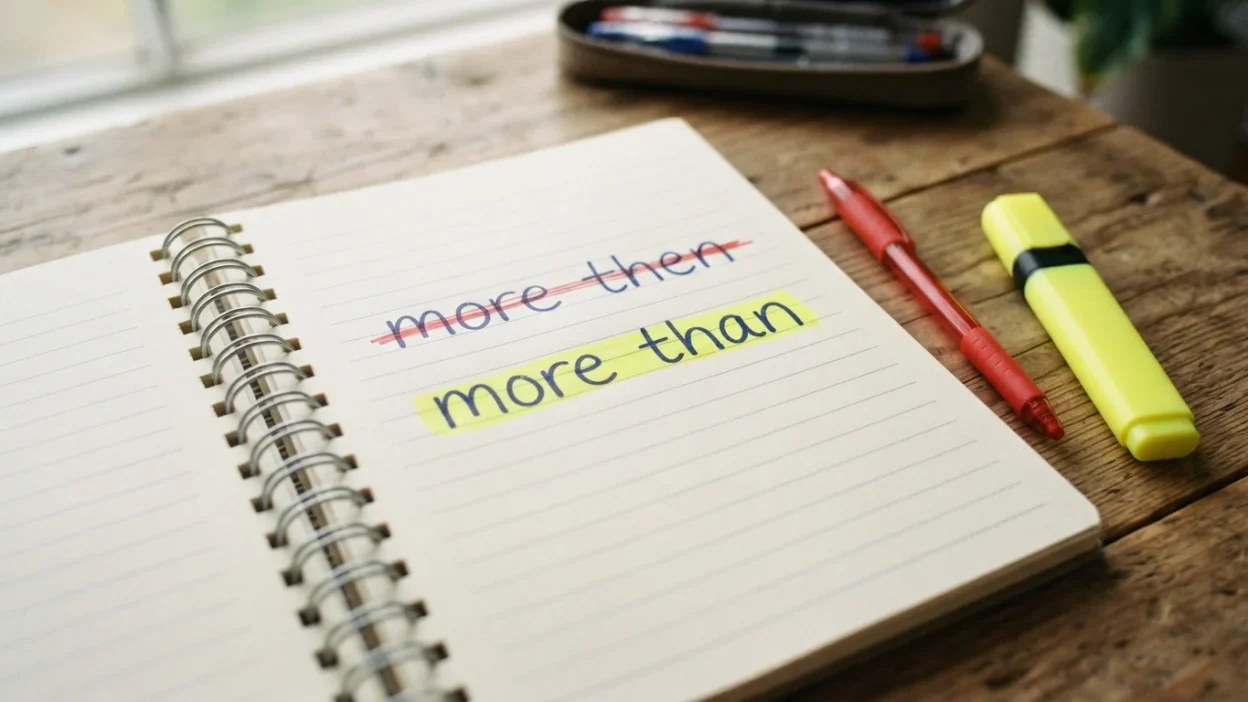
Have you ever paused while writing and wondered whether to use more then or more than? This is one of the most common English mistakes because the words sound similar.
Even confident writers mix them up. But once you understand the difference, it becomes very easy to use the correct form every time.
Let’s break down more then vs more than in a clear and simple way.
Quick Answer
More than is correct when comparing or talking about quantity.
More then is usually incorrect because then relates to time, not comparison.
Always use more than when you mean a greater amount or number.
Why People Confuse It
The confusion happens because then and than sound similar in fast speech.
Common reasons:
- Similar pronunciation
- Spelling based on sound
- Not knowing the different meanings
But these two words have very different uses.
First Word: More Then
More then is almost always incorrect in standard English when used for comparison.
It only makes sense if you are talking about time, but even then, it is rarely used in this exact phrase.
Incorrect example:
She has more then five books.
This should be corrected.
Second Word: More Than
More than is the correct phrase. It is used for comparison or quantity.
Examples:
- She has more than five books.
- This costs more than I expected.
- He earns more than his brother.
It is very common in both speaking and writing.
Comparison Table
| Feature | More Then | More Than |
|---|---|---|
| Correct | No (usually) | Yes |
| Usage | Incorrect | Standard |
| Meaning | Time related | Comparison or quantity |
| Recommendation | Avoid | Always use |
When to Use Each
Use more than when:
- Comparing two things
- Talking about numbers or amounts
- Writing formal or informal sentences
Avoid more then in correct writing.
Examples
Correct examples with more than:
- I have more than enough time.
- She has more than ten friends.
- This is more than I can handle.
- He spent more than expected.
- They need more than just help.
- It costs more than last year.
- She works more than eight hours daily.
- This is more than a simple task.
- He owns more than one car.
- We received more than we asked for.
- It is more than just a game.
Incorrect example:
- I have more then enough money.
Common Mistakes
Writers often:
- Use then instead of than
- Spell based on sound
- Forget the comparison rule
Always double check your usage.
Memory Trick
Think of this:
Than is for comparison, then is for time
So:
More than means a greater amount
American vs British English
Both American and British English use more than. There is no difference in spelling.
More then is incorrect in both.
Similar Words
Here are related comparisons:
- Less than
- Greater than
- Better than
They all use than for comparison.
Final Verdict
The answer is clear. More than is correct and widely used.
More then is incorrect in most cases.
Using the right phrase improves clarity and correctness.
FAQs
Is more then ever correct
Rarely, and only in unusual time related contexts, but it is best avoided.
Why do people confuse then and than
Because they sound similar when spoken quickly.
What does more than mean
It means a greater amount or number.
Can I use more then in formal writing
No, it should be corrected to more than.
Is there a difference in British and American English
No, both use more than.
How can I remember the difference
Use than for comparison and then for time.
Conclusion
Understanding more then vs more than is simple once you know the rule. Small mistakes like this can affect your writing clarity, but they are easy to fix.
By using more than correctly, your sentences become clearer and more accurate. With practice, choosing the right word will become natural.
Remember This
Use more than for comparison.
Avoid more then in correct English.

Carol Amanda is a passionate writer and faith-driven author dedicated to sharing the wisdom of the Bible. At BiblyWord, she creates inspiring and meaningful content that encourages spiritual growth and daily reflection. Her work focuses on helping readers connect with God’s Word and find guidance, peace, and strength in their faith journey.