
When writing in English, small spelling differences can make a big impact on clarity and credibility. One common confusion people face is between “bodies” and “bodys.” At first glance, both may look acceptable, especially if you are unsure about plural rules. But only one is correct.
This confusion often appears in everyday writing like emails, school assignments, and even professional documents. If you want to write clearly and confidently, understanding the difference is essential. Let’s break it down in a simple and practical way so you never make this mistake again.
Quick Answer
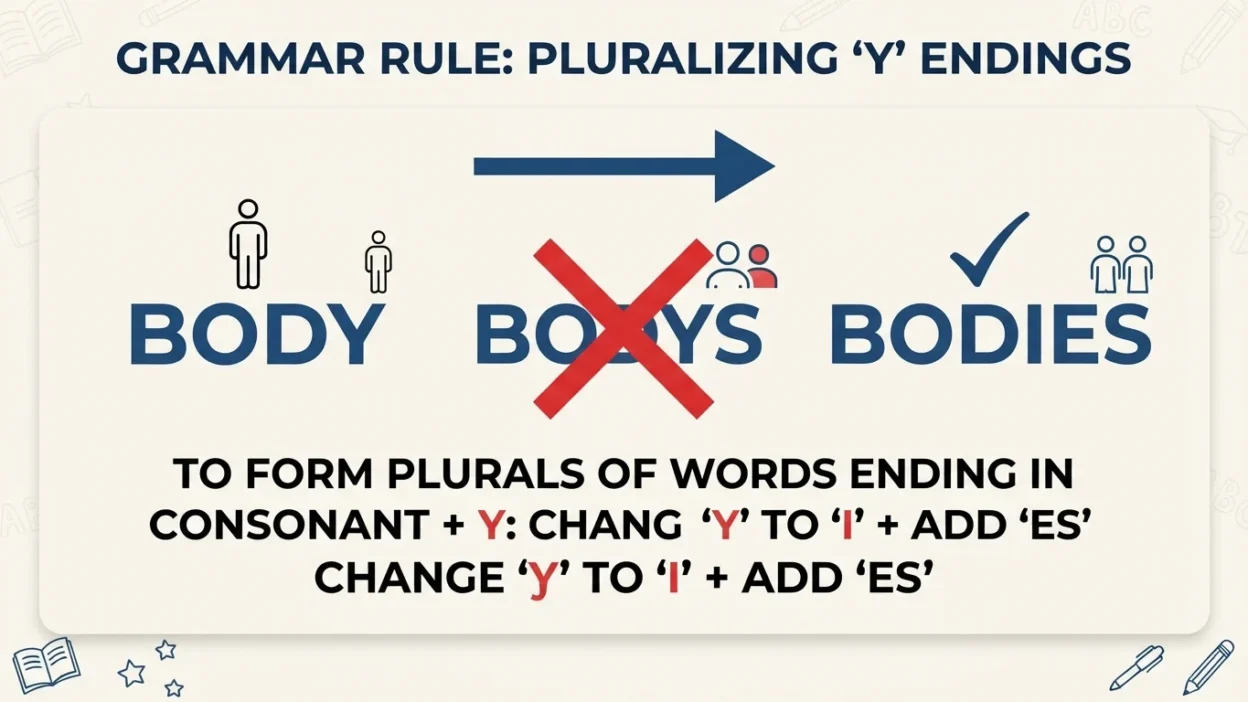
“Bodies” is the correct plural form of “body.” “Bodys” is incorrect and not recognized in standard English. When a noun ends in “y” after a consonant, you change “y” to “ies” to form the plural. Always use “bodies” in writing.
Definition and Meaning
The word “body” refers to a physical form of a person, animal, or object. It can also describe a group of people working together, like a governing body. When we talk about more than one, we need a plural form.
“Bodies” is the correct plural spelling. It follows standard English grammar rules. “Bodys” does not follow any accepted rule and is considered incorrect.
For example:
- Human bodies need rest.
- The organization has several governing bodies.
Understanding this definition helps you see why correct pluralization matters. It ensures your message is clear and professional in both casual and formal communication.
Why People Confuse It
Many people confuse “bodies” and “bodys” because English plural rules are not always straightforward. Some words simply add “s,” while others change completely.
The confusion often happens because:
- Writers assume all plurals just add “s”
- The spelling change from “y” to “ies” feels unusual
- Lack of grammar practice or exposure
Also, autocorrect tools may not always catch the mistake, especially in informal writing. This leads to repeated errors over time.
Once you understand the rule behind it, the confusion disappears quickly.
First Word
“Bodies” is the correct and standard plural form of “body.” It follows a common English rule used for nouns ending in “y.”
When “body” becomes plural:
- The “y” changes to “ies”
- The word becomes “bodies”
Examples:
- Dead bodies were found in the forest.
- Healthy bodies require exercise.
- The committee includes several decision making bodies.
Using “bodies” ensures your writing is grammatically correct and easy to understand. It is accepted in all forms of English writing, from casual conversations to academic papers.
Second Word
“Bodys” is incorrect and should not be used in standard English writing. It does not follow any recognized plural rule.
Why it is wrong:
- It ignores the rule of changing “y” to “ies”
- It looks unnatural to native speakers
- It can make your writing appear careless
You may occasionally see “bodys” in informal or incorrect texts, but it is not acceptable in proper grammar.
Always avoid using this form, especially in professional or academic contexts.
Grammar Rules Explained
English has a specific rule for nouns ending in “y.” If the letter before “y” is a consonant, you change “y” to “ies” to form the plural.
Examples:
- Body becomes bodies
- City becomes cities
- Baby becomes babies
If the letter before “y” is a vowel, you simply add “s.”
- Toy becomes toys
- Key becomes keys
Since “body” has a consonant before “y,” the correct plural is “bodies.” This rule is simple once you practice it.
Pronunciation Guide
Both “body” and “bodies” are easy to pronounce once you understand the difference.
Body is pronounced as “baa dee”
Bodies is pronounced as “baa deez”
The added “ies” creates a soft “eez” sound at the end. This slight change helps distinguish singular from plural in speech.
Practicing pronunciation can also help reinforce correct spelling in writing.
Comparison Table
| Word | Correct | Meaning | Usage |
|---|---|---|---|
| Bodies | Yes | Plural of body | Always use |
| Bodys | No | Incorrect spelling | Never use |
This simple comparison shows that “bodies” is the only correct choice.
When to Use Each
Use “bodies” whenever you are referring to more than one body. This applies to physical forms, organizations, or groups.
Examples:
- The rescue team found three bodies.
- Many regulatory bodies control this industry.
Never use “bodys” in any situation. It does not have a valid use case in English.
Keeping this rule in mind will help you avoid mistakes in all types of writing.
Examples
Here are real life examples using “bodies” correctly:
- The lake contained several bodies.
- Students study human bodies in biology class.
- The government works with international bodies.
- Strong bodies need proper nutrition.
- The police recovered the bodies quickly.
- Our bodies react differently to stress.
- Scientific bodies conduct research worldwide.
- The gym helps build stronger bodies.
- Bodies of water cover most of Earth.
- The rescue mission saved many bodies from danger
These examples show how commonly the word is used.
Common Sentences
You will often see “bodies” in everyday sentences like:
- Our bodies need water daily.
- The organization has multiple governing bodies.
- Bodies of evidence support the claim.
Using the correct form improves readability and makes your writing sound natural.
Avoid using incorrect forms like “bodys” in any sentence, as it can confuse readers.
Real Life Usage
In real life, “bodies” appears in many contexts such as health, law, science, and business.
For example:
- Doctors study human bodies to understand diseases
- Legal bodies create and enforce rules
- Fitness experts focus on building strong bodies
Because it is so widely used, using the correct spelling is essential. Even a small mistake can affect how your message is perceived.
Formal vs Informal Use
“Bodies” is used in both formal and informal writing without any issues.
Formal use:
- Academic papers
- Reports
- Official documents
Informal use:
- Conversations
- Social media
- Personal messages
“Bodys,” however, is not acceptable in either form. It should be avoided completely.
Common Mistakes
Here are common mistakes people make:
- Writing “bodys” instead of “bodies”
- Forgetting the “y to ies” rule
- Relying too much on phonetic spelling
To avoid these mistakes:
- Learn basic plural rules
- Proofread your writing
- Practice with similar words
Correcting these errors early helps improve your overall English skills.
Mistakes to Avoid
Avoid these specific errors:
- Using “bodys” in essays
- Typing “bodys” in emails
- Ignoring grammar rules
Instead, always double check your spelling. A quick review can prevent simple but noticeable mistakes.
Memory Trick
A simple trick can help you remember:
If a word ends in “y,” think “change to ies.”
Body becomes bodies
City becomes cities
This pattern is easy to remember and works for many words. Practicing this trick will make correct spelling automatic.
American vs British English
There is no difference between American and British English for this word.
Both use:
- Body as singular
- Bodies as plural
“Bodys” is incorrect in all versions of English. This makes it easy to remember because there are no regional exceptions.
Similar Words
Here are similar words that follow the same rule:
- Baby becomes babies
- Lady becomes ladies
- Story becomes stories
Learning these patterns helps reinforce the rule. Once you understand one, you can apply it to many others.
Synonyms and Alternatives
Instead of “bodies,” you can sometimes use:
- Forms
- Figures
- Groups
- Entities
However, the best word depends on context. “Bodies” remains the most accurate in most cases.
Expert Tips
To master this topic:
- Practice writing plural forms daily
- Read English content regularly
- Pay attention to spelling patterns
Experts recommend focusing on rules rather than memorizing individual words. This approach makes learning faster and more effective.
Related Confusing Words
Many words create similar confusion:
- Cities vs citys
- Babies vs babys
- Stories vs storys
In all these cases, the correct form uses “ies.” This shows how consistent the rule is across English vocabulary.
Final Verdict
“Bodies” is the only correct plural form of “body.” “Bodys” is incorrect and should never be used.
If you remember the simple rule of changing “y” to “ies,” you will avoid this mistake every time. This small detail can make a big difference in your writing quality.
FAQs
Is bodys ever correct?
No, “bodys” is always incorrect in standard English.
Why does body become bodies?
Because words ending in a consonant plus “y” change “y” to “ies” in plural form.
Can I use bodys in informal writing?
No, it is still incorrect even in casual use.
What is the plural of body?
The correct plural is “bodies.”
Does British English use bodys?
No, both British and American English use “bodies.”
Are there exceptions to this rule?
Only when a vowel comes before “y,” like “toys.”
Conclusion
Understanding the difference between “bodies” and “bodys” is simple once you know the rule. English spelling may seem tricky at times, but patterns like this make learning easier.
By practicing and applying the correct form, you can improve your writing and avoid common mistakes. If you are writing an email, essay, or report, using “bodies” correctly shows attention to detail and strong language skills.
Remember This
Always change “y” to “ies” when forming the plural of words like “body.”
“Bodies” is correct. “Bodys” is wrong.

Steven Mark is the administrator and a dedicated author at BiblyWord, responsible for managing the platform and maintaining high-quality content. Alongside his administrative role, he writes insightful biblical articles that inspire faith, reflection, and spiritual growth. His work supports the mission of sharing God’s Word in a clear and meaningful way.