English verbs can be tricky, especially when it comes to past tense forms. One common confusion people face is between “weeped” and “wept.” At first glance, both may seem acceptable, but only one is correct in standard English.
This mistake often appears in writing and speech because many verbs simply add “ed” to form the past tense. However, some verbs follow irregular patterns, and “weep” is one of them. Understanding the correct form not only improves your grammar but also makes your communication sound more natural and fluent.
Let’s explore the difference clearly so you can use the right word with confidence every time.
Quick Answer
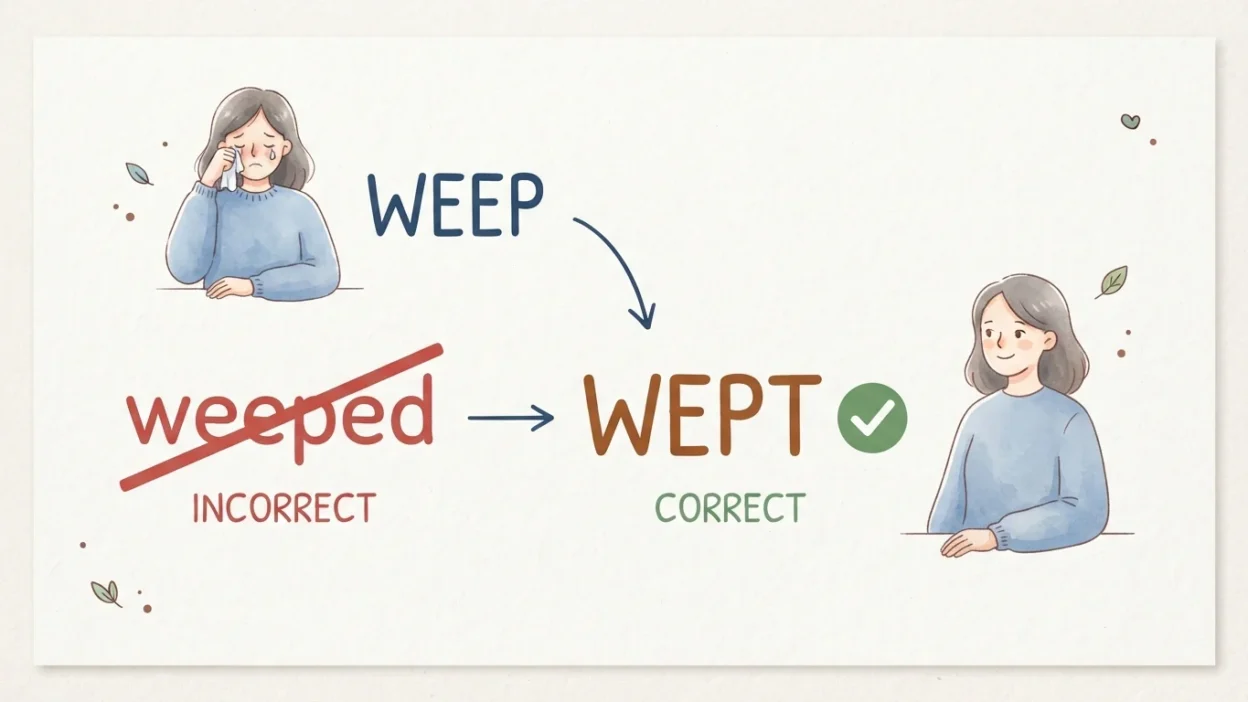
“Wept” is the correct past tense and past participle of “weep.” “Weeped” is incorrect and not used in standard English. Always use “wept” when talking about crying in the past.
Definition and Meaning
The verb “weep” means to cry, often quietly or with deep emotion. It is commonly used in both literary and everyday contexts.
When describing past actions, the correct form is “wept.” This word expresses that someone cried at an earlier time.
Examples:
- She wept silently during the movie.
- He has wept many times over the loss.
“Weeped” does not exist as a proper word in standard English, even though it may appear logical based on regular verb patterns.
Why People Confuse It
The confusion between “weeped” and “wept” comes from how most English verbs form their past tense.
People often assume:
- Add “ed” to make past tense
- Follow regular patterns for all verbs
However, English includes many irregular verbs that do not follow this rule. Since “weep” ends in a simple structure, learners naturally expect “weeped” to be correct.
Lack of exposure to literary or formal English also increases this confusion. Once you learn that “weep” is irregular, the mistake becomes easy to avoid.
First Word
“Weeped” is incorrect and should not be used in proper English writing or speech.
Why it is wrong:
- It incorrectly applies the regular verb rule
- It is not recognized in dictionaries
- It sounds unnatural to fluent speakers
You might see “weeped” in informal writing or by learners, but it is considered a grammatical error.
Avoid using this form in all contexts, especially in academic or professional communication.
Second Word
“Wept” is the correct past tense and past participle of “weep.” It is widely accepted and used in all forms of English.
Examples:
- The child wept after losing his toy.
- She wept with joy at the surprise.
- They have wept over their mistakes.
Using “wept” ensures your writing sounds natural and correct. It is commonly found in literature, storytelling, and emotional expressions.
Grammar Rules Explained
“Weep” is an irregular verb. This means it does not follow the standard rule of adding “ed” for past tense.
Correct forms:
- Present: weep
- Past: wept
- Past participle: wept
This pattern is similar to other irregular verbs:
- Sleep becomes slept
- Keep becomes kept
- Feel becomes felt
Learning these patterns helps you recognize and use irregular verbs correctly.
Pronunciation Guide
Understanding pronunciation helps reinforce correct usage.
Weep is pronounced as “weep”
Wept is pronounced as “wept”
The past form has a sharper ending sound. The “pt” creates a quick stop, making it distinct from the softer present form.
Practicing both aloud can help you remember the correct structure.
Comparison Table
| Word | Correct | Usage | Meaning |
|---|---|---|---|
| Wept | Yes | Past and past participle | Cried in the past |
| Weeped | No | Incorrect form | Not valid in English |
This table clearly shows that only “wept” should be used.
When to Use Each
Use “wept” whenever you are referring to crying in the past.
Examples:
- She wept during the sad scene.
- He has wept before in similar situations.
Never use “weeped” in any situation. It does not have a correct grammatical use.
Remembering this rule will help you avoid a common mistake.
Examples
Here are real life examples using “wept” correctly:
- She wept after hearing the news.
- The mother wept for her child.
- He wept quietly in the corner.
- They wept with happiness.
- The audience wept during the film.
- She has wept many nights alone.
- He wept over his past mistakes.
- The family wept together.
- She wept tears of joy.
- The boy wept when he fell
These examples show how naturally “wept” fits into sentences.
Common Sentences
You may often hear or read sentences like:
- She wept for hours.
- He wept in silence.
- They have wept before.
Using “wept” makes your sentences sound fluent and correct. Avoid replacing it with “weeped,” which would sound unnatural.
Real Life Usage
“Wept” is commonly used in emotional contexts such as:
- Literature and storytelling
- Religious or poetic texts
- Personal experiences and memories
For example:
- Characters in novels often wept during tragic moments
- People wept at weddings or funerals
Because it expresses deep emotion, choosing the correct form is important for clarity and impact.
Formal vs Informal Use
“Wept” is suitable for both formal and informal use.
Formal:
- Academic writing
- Literature
- Reports
Informal:
- Conversations
- Social media
- Personal messages
“Weeped” is not acceptable in either context and should always be avoided.
Common Mistakes
People often make these mistakes:
- Writing “weeped” instead of “wept”
- Forgetting irregular verb patterns
- Overgeneralizing grammar rules
To avoid these:
- Learn common irregular verbs
- Practice regularly
- Proofread your work
Correct usage builds confidence in your writing.
Mistakes to Avoid
Avoid these specific errors:
- Using “weeped” in essays
- Saying “I weeped yesterday”
- Ignoring irregular verb rules
Instead, always replace it with “wept” to ensure accuracy.
Memory Trick
A simple trick can help you remember:
Weep sounds like keep
Keep becomes kept
So weep becomes wept
This pattern makes it easy to recall the correct form.
American vs British English
There is no difference between American and British English in this case.
Both use:
- Weep as present
- Wept as past
“Weeped” is incorrect in all regions, making this rule universal.
Similar Words
Here are similar irregular verbs:
- Sleep becomes slept
- Keep becomes kept
- Sweep becomes swept
Recognizing these patterns helps reinforce your understanding.
Synonyms and Alternatives
Instead of “wept,” you can use:
- Cried
- Sobbed
- Shed tears
- Lamented
However, “wept” often sounds more emotional or literary.
Expert Tips
To master this:
- Focus on common irregular verbs
- Read books and articles
- Practice writing sentences
Experts recommend learning patterns rather than memorizing individual words.
Related Confusing Words
Other confusing pairs include:
- Sleeped vs slept
- Keeped vs kept
- Sweeped vs swept
In all these cases, the correct forms follow irregular patterns.
Final Verdict
“Wept” is the correct past tense of “weep.” “Weeped” is incorrect and should never be used.
Once you learn this irregular pattern, it becomes easy to remember. Using the correct form will improve your writing and make your English sound more natural.
FAQs
Is weeped ever correct?
No, “weeped” is always incorrect.
What is the past tense of weep?
The correct past tense is “wept.”
Why is wept used instead of weeped?
Because “weep” is an irregular verb.
Can I use wept in everyday conversation?
Yes, it works in both formal and informal contexts.
Is wept old fashioned?
It can sound slightly literary but is still widely used.
Are there similar verbs like weep?
Yes, such as keep to kept and sleep to slept.
Conclusion
Understanding the difference between “weeped” and “wept” is essential for clear and correct English. While “weeped” may seem logical, it is not a valid word in standard grammar.
By learning irregular verb patterns, you can avoid this and similar mistakes. Whether you are writing or speaking, using “wept” correctly will make your language more natural and polished.
Remember This
“Weep” does not take “ed” in the past.
Always use “wept” for past tense.

Donald Andrew is a dedicated author at BiblyWord, passionate about sharing biblical teachings in a clear and inspiring way. He creates meaningful content that helps readers understand scripture, reflect on their faith, and apply God’s Word in daily life. His work supports spiritual growth, guidance, and a deeper connection with biblical wisdom.