Spelling errors can easily slip into writing, especially when words sound the same. One of the most common mistakes is confusing “receipt” with “reciept.” While both may look similar, only one is correct in standard English.
This confusion often happens in emails, shopping records, invoices, and even academic writing. Since the word is used frequently in daily life, getting it wrong can affect your credibility. The good news is that once you understand the rule behind it, the correct spelling becomes easy to remember.
Let’s break it down in a simple and clear way so you can avoid this mistake forever.
Quick Answer
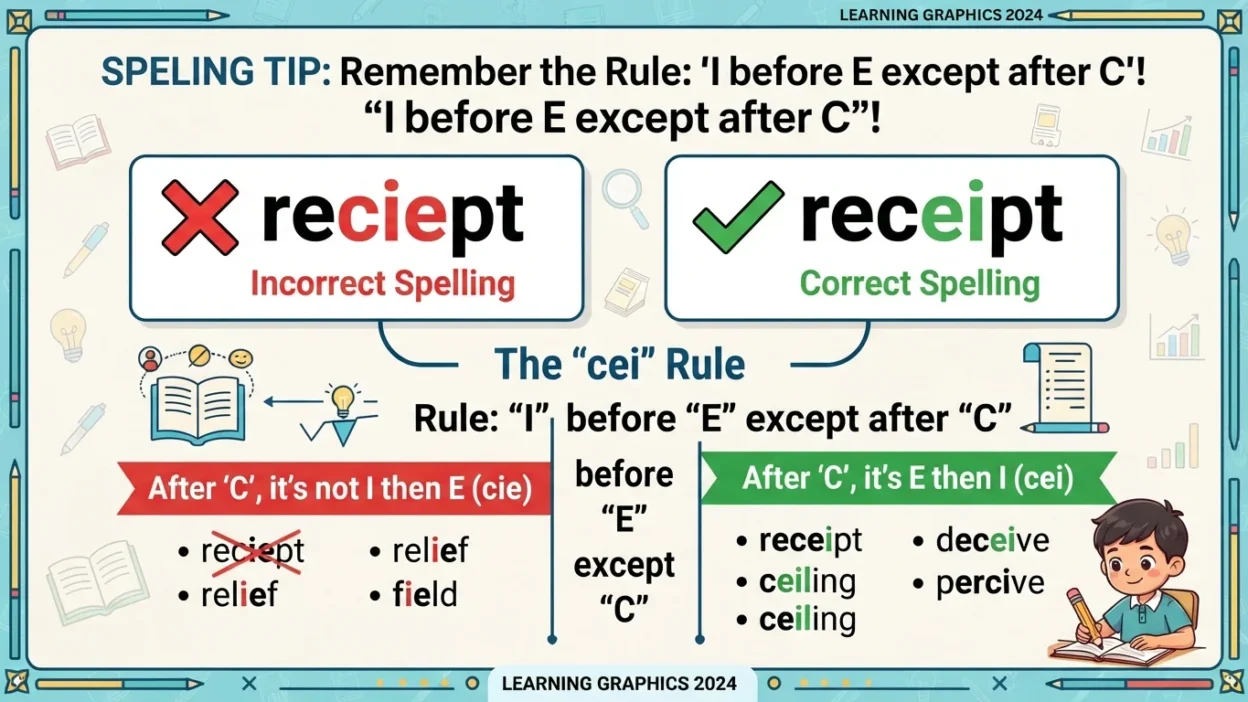
“Receipt” is the correct spelling. “Reciept” is incorrect and should never be used. Remember the rule “i before e except after c” to spell “receipt” correctly.
Definition and Meaning
The word “receipt” refers to a written or digital record that confirms a transaction. It shows proof that payment has been made or goods have been received.
Examples:
- Keep your receipt after shopping.
- The store emailed me a receipt.
“Reciept” has no meaning because it is not a valid English word. It is simply a common misspelling of “receipt.”
Understanding the correct meaning helps you use the word properly in everyday situations like shopping, banking, and business communication.
Why People Confuse It
The confusion between “receipt” and “reciept” comes from spelling patterns in English.
Common reasons include:
- Misunderstanding vowel order
- Ignoring spelling rules
- Typing quickly without proofreading
Many people rely on how the word sounds, which leads to mistakes. Since “receipt” is not spelled exactly how it sounds, it becomes tricky.
Learning the correct rule helps remove this confusion completely.
First Word
“Receipt” is the correct and standard spelling. It is accepted in all forms of English writing.
Examples:
- I lost my receipt from the store.
- Please provide a receipt for reimbursement.
- The cashier handed me the receipt.
Using “receipt” correctly ensures your writing looks professional and accurate. It is commonly used in business, finance, and everyday communication.
Second Word
“Reciept” is incorrect and should never be used.
Why it is wrong:
- It breaks standard spelling rules
- It is not found in dictionaries
- It can make your writing look careless
Even though it is a common mistake, it is still considered an error in all contexts. Always avoid using this form.
Grammar Rules Explained
The correct spelling follows the rule:
“I before E except after C”
In “receipt,” the letters “ei” come after “c,” which matches the rule.
Other examples:
- Receive
- Ceiling
- Deceive
This rule is not perfect for every word, but it works well for “receipt.” Remembering it can help you avoid similar mistakes.
Pronunciation Guide
“Receipt” is pronounced as “ri seet”
Breakdown:
- ri
- seet
The “p” in the word is silent, which adds to the confusion. This silent letter is one reason people misspell it.
Practicing pronunciation can help reinforce the correct spelling in your memory.
Comparison Table
| Word | Correct | Meaning | Usage |
|---|---|---|---|
| Receipt | Yes | Proof of payment | Always use |
| Reciept | No | Incorrect spelling | Never use |
This table clearly shows that “receipt” is the only correct option.
When to Use Each
Use “receipt” whenever you are referring to proof of payment or a transaction record.
Examples:
- Save your receipt for returns.
- I emailed the receipt to you.
Never use “reciept” in any situation. It is always incorrect.
Keeping this simple rule in mind will help you write correctly every time.
Examples
Here are real life examples using “receipt” correctly:
- I kept the receipt for my purchase.
- She asked for a receipt at the counter.
- The receipt shows the total amount.
- Please attach the receipt to your report.
- He lost the receipt and could not return the item.
- The cashier printed the receipt.
- I emailed the receipt to my manager.
- The receipt includes tax details.
- Always check your receipt before leaving.
- The digital receipt was sent instantly
These examples show how commonly the word is used.
Common Sentences
You may often hear or read:
- Do you need a receipt
- Keep the receipt for warranty
- I found the receipt in my bag
Using the correct spelling ensures your sentences are clear and professional.
Real Life Usage
“Receipt” is used in many everyday situations:
- Shopping and retail
- Business transactions
- Online purchases
- Expense tracking
Because it is so widely used, spelling it correctly is very important. A small mistake can create confusion or appear unprofessional.
Formal vs Informal Use
“Receipt” works in both formal and informal writing.
Formal:
- Business reports
- Financial documents
- Emails
Informal:
- Messages
- Conversations
- Notes
“Reciept” is not acceptable in any context and should always be avoided.
Common Mistakes
People often make these mistakes:
- Writing “reciept” instead of “receipt”
- Forgetting the spelling rule
- Ignoring the silent “p”
To avoid mistakes:
- Practice the correct spelling
- Use spell check tools
- Proofread your writing
Mistakes to Avoid
Avoid these errors:
- Typing “reciept” in emails
- Using incorrect spelling in documents
- Relying only on pronunciation
Always double check your spelling before finalizing your work.
Memory Trick
A simple trick:
Think “cei” in receipt
Because it comes after “c”
So remember:
C comes before EI in receipt
This trick helps you recall the correct order quickly.
American vs British English
There is no difference between American and British English for this word.
Both use:
- Receipt as correct spelling
- Reciept as incorrect spelling
This makes it easy to remember across all regions.
Similar Words
Here are similar words following the same rule:
- Receive
- Ceiling
- Deceive
Learning these patterns helps strengthen your spelling skills.
Synonyms and Alternatives
Depending on context, you can use:
- Proof of purchase
- Invoice
- Bill
- Record
However, “receipt” remains the most common and accurate term.
Expert Tips
To improve your spelling:
- Learn common rules like “i before e”
- Practice regularly
- Read more English content
Experts recommend focusing on patterns rather than memorizing random words.
Related Confusing Words
Other commonly confused spellings include:
- Believe vs beleive
- Receive vs recieve
- Piece vs peice
Understanding spelling rules helps avoid these mistakes as well.
Final Verdict
“Receipt” is the correct spelling and should always be used. “Reciept” is incorrect and must be avoided.
By remembering the simple rule and practicing regularly, you can eliminate this common mistake from your writing.
FAQs
Is reciept ever correct
No, it is always incorrect.
What is the correct spelling
The correct spelling is “receipt.”
Why is receipt spelled this way
It follows the “i before e except after c” rule.
Is the p in receipt silent
Yes, the “p” is silent.
Can I use reciept informally
No, it is incorrect in all contexts.
Are there similar words like receipt
Yes, such as receive and ceiling.
Conclusion
Spelling mistakes like “reciept” instead of “receipt” are very common, but they are easy to fix once you understand the rule. Paying attention to small details like letter order can greatly improve your writing.
Whether you are writing an email, a report, or a simple message, using the correct spelling shows professionalism and clarity. Make it a habit to double check your words and apply simple grammar rules.
Remember This
Always use “receipt” with “cei” after “c.”
“Reciept” is wrong and should never be used.

Kevin Brian is a passionate author at BiblyWord, dedicated to sharing the message of the Bible through thoughtful and inspiring content. He focuses on creating clear and meaningful writings that help readers understand scripture, strengthen their faith, and find guidance in everyday life through God’s Word.