The words yea and nay are short, old fashioned terms that still appear in voting, literature, and formal expressions. Many people confuse them with yeah and nay, or assume they are casual words. In reality, yea vs nay has a specific meaning, especially in formal or historical contexts.
Understanding these terms is useful when reading official documents, historical texts, or parliamentary language. In this guide, you’ll learn the meanings, usage rules, examples, and easy tricks to confidently use yea vs nay correctly.
Quick Answer
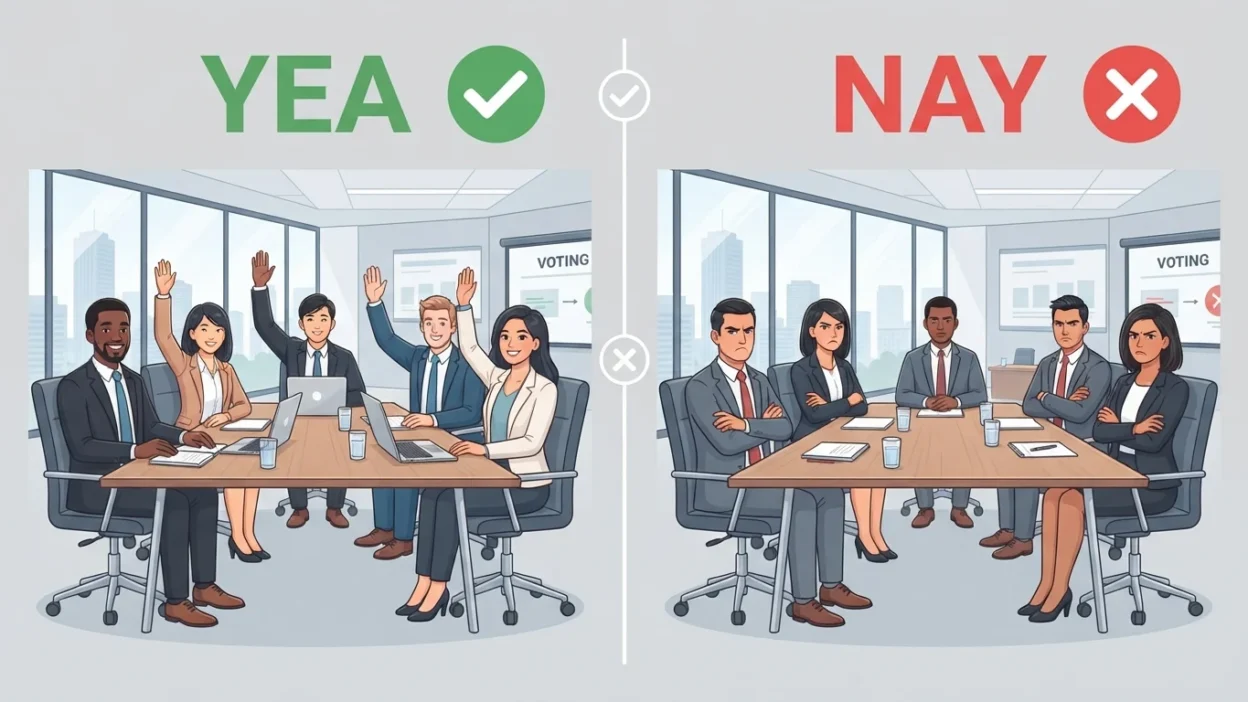
Yea means “yes” or approval, often used in formal voting.
Nay means “no” or rejection.
Use yea for agreement and nay for disagreement, especially in formal contexts.
Definition and Meaning
Yea is an old or formal word meaning “yes” or agreement.
Nay is an old or formal word meaning “no” or refusal.
So:
- Yea = yes
- Nay = no
Why People Confuse It
The confusion comes from similar-sounding words like yeah.
Many people think yea is just a different spelling of yeah, but they are not the same.
Also, both words are rarely used in everyday conversation.
First Word: Yea
Yea is used to express agreement or approval.
It is commonly seen in formal voting, especially in government or organizations.
Examples:
- The motion was passed with more yeas than nays.
- All in favor say yea.
Second Word: Nay
Nay is used to express disagreement or refusal.
It is also common in formal voting or historical writing.
Examples:
- The proposal received several nays.
- He voted nay on the issue.
Grammar Rules Explained
Both yea and nay are interjections or nouns.
They are often used in voting contexts:
- Yea = vote in favor
- Nay = vote against
Comparison Table
| Feature | Yea | Nay |
|---|---|---|
| Meaning | Yes | No |
| Usage | Approval | Rejection |
| Context | Formal, voting | Formal, voting |
| Example | Vote yea | Vote nay |
When to Use Each
Use yea when:
- Showing agreement
- Voting in favor
Use nay when:
- Showing disagreement
- Voting against
Real Life Usage
These words are commonly used in:
- Parliamentary voting
- Official meetings
- Historical texts
They are rarely used in casual conversation.
Formal vs Informal Use
Yea and nay are formal or archaic.
In everyday speech, people use yes and no instead.
Pronunciation Guide
- Yea: /jeɪ/ (sounds like “yay”)
- Nay: /neɪ/
Synonyms and Alternatives
For yea:
- Yes
- Agree
For nay:
- No
- Reject
Common Sentences
Examples:
- All those in favor say yea.
- Those against say nay.
- The vote was 10 yeas and 5 nays.
Examples
Here are 10 examples:
- The council voted yea on the proposal.
- Several members said yea.
- He cast a yea vote.
- The motion passed with more yeas.
- They responded with a loud yea.
- She voted nay on the issue.
- There were three nays in the vote.
- He said nay to the suggestion.
- The proposal failed due to many nays.
- The chairman called for yeas and nays.
Common Mistakes
A common mistake is confusing yea with yeah.
Another mistake is using these words in casual contexts where “yes” or “no” is more appropriate.
Mistakes to Avoid
Avoid:
- Using “yea” instead of “yeah” in informal speech
- Using these words in casual writing unnecessarily
Memory Trick
Remember:
Yea = yay (positive)
Nay = no
Think: “yay” sounds like approval.
American vs British English
There is no major difference in usage.
Both use these terms in formal or historical contexts.
Similar Words
Other related words:
- Yeah vs Yes
- No vs Nope
- Aye vs Yes
Related Confusing Words
More examples:
- Affect vs Effect
- Advice vs Advise
- Accept vs Except
Expert Tips
Use yea and nay only in formal or historical contexts.
For everyday communication, stick to yes and no.
When Does It Apply
Use these words when:
- Reading or writing formal documents
- Discussing voting results
- Understanding historical texts
Final Verdict
Yea means yes and is used in formal approval.
Nay means no and is used in formal rejection.
They are correct but mostly limited to formal contexts.
FAQs
1. What is the difference between yea and nay?
Yea means yes, nay means no.
2. Is yea the same as yeah?
No, they are different.
3. Where are these words used?
In formal voting and historical texts.
4. Are they used in daily conversation?
Rarely.
5. How do I remember the difference?
Yea sounds like yay.
6. Are they still used today?
Yes, in formal contexts.
Remember This
Yea = yes
Nay = no
Use them only in formal situations.
Conclusion
The difference between yea and nay is straightforward. Yea means yes or agreement, while nay means no or disagreement. Although they are not commonly used in everyday conversation, they still play an important role in formal settings like voting and official decisions.
By remembering simple associations like “yea sounds like yay” and “nay means no,” you can easily understand and use these words when needed. With this knowledge, you’ll be able to recognize and apply them correctly in the right context.

Steven Mark is the administrator and a dedicated author at BiblyWord, responsible for managing the platform and maintaining high-quality content. Alongside his administrative role, he writes insightful biblical articles that inspire faith, reflection, and spiritual growth. His work supports the mission of sharing God’s Word in a clear and meaningful way.