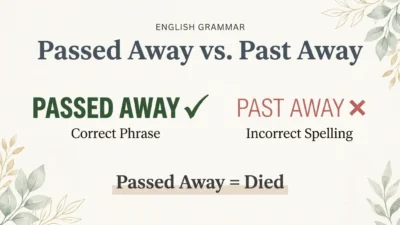
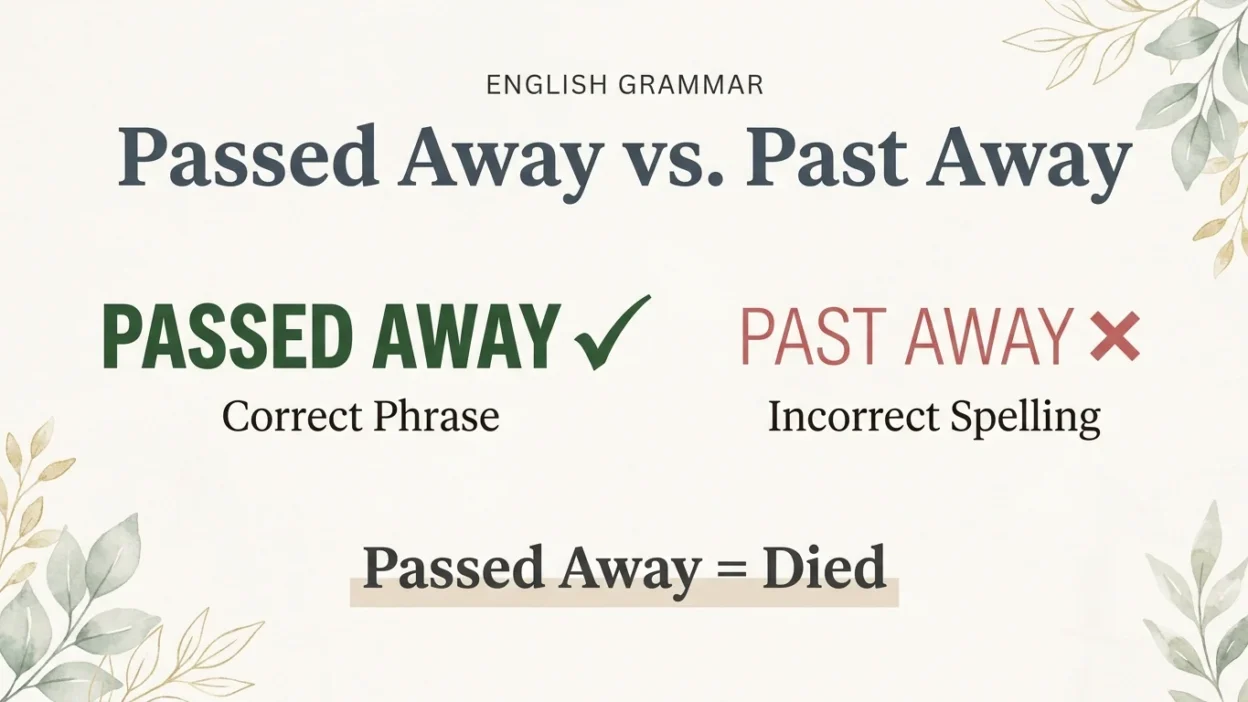
The phrases passed away and past away sound very similar, but only one is the standard English expression. Passed away is the correct phrase used as a polite or respectful way to say that someone has died. Past away is a common spelling mistake and should not be used when referring to someone’s death.
This confusion happens because passed and past are pronounced similarly, while both words are connected to the idea of something happening in an earlier time. However, their grammatical roles are different.
Passed is the past tense of the verb pass, while past generally refers to previous time or something beyond a particular point. In this guide, you’ll learn exactly why passed away is correct, what the phrase means, how to use it respectfully, common mistakes, examples, and an easy memory trick.
Quick Answer
Passed away is the correct expression. It is a polite and respectful way of saying that someone has died. Past away is incorrect in this context and is usually a spelling mistake. Remember: passed away = died, while past refers to previous time or something beyond a point.
Definition and Meaning
Passed away is a euphemistic expression meaning died.
For example:
- Her grandfather passed away last year.
- His father passed away peacefully.
- We were sorry to hear that she had passed away.
The expression is generally considered softer and more respectful than simply saying died, especially when speaking about someone’s loved one.
Past away does not have this meaning and is not the standard phrase.
Why People Confuse It
The main reason people confuse these expressions is that passed and past sound the same or very similar in many varieties of English.
Compare:
- passed
- past
They differ in spelling and grammatical function, even though their pronunciation can be identical.
Because people often hear the expression before seeing it written, they may incorrectly spell it as past away.
The correct spelling is always:
passed away
First Phrase: Passed Away
Passed away is a phrasal expression formed with the verb pass and the adverb away.
In this expression, passed away means died.
Examples:
- My uncle passed away yesterday.
- Her mother passed away peacefully.
- Their beloved dog passed away after a long illness.
The expression can be used in both conversation and writing, particularly when a respectful or gentle tone is appropriate.
Second Phrase: Past Away
Past away is not the standard English expression for death.
For example:
❌ My grandfather past away last month.
The correct form is:
✔ My grandfather passed away last month.
The word past has other meanings, usually involving previous time or movement beyond something, but it does not form the standard expression past away meaning “died.”
Grammar Rules Explained
Passed is the past tense and past participle of the verb pass.
Examples:
- pass → passed
- He passed the exam.
- She passed the house.
- Time passed quickly.
In passed away, the verb pass combines with away to form an expression meaning “die.”
Past, on the other hand, is usually a noun, adjective, adverb, or preposition.
Examples:
- in the past
- walk past the store
- the past year
Therefore, when you mean “died,” use passed away.
Comparison Table
| Feature | Passed Away | Past Away |
|---|---|---|
| Correct expression? | Yes | No |
| Meaning | Died | Not standard in this meaning |
| Grammar | Verb phrase | Incorrect phrase |
| Tone | Polite/respectful | Incorrect |
| Example | He passed away peacefully. | ❌ He past away peacefully. |
When to Use Passed Away
Use passed away when you want to refer respectfully to someone’s death.
It is particularly appropriate when:
- Offering condolences
- Talking about a deceased family member
- Writing an obituary
- Discussing someone’s death sensitively
- Speaking to someone who has lost a loved one
Examples:
- I’m sorry to hear that your father passed away.
- Her grandmother passed away peacefully.
- He passed away at the age of 82.
Real Life Usage
Passed away is extremely common in everyday English.
You might hear:
- “I’m sorry for your loss. When did he pass away?”
- “Her mother passed away last year.”
- “He passed away peacefully surrounded by his family.”
The phrase is often preferred when speakers want to sound compassionate and respectful.
Formal vs Informal Use
Passed away can be used in both formal and informal communication.
It is often appropriate in:
- Sympathy messages
- Obituaries
- News reports
- Memorial announcements
- Personal conversations
However, in medical, legal, or highly technical contexts, died or death may sometimes be used because they are more direct and precise.
For sensitive personal communication, passed away is generally a respectful choice.
Pronunciation Guide
Passed away is pronounced approximately:
/pæst əˈweɪ/
The word passed and the word past can sound identical in many accents.
That is why spelling is important.
When writing the expression, remember:
✔ passed away
Not:
❌ past away
Synonyms and Alternatives
Depending on the context, alternatives to passed away include:
- Died
- Deceased
- Passed on
- Lost his/her life
- Left us
- Is no longer with us
However, these expressions are not always interchangeable in tone.
Died is direct and factual.
Passed away is softer and more euphemistic.
Deceased is more formal and is commonly used as an adjective or noun in official contexts.
Common Sentences
Here are some natural sentences using passed away:
- Her father passed away peacefully.
- My grandfather passed away last year.
- She was devastated when her friend passed away.
- His mother passed away at the age of 90.
- We recently learned that their teacher had passed away.
- I’m sorry to hear that your uncle passed away.
Examples
Here are 12 examples:
- My grandfather passed away last year.
- Her mother passed away peacefully.
- His uncle passed away after a long illness.
- We were sad to hear that she had passed away.
- Their beloved teacher passed away recently.
- He passed away surrounded by his family.
- I’m sorry to hear that your friend passed away.
- Her grandmother passed away at the age of 85.
- The actor passed away peacefully at home.
- His father passed away several years ago.
- They held a memorial service after she passed away.
- Everyone remembered him fondly after he passed away.
Common Mistakes
The most common mistake is:
❌ She past away last year.
Correct:
✔ She passed away last year.
Another mistake is writing:
❌ My uncle has past away.
Correct:
✔ My uncle has passed away.
This happens because past and passed sound alike.
Mistakes to Avoid
Avoid these common forms:
- ❌ past away
- ❌ has past away
- ❌ had past away
- ❌ will past away
Use passed in the appropriate tense:
- ✔ passed away
- ✔ has passed away
- ✔ had passed away
For example:
She has passed away.
He had passed away before we arrived.
Memory Trick
Here’s the easiest memory trick:
Passed Away = Passed from this life
Think of passed as coming from the verb pass.
Someone who has passed away has passed from life.
Another simple trick:
Passed = action
Past = previous time
So:
✔ He passed away.
❌ He past away.
American vs British English
The phrase passed away is standard in both American and British English.
Both varieties commonly use it as a polite way to refer to someone’s death.
Examples:
- She passed away peacefully.
- His father passed away last year.
The expression does not have a major spelling difference between the two varieties.
Similar Words
Other expressions related to passed away include:
- Died
- Deceased
- Passed on
- Departed
- No longer with us
The choice depends on context and tone.
For example, deceased is more formal, while passed away is generally softer and more conversational.
Related Confusing Words
If you often confuse passed and past, you may also want to study:
- Past vs passed
- Then vs than
- Your vs you’re
- Their vs there vs they’re
- Affect vs effect
- Advice vs advise
These word pairs are frequently confused because of similar pronunciation or spelling.
Passed Away in Condolence Messages
Passed away is especially common when expressing sympathy.
Examples:
- I’m very sorry to hear that your father passed away.
- Please accept my deepest condolences for your loss.
- I was saddened to hear that your mother passed away.
- My thoughts are with you and your family during this difficult time.
When speaking to someone who is grieving, a respectful and compassionate tone is usually more appropriate than focusing on grammar terminology.
Passed Away vs Died
Both expressions refer to death, but their tone differs.
Died is direct and neutral.
Passed away is softer and more euphemistic.
For example:
Direct:
His father died last year.
Gentler:
His father passed away last year.
Neither is grammatically wrong. The choice depends on the context, audience, and desired tone.
Expert Tips
Remember three things:
1. Passed is the verb form.
Pass → passed.
2. Past refers to earlier time or something beyond a point.
3. The correct expression for death is “passed away.”
If you are writing a condolence message, obituary, or sensitive personal message, passed away is usually a respectful option.
How to Choose the Correct Phrase
When you’re unsure, ask:
Does the sentence mean “died”?
If yes:
✔ passed away
If you’re talking about previous time or something beyond a particular point, past may be appropriate.
For example:
He passed away last year.
→ He died last year.
But:
He walked past my house.
→ He walked beyond my house.
This meaning test makes the difference easy.
Final Verdict
The correct phrase is passed away.
It means died and is commonly used as a polite or respectful expression when referring to someone’s death.
Past away is incorrect in this context. The word past is used for previous time, history, or something beyond a point, but it does not form the standard expression meaning “died.”
Remember:
Passed away = died.
Past = previous or beyond.
FAQs
Is it passed away or past away?
Passed away is correct. Past away is a common spelling mistake.
What does passed away mean?
Passed away is a polite or respectful way of saying that someone died.
Why do people write past away?
Because past and passed can sound identical or very similar when spoken.
Is passed away grammatically correct?
Yes. Passed away is a standard English expression meaning “died.”
Can I say “has passed away”?
Yes.
Example: Her grandfather has passed away.
Is passed away formal?
It can be used in both formal and informal English and is especially common in respectful or sensitive contexts.
Is died or passed away better?
Neither is grammatically better. Died is more direct, while passed away is generally softer and more euphemistic.
What is the opposite of passed away?
There is no exact grammatical opposite, but depending on context, you might simply refer to someone as alive or living.
Remember This
The rule is extremely simple:
PASSED AWAY = DIED ✅
PAST AWAY = INCORRECT ❌
Remember:
Passed comes from pass.
So write:
- He passed away.
- She has passed away.
- They learned that their friend had passed away.
Do not write:
- ❌ He past away.
- ❌ She has past away.
Conclusion
The difference between passed away and past away is straightforward once you understand the role of passed. The standard English expression is passed away, which means that someone has died. It is widely used because it provides a gentler and more respectful way to talk about death.
Past away is not the correct expression. The word past relates to previous time or something beyond a particular point. Since passed away contains the verb pass, the spelling must include -ed. Whenever you mean “died,” remember the simple rule: passed away, not past away.

Carol Amanda is a passionate writer and faith-driven author dedicated to sharing the wisdom of the Bible. At BiblyWord, she creates inspiring and meaningful content that encourages spiritual growth and daily reflection. Her work focuses on helping readers connect with God’s Word and find guidance, peace, and strength in their faith journey.