Spelling mistakes can easily change the meaning of a sentence or make writing look unprofessional. One common confusion people face is between “possess” and “posses.” At a glance, both may seem acceptable, but only one is correct in standard English.
This mistake often appears in essays, emails, and even social media posts. Since the word is commonly used to describe ownership or control, using the wrong spelling can create confusion. The good news is that this is a simple mistake to fix once you understand the correct form and pattern.
Let’s explore the difference clearly so you can write with confidence every time.
Quick Answer
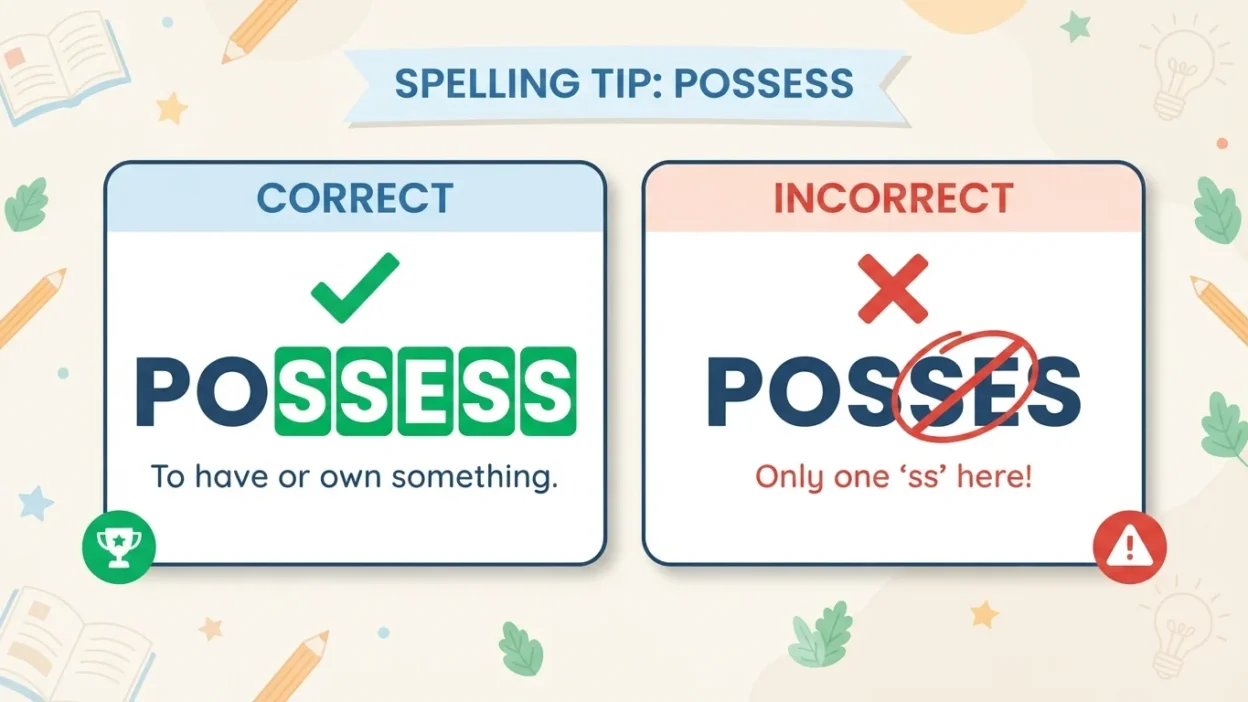
“Possess” is the correct spelling and means to own or have something. “Posses” is incorrect and should never be used in standard English writing.
Definition and Meaning
The word “possess” means to own, have, or control something. It can refer to physical ownership or qualities that a person has. For example, someone can possess a car, or they can possess skills and talents.
It is also used in emotional or descriptive contexts. A person may possess confidence, patience, or intelligence. This makes the word very useful in both formal and everyday communication.
On the other hand, “posses” is not a valid English word. It has no meaning in standard usage and appears only as a spelling mistake. Writers sometimes confuse it due to the repeated letters in “possess.”
Why People Confuse It
Many people confuse “possess” and “posses” because of how the word sounds. When spoken quickly, the double letters are not clearly noticeable, which leads to spelling errors.
Another reason is the presence of multiple “s” letters in the correct form. Writers often drop one “s” by mistake, especially when typing fast or without proofreading.
Lack of familiarity with spelling patterns also plays a role. Words with double consonants can be tricky, and without practice, it is easy to make errors. Once you learn the correct structure, the confusion becomes much easier to avoid.
First Word
“Possess” is the correct spelling and should always be used. It is a standard English verb and appears in both formal and informal writing.
You can use it to describe ownership, qualities, or control. For example, a person may possess knowledge, or a company may possess valuable assets.
It also appears in different forms such as “possessed” and “possessing.” These forms follow regular verb patterns, making the word flexible in different contexts. Using “possess” correctly improves clarity and professionalism in your writing.
Second Word
“Posses” is incorrect and should never be used in proper English. It does not appear in dictionaries and has no recognized meaning.
The mistake usually happens when one of the “s” letters is dropped from “possess.” This small error can make your writing look careless and confusing.
Even in informal communication, using “posses” is not acceptable. It is always better to double check your spelling and ensure you are using the correct form. Avoiding this mistake helps maintain accuracy in your writing.
Grammar Rules Explained
“Possess” is a regular verb, which means it follows standard grammar rules for tense and form. In present tense, you use “possess.” In past tense, it becomes “possessed,” and in continuous form, it becomes “possessing.”
The key rule to remember is the double “s” at the end of the base word. This spelling remains consistent even when adding endings like “ed” or “ing.”
Understanding this rule helps you use the word correctly in different sentences. It also prevents confusion when writing quickly or under pressure. Once you learn the pattern, it becomes natural to spell it correctly.
Pronunciation Guide
“Possess” is pronounced as puh zes. The stress falls on the second part of the word, which makes it sound smooth and clear.
The double “s” creates a strong “z” sound in the middle, which is important for correct pronunciation. This sound helps distinguish it from incorrect forms like “posses.”
Practicing pronunciation can improve both your speaking and writing skills. When you say the word correctly, it becomes easier to remember the correct spelling.
Comparison Table
| Word | Correct | Meaning | Usage |
|---|---|---|---|
| Possess | Yes | To own or have | Always use |
| Posses | No | Incorrect spelling | Never use |
This simple table clearly shows that “possess” is the only correct option.
When to Use Each
Use “possess” whenever you want to describe ownership, control, or qualities. It works in many contexts, including personal, academic, and professional writing.
For example, you can say someone possesses talent, or a company possesses resources. The word is flexible and widely accepted in all forms of English.
You should never use “posses” in any situation. It is not a valid word and will always be considered incorrect. Remembering this simple rule will help you avoid mistakes.
Examples
Here are real life examples using “possess” correctly:
- She possesses great leadership skills
- He possesses a strong sense of responsibility
- They possess valuable information
- The company possesses advanced technology
- She possesses natural talent
- He possesses deep knowledge
- The team possesses strong teamwork
- She possesses patience
- He possesses courage
- They possess unique abilities
These examples show how commonly the word is used in different contexts.
Common Sentences
You will often see “possess” used in everyday sentences. It appears in both spoken and written English across many situations.
Examples include describing someone’s abilities or what they own. It can also be used in formal writing when discussing qualities or resources.
Using the correct spelling ensures that your sentences are clear and easy to understand. It also helps you communicate more effectively in both personal and professional settings.
Real Life Usage
“Possess” is used in many areas of daily life. In education, teachers may describe students as possessing certain skills. In business, companies possess assets and resources.
In personal conversations, people often talk about possessing qualities like kindness or confidence. The word is also common in books and articles, especially when describing characters or ideas.
Because it is widely used, correct spelling is important. Even a small mistake can affect how your message is understood.
Formal vs Informal Use
“Possess” works well in both formal and informal writing. In formal contexts, it is used in reports, essays, and professional communication.
In informal settings, it appears in conversations, messages, and social media posts. The meaning remains the same across all contexts.
“Posses” is not acceptable in any form of writing. It should always be avoided. Using the correct spelling ensures your writing looks polished and reliable.
Common Mistakes
One of the most common mistakes is dropping one “s” and writing “posses.” This usually happens when typing quickly or not paying attention to detail.
Another mistake is misunderstanding how double consonants work in English. Words like “possess” require careful spelling, especially when adding endings.
To avoid these mistakes, it is important to practice and review your writing. Simple habits like proofreading can make a big difference in accuracy.
Mistakes to Avoid
Avoid using “posses” in any type of writing. It is always incorrect and can reduce the quality of your work.
Do not rely only on how the word sounds, as pronunciation can be misleading. Always check the correct spelling before using it.
It is also helpful to learn common patterns in English spelling. This will help you avoid similar mistakes with other words.
Memory Trick
A simple trick can help you remember the correct spelling. Think of “possess” as having extra “s” letters because it means to have or own something.
You can also remember that it has double “s” in the middle and at the end. This pattern makes it stand out from incorrect forms.
Practicing this trick regularly will help you recall the correct spelling quickly and easily.
American vs British English
There is no difference between American and British English for this word. Both use “possess” as the correct spelling.
The incorrect form “posses” is not accepted in any version of English. This makes it easy to remember because there are no regional variations.
Using the correct spelling ensures consistency in all types of writing.
Similar Words
There are many words in English that use double consonants, similar to “possess.” Examples include “address,” “success,” and “process.”
These words also require careful spelling to avoid mistakes. Learning them together can help you recognize patterns and improve your accuracy.
By practicing similar words, you can strengthen your overall spelling skills.
Synonyms and Alternatives
You can sometimes replace “possess” with other words depending on the context. Common alternatives include “own,” “have,” and “hold.”
Each synonym has a slightly different tone, so choose the one that best fits your sentence. However, “possess” often sounds more formal and descriptive.
Using synonyms can add variety to your writing while keeping the meaning clear.
Expert Tips
Experts recommend focusing on spelling patterns rather than memorizing individual words. This approach helps you understand how English works.
Reading regularly can also improve your spelling naturally. When you see words used correctly, they become easier to remember.
Finally, always proofread your work. A quick review can catch small mistakes and improve the overall quality of your writing.
Related Confusing Words
There are many similar spelling confusions in English. Examples include “address vs adress” and “success vs succes.”
These mistakes often involve missing or extra letters. Learning the correct forms helps you avoid repeating the same errors.
By paying attention to these patterns, you can become more confident in your writing.
Final Verdict
“Possess” is the correct spelling and should always be used. “Posses” is incorrect and must be avoided.
Understanding the correct form helps you write clearly and professionally. It also prevents confusion in communication.
Once you learn the pattern of double “s,” this mistake becomes easy to avoid.
FAQs
Is posses ever correct
No, it is always incorrect
What is the correct spelling
The correct spelling is possess
Why do people write posses
Because they drop one “s” by mistake
Can I use posses informally
No, it is incorrect in all contexts
What does possess mean
It means to own or have something
Are there similar words like possess
Yes, such as address and success
Conclusion
Understanding the difference between “possess” and “posses” is simple once you know the correct spelling. Small errors like this can affect the clarity and professionalism of your writing.
By practicing and applying basic spelling rules, you can avoid common mistakes and improve your communication skills. Always choose “possess” to ensure your writing is accurate and clear.
Remember This
Always use “possess” with double “s”
“Posses” is wrong and should never be used

Donald Andrew is a dedicated author at BiblyWord, passionate about sharing biblical teachings in a clear and inspiring way. He creates meaningful content that helps readers understand scripture, reflect on their faith, and apply God’s Word in daily life. His work supports spiritual growth, guidance, and a deeper connection with biblical wisdom.