Spelling mistakes can quietly damage your writing, especially when two words look almost identical. A very common confusion is between “hazard” and “hazzard.” Many people assume both are correct, but only one is accepted in standard English.
This mistake appears in essays, safety reports, and everyday writing. Since the word is often used in serious contexts like danger, risk, and warnings, using the wrong spelling can reduce clarity and professionalism. The good news is that this confusion is easy to fix once you understand the correct form and pattern.
Let’s explore everything in detail so you never make this mistake again.
Quick Answer
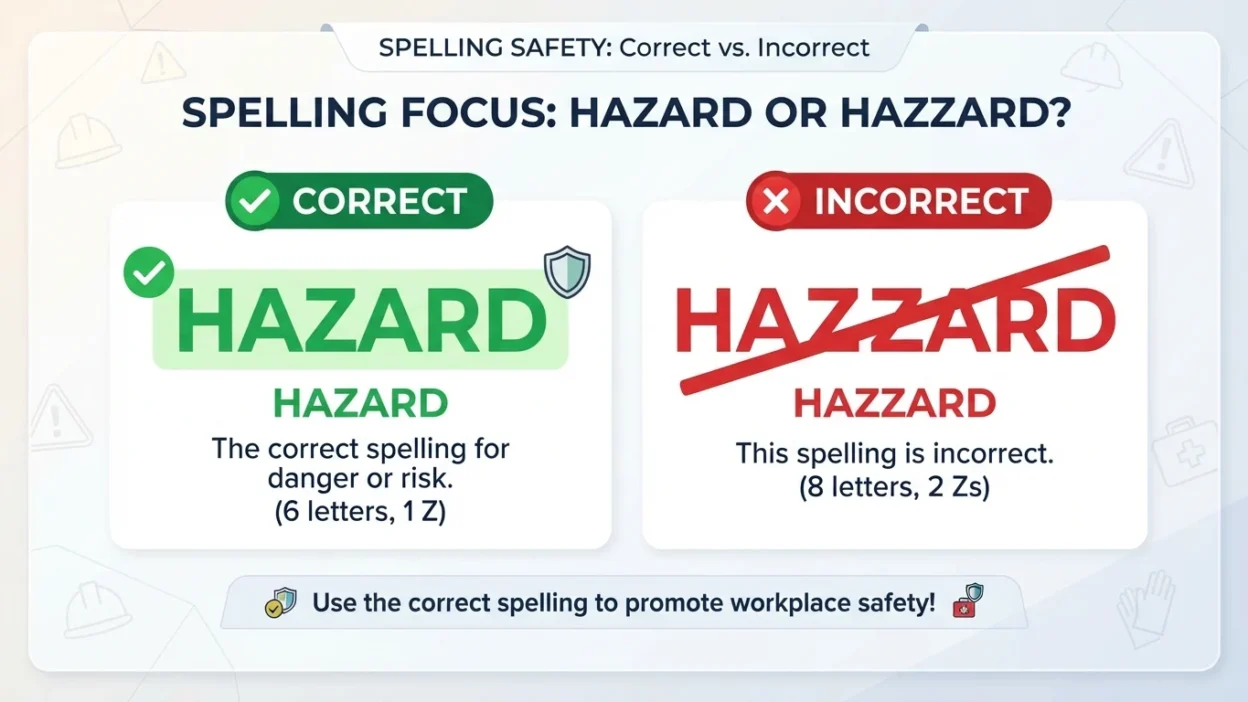
“Hazard” is the correct spelling and means danger or risk. “Hazzard” is incorrect and should never be used in standard English writing.
Definition and Meaning
The word “hazard” refers to a potential danger, risk, or something that can cause harm. It is widely used in safety, health, science, and everyday situations. A hazard can be physical, emotional, or environmental depending on the context.
For example, a wet floor is a hazard because it can cause someone to slip. Similarly, smoking is considered a health hazard because it can harm the body over time. The word helps people identify and avoid risky situations.
On the other hand, “hazzard” has no meaning in standard English. It is simply a misspelling of “hazard.” Even though it may look correct due to the double letter, it is not accepted in any formal or informal writing.
Understanding the meaning of “hazard” helps you use it properly and confidently in real life situations.
Why People Confuse It
Many people confuse “hazard” and “hazzard” because of spelling habits and pronunciation patterns. When spoken, the word may sound like it has a stronger middle sound, which leads some writers to add an extra letter.
Another reason is that English contains many words with double letters, such as “buzz” or “jazz.” This creates a false assumption that “hazard” should also follow the same pattern. However, this is not true in this case.
Typing quickly also increases the chances of adding an extra “z” without noticing. Many people do not proofread carefully, so the mistake goes unnoticed and becomes a habit over time.
Once you learn that “hazard” uses only one “z,” the confusion becomes easy to avoid.
First Word
“Hazzard” is incorrect and should never be used in proper English writing. It does not follow any recognized spelling rule and is not found in standard dictionaries.
Using “hazzard” can make your writing appear careless or unprofessional. This is especially important in situations like safety reports, academic work, or business communication, where accuracy matters a lot.
Many learners believe that adding an extra letter makes the word look stronger or more correct. However, English spelling does not work that way. Accuracy depends on standard rules and accepted forms.
To maintain clarity and professionalism, always avoid using “hazzard.” Even in informal writing, it is still considered a mistake and should be corrected.
Second Word
“Hazard” is the correct and widely accepted spelling. It is used in both everyday language and professional contexts to describe danger or risk.
You will often see this word in safety signs, warning labels, and official documents. For example, road signs may warn about hazards ahead, and workplaces often identify hazards to protect employees.
Using “hazard” correctly helps your writing sound clear and reliable. It also ensures that your message is understood without confusion.
Because this word is often linked to safety, correct spelling becomes even more important. A small mistake can change how seriously your message is taken.
Grammar Rules Explained
“Hazard” is a regular noun and can also be used as a verb in some contexts. As a noun, it describes a risk or danger. As a verb, it can mean to take a risk or suggest something uncertain.
For example, you might say there is a fire hazard in the building. You can also say someone hazarded a guess when they were unsure about something.
The spelling remains the same in all forms. There is no rule that allows doubling the “z” in this word. English spelling must follow established patterns, and “hazard” is fixed in its form.
Learning the correct structure helps you avoid unnecessary mistakes and improves your overall grammar skills.
Pronunciation Guide
“Hazard” is pronounced as ha zard. The word has two syllables, and the middle sound is soft, not strong enough to require doubling the letter.
The pronunciation can sometimes trick learners into thinking there should be two “z” letters. However, spelling and pronunciation do not always match perfectly in English.
Practicing the correct pronunciation can help reinforce the correct spelling. When you say it clearly and slowly, you will notice that only one “z” sound is needed.
This small awareness can make a big difference in avoiding spelling errors.
Comparison Table
| Word | Correct | Meaning | Usage |
|---|---|---|---|
| Hazard | Yes | Danger or risk | Always use |
| Hazzard | No | Incorrect spelling | Never use |
This simple table clearly shows which word is correct and which should be avoided.
When to Use Each
Use “hazard” whenever you are referring to danger, risk, or something that may cause harm. It can be used in physical, emotional, or abstract situations.
For example, a broken road can be a driving hazard. Stress can also be considered a mental health hazard. The word fits many contexts, making it very useful in daily communication.
“Hazzard” should not be used at all. It has no correct application in English. No matter the situation, always replace it with “hazard.”
Keeping this rule in mind will help you avoid mistakes in both writing and speaking.
Examples
Here are real life examples using “hazard” correctly:
- The wet floor is a hazard.
- Smoking is a health hazard.
- There is a fire hazard in the building.
- Driving fast can be a serious hazard.
- The chemical poses a hazard to workers.
- Ice on the road is a hazard.
- Loud noise can be a hearing hazard.
- Poor lighting is a safety hazard.
- The broken glass is a hazard.
- Pollution is an environmental hazard
These examples show how commonly the word is used in different situations.
Common Sentences
You may often hear or read sentences like:
- This area is a hazard zone
- It can become a safety hazard
- The risk is clearly a hazard
Using the correct spelling ensures your sentences are easy to understand and professional.
Avoid using incorrect forms because they can confuse readers and weaken your message.
Real Life Usage
“Hazard” is used in many real life situations, especially in safety and risk management. It appears in workplaces, schools, roads, and public places.
For example, construction sites often display hazard warnings to protect workers. Hospitals also identify health hazards to ensure patient safety. Even in daily life, people use the word to describe risky situations.
Because it is connected to safety and awareness, using the correct spelling is very important. It ensures your message is taken seriously and understood clearly.
Formal vs Informal Use
“Hazard” works in both formal and informal writing. In formal contexts, it is used in reports, research papers, and official warnings. In informal settings, it appears in conversations and everyday writing.
The meaning remains the same in all situations. This makes it a flexible and useful word.
“Hazzard” is incorrect in both formal and informal use. It should never appear in any type of writing.
Maintaining correct spelling helps you communicate effectively in every situation.
Common Mistakes
People often make these mistakes:
- Adding an extra “z” and writing “hazzard”
- Assuming the spelling based on sound
- Typing quickly without checking
To avoid these mistakes, focus on correct spelling and take time to proofread your work. Practice writing the word correctly until it becomes natural.
Small improvements like this can greatly enhance your writing skills.
Mistakes to Avoid
Avoid using “hazzard” in any type of writing. This includes emails, essays, reports, and social media posts.
Do not rely only on pronunciation when spelling words. English often includes silent or soft sounds that do not match spelling exactly.
Always double check your work before sharing it. This simple habit can prevent many common errors and improve your confidence.
Memory Trick
A simple way to remember is this:
Hazard has one z, like risk has one k
Both words are short and simple. This connection can help you recall the correct spelling quickly.
Repeating this trick a few times will make it easy to remember.
American vs British English
There is no difference between American and British English for this word. Both use “hazard” as the correct spelling.
This makes it easier to learn because you do not need to remember different versions. The rule is the same everywhere.
“Hazzard” is incorrect in all forms of English and should always be avoided.
Similar Words
Here are similar words related to risk and danger:
- Danger
- Risk
- Threat
- Peril
These words can sometimes replace “hazard” depending on the context, but each has a slightly different meaning.
Learning these alternatives can help improve your vocabulary.
Synonyms and Alternatives
Depending on the situation, you can use:
- Danger for general risk
- Threat for possible harm
- Peril for serious danger
- Risk for chance of loss
Even with these options, “hazard” remains a strong and commonly used word in many contexts.
Expert Tips
To master spelling:
- Practice commonly used words
- Pay attention to single and double letters
- Read regularly to see correct usage
Experts suggest focusing on patterns rather than guessing. This helps build long term accuracy in writing.
Consistent practice will make correct spelling automatic.
Related Confusing Words
Other words that cause similar confusion include:
- Occur vs ocur
- Address vs adress
- Success vs succes
These mistakes often involve missing or extra letters. Learning correct forms helps you avoid repeated errors.
Final Verdict
“Hazard” is the correct spelling and should always be used. “Hazzard” is incorrect and must be avoided.
By remembering that the word uses only one “z,” you can easily prevent this common mistake. Correct spelling improves clarity, professionalism, and confidence in your writing.
FAQs
Is hazzard ever correct
No, it is always incorrect
What is the correct spelling
The correct spelling is hazard
Why do people write hazzard
Because of pronunciation confusion and double letter habits
Can I use hazzard informally
No, it is incorrect in all contexts
What does hazard mean
It means danger or risk
Are there similar words like hazard
Yes, such as danger, risk, and threat
Conclusion
Understanding the difference between “hazard” and “hazzard” is simple once you know the correct spelling. While the mistake is common, it is easy to fix with a little practice and attention.
Using “hazard” correctly ensures your writing is clear and professional. Whether you are writing a report or a simple message, small details like this matter a lot.
Remember This
Always use “hazard” with one z
“Hazzard” is wrong and should never be used

Kevin Brian is a passionate author at BiblyWord, dedicated to sharing the message of the Bible through thoughtful and inspiring content. He focuses on creating clear and meaningful writings that help readers understand scripture, strengthen their faith, and find guidance in everyday life through God’s Word.