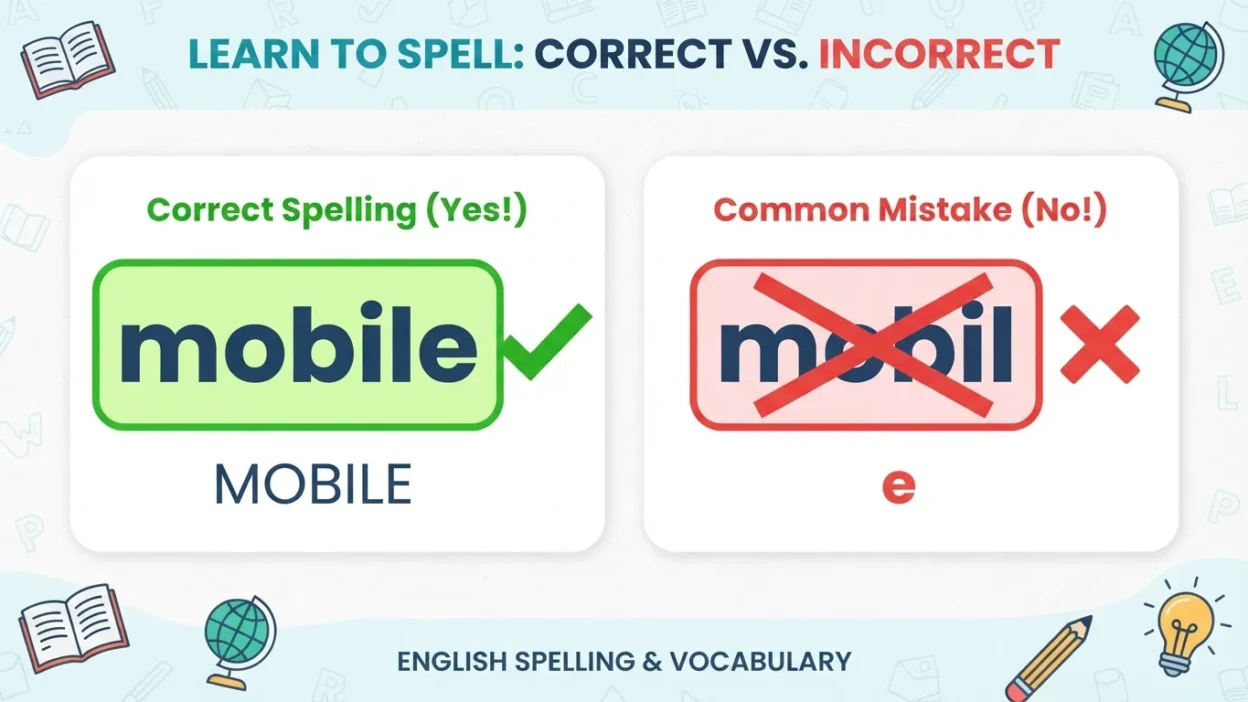
Spelling errors can easily affect the clarity of your writing, especially when two words look almost identical. One common confusion is between “mobil” and “mobile.” While both may seem acceptable at first glance, only one is correct in standard English.
This mistake often appears in text messages, online searches, and even business writing. Since the word is widely used in technology, communication, and everyday life, using the wrong spelling can make your writing look unprofessional. The good news is that this confusion is very easy to fix once you understand the correct form and usage.
Let’s explore the difference in a clear and practical way so you can use the right word with confidence.
Quick Answer
“Mobile” is the correct spelling and means something that can move or a portable phone. “Mobil” is incorrect in general English usage and should not be used.
Definition and Meaning
The word “mobile” refers to something that can move easily or is portable. It is commonly used to describe phones, devices, and even people or systems that are flexible and not fixed in one place.
In daily life, “mobile” is most often used for mobile phones, which are portable communication devices. It can also describe something that is capable of movement, such as a mobile unit or mobile workforce.
“Mobil” is not a correct English spelling in this context. It may appear as a brand name in some cases, but it is not a standard word for general writing.
Understanding this meaning helps you use the correct word in all situations.
Why People Confuse It
Many people confuse “mobil” and “mobile” because of pronunciation and typing habits. When spoken quickly, the final “e” in “mobile” may not be clearly heard, leading to the incorrect shorter form.
Another reason is fast typing on phones or keyboards. People often drop the last letter without realizing it. In some cases, exposure to brand names like Mobil can also create confusion.
Spelling based on sound rather than structure is a common issue in English. Once you recognize the correct spelling pattern, the confusion becomes easy to avoid.
First Word
“Mobil” is generally incorrect in standard English writing. It is not accepted as the correct spelling for the word that means portable or able to move.
The only time you may see “Mobil” is as part of a brand name, such as an oil company. Outside of that specific use, it should not be used in sentences.
Using “mobil” in everyday writing can make your work look careless and unprofessional. It may also confuse readers who expect correct spelling.
To maintain clarity and accuracy, always avoid using “mobil” unless referring to a proper name.
Second Word
“Mobile” is the correct spelling and widely used in English. It applies to many contexts, including technology, communication, and movement.
It is commonly used for mobile phones, mobile apps, and mobile services. The word also describes anything that is not fixed and can move or adapt easily.
Because of its broad usage, “mobile” is an important word in modern communication. Using it correctly ensures your writing is clear and professional.
Whether you are writing formally or casually, “mobile” is the correct and reliable choice.
Grammar Rules Explained
“Mobile” functions mainly as an adjective and a noun. As an adjective, it describes something that can move. As a noun, it often refers to a mobile phone.
The spelling includes a silent “e” at the end, which is common in English words. This silent letter helps form the correct structure of the word.
Dropping the final “e” changes the spelling and makes it incorrect. English often requires full word forms to maintain meaning and accuracy.
Understanding these grammar basics helps you use “mobile” correctly in sentences.
Pronunciation Guide
“Mobile” is pronounced as “moh bile” or sometimes “moh beel” depending on accent. Both pronunciations are accepted in English.
The last letter “e” is silent, which is why some people mistakenly remove it in spelling. However, even though it is not pronounced strongly, it must remain in the written form.
Practicing the pronunciation can help you remember that the full spelling includes the final “e.”
This connection between sound and spelling improves accuracy.
Comparison Table
| Word | Correct | Meaning | Usage |
|---|---|---|---|
| Mobile | Yes | Portable or able to move | Always use |
| Mobil | No | Incorrect in general writing | Avoid |
This table clearly shows that “mobile” is the correct option.
When to Use Each
Use “mobile” when referring to something portable or able to move. It is especially common when talking about phones, apps, or flexible systems.
You can use it in both formal and informal contexts without any issue. The word fits naturally in many types of sentences and situations.
Do not use “mobil” unless you are referring to a specific brand name. In general writing, it is considered incorrect.
Keeping this rule in mind will help you avoid confusion.
Examples
Here are real life examples using “mobile” correctly:
- I bought a new mobile phone.
- The app works well on mobile devices.
- She has a mobile lifestyle.
- The company offers mobile services.
- He checked his mobile during the meeting.
- The team uses mobile tools.
- Mobile banking is very convenient.
- The signal is weak on my mobile.
- They created a mobile application.
- The device is fully mobile
These examples show how commonly the word is used.
Common Sentences
You will often hear sentences like:
- I forgot my mobile at home
- This site is mobile friendly
- Mobile usage is increasing
Using the correct spelling ensures your sentences sound natural and professional.
Real Life Usage
“Mobile” is widely used in everyday life. It appears in technology, business, education, and communication.
People use it to describe phones, internet access, and flexible work systems. It is also used in services like mobile banking and mobile learning.
Because it is such a common word, spelling it correctly is very important. A small mistake can affect how your message is understood.
Formal vs Informal Use
“Mobile” works in both formal and informal writing. It is suitable for business reports, academic work, and casual messages.
In formal contexts, it helps maintain professionalism and clarity. In informal contexts, it feels natural and easy to use.
“Mobil” does not fit in either context and should be avoided.
Using the correct form improves your communication.
Common Mistakes
People often make mistakes like dropping the final “e” and writing “mobil.” This usually happens بسبب fast typing or relying on pronunciation.
Another mistake is assuming shorter words are acceptable. English spelling often requires full forms to remain correct.
To avoid these errors, focus on writing carefully and reviewing your work. Practicing correct spelling regularly can also help.
Mistakes to Avoid
Avoid using “mobil” in emails, assignments, or professional writing. It can reduce the quality of your work and create confusion.
Do not rely only on how the word sounds. Always follow correct spelling rules.
Taking a moment to proofread your writing can prevent these simple mistakes.
Memory Trick
A simple way to remember the correct spelling is to think of “mobile” as “move plus able.” This reminds you that the word describes something capable of movement.
The final “e” completes the word and should not be removed. Visualizing the full word can help you recall it easily.
Practicing this trick will make the correct spelling stick in your memory.
American vs British English
There is no difference between American and British English for this word. Both use “mobile” as the correct spelling.
The pronunciation may vary slightly, but the spelling remains the same. This makes it easier to remember across different regions.
“Mobil” is not correct in either version of English.
Similar Words
There are several words similar to “mobile” that follow patterns with silent letters. Examples include “table,” “simple,” and “stable.”
These words also keep the final “e” even though it is not strongly pronounced. Learning these patterns can improve your spelling skills.
Recognizing these similarities helps reinforce correct usage.
Synonyms and Alternatives
You can use words like “portable,” “movable,” or “flexible” as alternatives to “mobile.” These words can fit in different contexts depending on your sentence.
However, “mobile” remains the most common and widely understood term, especially in technology and communication.
Choosing the right synonym depends on your purpose, but correct spelling is always important.
Expert Tips
To improve your spelling, focus on learning complete word forms rather than relying on sound. This helps avoid common mistakes.
Reading regularly and practicing writing can strengthen your memory of correct spellings. Using spell check tools can also support accuracy.
Experts suggest reviewing your work carefully to catch small errors before finalizing it.
Related Confusing Words
Other similar spelling confusions include “simple” and “simpl,” “table” and “tabl,” or “little” and “litle.”
In each case, the correct word includes all necessary letters. Dropping letters leads to incorrect forms.
Learning these patterns helps you avoid multiple mistakes at once.
Final Verdict
“Mobile” is the correct spelling and should always be used in writing. “Mobil” is incorrect in general usage and must be avoided.
By remembering the full word and practicing correct spelling, you can easily avoid this mistake and improve your writing.
FAQs
Is mobil ever correct
It is only correct as a brand name, not in general writing
What is the correct spelling
The correct spelling is mobile
Why do people write mobil
Because they drop the silent final letter
Can I use mobil informally
No, it is still incorrect
What does mobile mean
It means something that can move or is portable
Are there similar words like mobile
Yes, such as portable and flexible
Conclusion
Understanding the difference between “mobil” and “mobile” is simple once you know the correct spelling. While “mobil” may appear in some contexts, it is not a valid general English word.
Using “mobile” correctly improves clarity and professionalism in your writing. Whether you are writing an email, message, or report, paying attention to small details makes a big difference.
Remember This
Always use “mobile” with the final “e”
“Mobil” is incorrect in general writing

Carol Amanda is a passionate writer and faith-driven author dedicated to sharing the wisdom of the Bible. At BiblyWord, she creates inspiring and meaningful content that encourages spiritual growth and daily reflection. Her work focuses on helping readers connect with God’s Word and find guidance, peace, and strength in their faith journey.