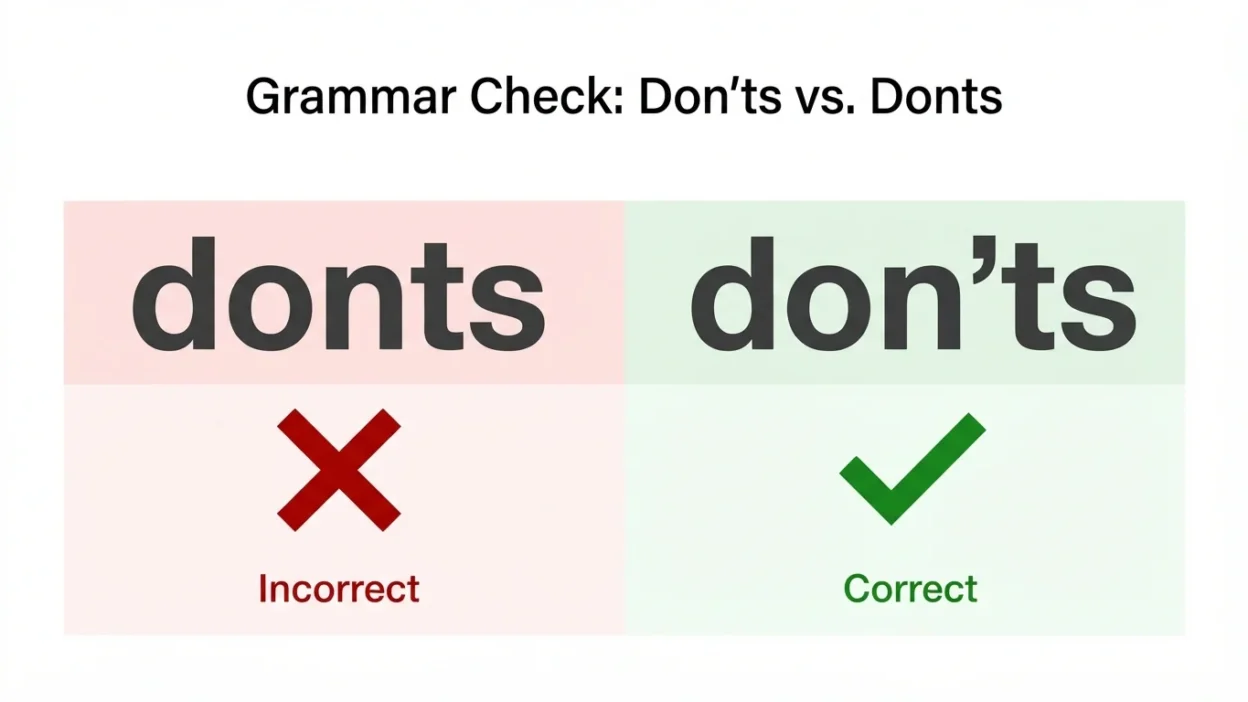
Understanding small punctuation marks can make a big difference in your writing. One common confusion people face is choosing between “donts” and “don’ts.” At first glance, both may seem acceptable, especially in casual writing or social media. However, only one form is grammatically correct in standard English.
Many learners and even native speakers skip apostrophes when typing quickly. This leads to mistakes that can affect clarity and professionalism. If you want your writing to look polished and correct, knowing the right form is essential. Let’s break it down in a simple and practical way so you can use it with confidence.
Quick Answer
The correct form is “don’ts” with an apostrophe. It is the plural of “don’t.” The word “donts” without an apostrophe is incorrect in standard English and should be avoided in formal and professional writing.
Why People Confuse It
Many people confuse “donts” and “don’ts” because they already see “don’t” as a contraction. When they try to make it plural, they hesitate about whether to keep or remove the apostrophe. This confusion grows when informal writing ignores grammar rules.
Another reason is fast typing. People often skip punctuation, especially on phones. Over time, incorrect forms like “donts” become common in casual spaces, making them look acceptable even though they are not.
Also, learners may think apostrophes are only used for possession or contractions. They may not realize that apostrophes can also appear in plurals of certain shortened forms. This misunderstanding leads to incorrect spelling.
First Word
The word “donts” is not considered correct in standard English. It appears often in informal writing, but it does not follow proper grammar rules. When you use it in formal content, it may reduce credibility.
Writers sometimes use “donts” to avoid punctuation, especially in headlines or quick notes. While this may be acceptable in very casual contexts, it is not suitable for academic or professional writing.
Using “donts” can confuse readers. They may pause to understand what you mean. Clear writing should avoid such confusion, so it is better to stick with the correct form.
Second Word
“Don’ts” is the correct plural form of “don’t.” The apostrophe remains because the word comes from a contraction. This is the accepted spelling in dictionaries and grammar guides.
It clearly shows that the word is derived from “do not.” Keeping the apostrophe helps maintain the original structure and meaning. It also improves readability.
Using “don’ts” in your writing shows attention to detail. It signals that you understand grammar rules and apply them correctly in real situations.
Definition and Meaning
“Don’ts” refers to actions or behaviors that should be avoided. It is commonly used in advice, rules, and guidelines. For example, you might see “dos and don’ts” in instruction lists.
The word comes from “do not,” which expresses prohibition. When pluralized, it refers to multiple things you should not do. This makes it very useful in teaching and communication.
Understanding the meaning helps you use the word naturally. It is often paired with “dos,” which refers to recommended actions.
Pronunciation Guide
“Don’ts” is pronounced as donts, with a clear stop before the final “s.” The apostrophe does not change how it sounds, but it changes how it is written.
When speaking, most people pronounce it quickly, almost like one smooth word. However, in writing, the apostrophe is important for correctness.
Practicing pronunciation alongside spelling helps reinforce proper usage. It ensures both your spoken and written English stay aligned.
Grammar Rules Explained
The key rule is that contractions keep their apostrophes even when pluralized. Since “don’t” is a contraction of “do not,” its plural becomes “don’ts.”
This is different from regular nouns. For example, “cat” becomes “cats” without an apostrophe. But contractions follow a slightly different rule.
Understanding this rule helps you avoid similar mistakes with other contractions. It builds a stronger foundation in grammar.
Comparison Table
| Form | Correct | Reason |
|---|---|---|
| donts | No | Missing apostrophe |
| don’ts | Yes | Correct plural of “don’t” |
This table shows the clear difference. The correct version keeps the apostrophe because of its origin.
When to Use Each
Use “don’ts” when listing things to avoid. It is perfect for guides, rules, and instructions. For example, workplace guidelines often include “dos and don’ts.”
Avoid using “donts” in formal writing. It may be seen as careless or incorrect. Even in casual writing, it is better to use the correct form.
Choosing the right form depends on your audience. If you want clarity and professionalism, always use “don’ts.”
Real Life Usage
In everyday life, you will see “don’ts” in advice articles, school rules, and professional documents. It is a common word used to guide behavior.
For example, a teacher might share classroom don’ts. A company might list workplace don’ts. These examples show how widely the word is used.
Using it correctly ensures your message is clear. It also helps your audience understand your intent without confusion.
Formal vs Informal Use
In formal writing, “don’ts” is always the correct choice. It follows grammar rules and maintains professionalism.
In informal settings, some people may write “donts.” However, this is not recommended if you want to build strong writing habits.
Even in casual writing, using the correct form improves clarity. It also helps you develop consistent grammar skills over time.
Synonyms and Alternatives
Instead of “don’ts,” you can use phrases like:
- Things to avoid
- Rules to follow
- Prohibited actions
- Mistakes to avoid
These alternatives can add variety to your writing. They are useful when you want to avoid repetition.
Choosing the right synonym depends on your tone. Some options sound more formal, while others are more casual.
Common Sentences
Here are some natural sentences using “don’ts”:
- Learn the basic dos and don’ts of communication
- These are the don’ts of social media etiquette
- Follow the safety don’ts carefully
- Parenting comes with many dos and don’ts
These examples show how the word fits into everyday language. They also help you practice correct usage.
Examples
Here are at least ten real examples:
- Office don’ts include arriving late
- Travel don’ts can ruin your trip
- Health don’ts should be taken seriously
- Interview don’ts include poor preparation
- Study don’ts affect performance
- Driving don’ts keep roads safe
- Writing don’ts reduce clarity
- Fitness don’ts can cause injury
- Social don’ts help avoid embarrassment
- Money don’ts prevent bad decisions
Each example shows how the word applies to different areas of life.
Common Mistakes
One major mistake is removing the apostrophe. Writing “donts” may seem faster, but it is incorrect.
Another mistake is overthinking the rule. Some people avoid using the word entirely because they are unsure.
The best approach is simple. Remember the origin of the word and keep the apostrophe.
Mistakes to Avoid
Avoid using “donts” in professional emails or academic writing. It can make your work look careless.
Do not mix both forms in the same document. Consistency is important for clarity.
Also, avoid ignoring punctuation rules. Small details like apostrophes can make a big difference.
Memory Trick
Think of the original phrase “do not.” The apostrophe in “don’t” replaces the missing letter. When you make it plural, keep that apostrophe.
A simple trick is to remember “dos and don’ts.” You often see them together, and the correct form becomes easier to recall.
Repeating this phrase helps fix it in your memory.
American vs British English
Both American and British English use “don’ts” as the correct form. There is no difference in this case.
This makes it easier for learners. You do not need to worry about regional variations for this word.
No matter where you write, “don’ts” is the accepted standard.
Similar Words
Other confusing words include:
- Its and it’s
- Your and you’re
- Whose and who’s
These words also involve apostrophes and contractions. Learning one rule helps you understand others.
Practicing these pairs improves overall grammar skills.
Related Confusing Words
Words like “dos” and “do’s” can also cause confusion. In modern usage, “dos” is often written without an apostrophe, while “don’ts” keeps it.
This difference can feel tricky. However, remembering common usage patterns helps.
Exposure to correct writing will strengthen your understanding over time.
Expert Tips
Always proofread your writing. Small errors like missing apostrophes are easy to fix.
Use grammar tools if needed. They can help catch mistakes quickly.
Most importantly, practice regularly. The more you write correctly, the more natural it becomes.
Final Verdict
“Don’ts” is the correct and accepted form. It follows grammar rules and maintains clarity in writing. The apostrophe is essential because the word comes from a contraction.
“Donts” is incorrect and should be avoided, especially in formal contexts. While it may appear in casual writing, it does not meet standard grammar expectations.
FAQs
Is donts ever correct
No, “donts” is not correct in standard English writing.
Why does don’ts have an apostrophe
Because it comes from the contraction “don’t,” which includes an apostrophe.
Can I use donts in casual writing
You can, but it is not recommended if you want correct grammar.
What does don’ts mean
It refers to things you should not do.
Is there a difference in British English
No, both American and British English use “don’ts.”
What is the plural of don’t
The plural form is “don’ts.”
Conclusion
Small grammar details can shape how your writing is perceived. Choosing between “donts” and “don’ts” may seem minor, but it reflects your attention to correctness. Using the right form helps your message stay clear and professional.
By understanding the rule and practicing it in real situations, you can avoid this common mistake. Over time, correct usage becomes natural, and your writing improves without extra effort.
Remember This
Always write “don’ts” with an apostrophe because it comes from “do not.” Never use “donts” in proper English writing.

Kevin Brian is a passionate author at BiblyWord, dedicated to sharing the message of the Bible through thoughtful and inspiring content. He focuses on creating clear and meaningful writings that help readers understand scripture, strengthen their faith, and find guidance in everyday life through God’s Word.