Have you ever paused mid sentence and wondered whether to write breeched or breached? They sound almost the same, but their meanings are very different. This is why many writers mix them up.
In English, small spelling changes can completely change meaning. Using the wrong word can confuse your reader, especially in formal or professional writing. So it is important to understand both clearly.
Let’s break down breeched vs breached in a simple and practical way.
Quick Answer
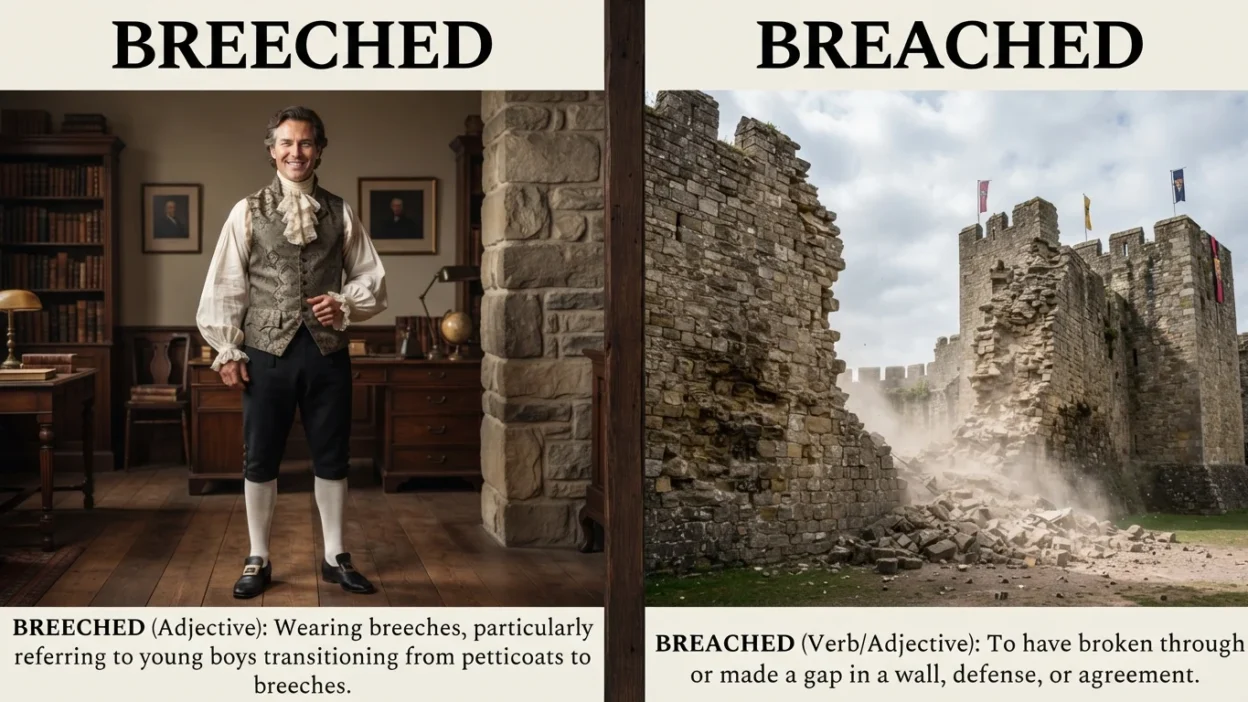
Breached is the most commonly used word. It means broken, violated, or failed to keep something like a rule or agreement.
Breeched is rare and refers to putting someone into breeches or related to clothing.
Why People Confuse It
These words sound almost identical when spoken. That makes it easy to choose the wrong spelling.
Common reasons:
- Same pronunciation
- Similar spelling
- Lack of familiarity with “breeched”
But their meanings are not the same at all.
First Word: Breeched
Breeched comes from the word breeches, which are a type of clothing. Historically, it also meant the moment when a young boy first wore trousers instead of gowns.
It is:
- Rare in modern English
- Mostly found in historical contexts
- Related to clothing or dress
Example:
The child was breeched at a young age.
This word is not commonly used in everyday writing.
Second Word: Breached
Breached is the correct and widely used word. It means something has been broken, violated, or not followed.
It is commonly used in:
- Law and contracts
- Security and data
- Rules and agreements
Examples:
- The company breached the contract.
- Their privacy was breached.
- He breached the agreement.
This is the word you will use most of the time.
Comparison Table
| Feature | Breeched | Breached |
|---|---|---|
| Usage | Rare, historical | Common and modern |
| Meaning | Related to clothing | Broken or violated |
| Context | Old traditions | Legal, business, daily use |
| Popularity | Very low | Very high |
| Recommendation | Avoid in most writing | Use in almost all cases |
When to Use Each
Use breached when:
- Talking about broken rules or agreements
- Writing about security or data issues
- Discussing legal or business topics
Use breeched only when:
- Referring to historical clothing or traditions
In modern writing, you will almost always need breached.
Examples
Correct examples with breached:
- The company breached the contract terms.
- Security was breached during the attack.
- He breached the trust of his team.
- The agreement was breached last week.
- Their data was breached by hackers.
- She breached the rules of the game.
- The wall was breached during the battle.
- They breached the conditions of the deal.
- The system was breached overnight.
- He breached the code of conduct.
- The company faced action after it breached the law.
Rare example with breeched:
- The boy was breeched in a traditional ceremony.
Common Mistakes
Writers often:
- Use breeched instead of breached
- Assume both words mean the same
- Choose spelling based on sound
Always check the meaning before using the word.
Memory Trick
Think of this:
Breached has “reach” inside it like breaking limits or crossing a line
So when something is broken or violated, use breached.
American vs British English
Both American and British English use breached in the same way.
Breeched is rare in both and mostly historical.
Similar Words
Here are related words:
- Broken
- Violated
- Infringed
- Breach
All relate to breaking rules or agreements.
Final Verdict
The difference is clear. Breached is the correct and commonly used word.
Breeched is rare and mostly historical.
For modern writing, always choose breached.
FAQs
Is breeched a real word
Yes, but it is rare and used in historical or clothing contexts.
What does breached mean
It means something has been broken or violated.
Which should I use in business writing
Always use breached.
Are breeched and breached interchangeable
No, they have completely different meanings.
Why is breached more common
Because it applies to many modern contexts like law and security.
Can breeched be used today
Only in very specific historical or descriptive contexts.
Conclusion
Understanding breeched vs breached helps you avoid confusion and write with clarity. Even though they sound the same, their meanings are very different.
In almost every modern situation, breached is the correct choice. By using it properly, your writing becomes more accurate and professional.
Remember This
Use breached for broken rules or agreements.
Avoid breeched unless referring to rare historical context.

Carol Amanda is a passionate writer and faith-driven author dedicated to sharing the wisdom of the Bible. At BiblyWord, she creates inspiring and meaningful content that encourages spiritual growth and daily reflection. Her work focuses on helping readers connect with God’s Word and find guidance, peace, and strength in their faith journey.