If you’ve ever typed agast and wondered why it looks wrong, you’re not alone. Many people confuse agast vs aghast because they sound similar and are rarely used in everyday conversation. This confusion often leads to spelling mistakes in writing, especially in formal or descriptive sentences.
Understanding the correct word matters more than you think. Using the wrong spelling can make your writing look unpolished or unclear. In this guide, you’ll learn the real difference between these two terms, how to use the correct one, and simple ways to remember it forever.
Quick Answer
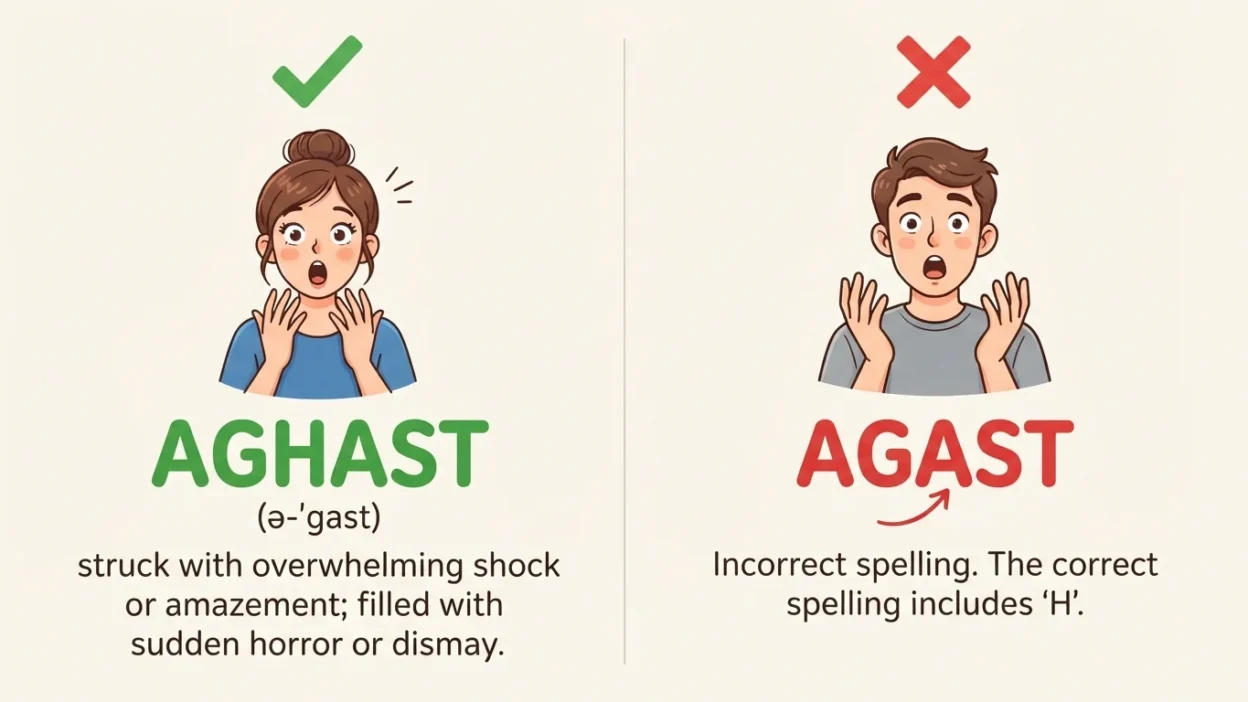
Aghast is the correct word. It means feeling shocked or horrified. Agast is incorrect and not a real English word. If you want to express surprise or disbelief, always use aghast. The confusion happens because of pronunciation and unfamiliar spelling patterns.
Why People Confuse It
Many people confuse agast vs aghast because they sound almost identical when spoken. The silent “h” in aghast makes it easy to overlook, especially for learners or fast typists. When words sound the same, people often guess the spelling, which leads to errors.
Another reason is exposure. The word aghast is not commonly used in daily conversation, so people are less familiar with its correct spelling. When they try to write it, they rely on how it sounds rather than how it is actually spelled.
Also, English has many irregular spellings. Words like ghost, hour, and honest all have silent letters. This inconsistency makes it harder for learners to trust their instincts, which is why mistakes like “agast” happen frequently.
First Word
The word agast is not a valid English word. It does not appear in standard dictionaries and has no recognized meaning. If you see it written somewhere, it is almost certainly a spelling mistake.
People often write “agast” when they mean aghast, especially in informal writing or online comments. Since it looks simpler, it feels correct to some writers, but it is not accepted in proper English.
Using “agast” in essays, emails, or professional writing can reduce credibility. Always double check and replace it with the correct spelling to maintain clarity and accuracy.
Second Word
The word aghast is the correct and meaningful term. It is an adjective used to describe a feeling of shock, horror, or disbelief. It is often used in emotional or dramatic contexts.
For example, you might feel aghast when hearing unexpected bad news or witnessing something surprising. The word adds strong emotional tone to a sentence.
Despite its uncommon use, aghast is powerful when used correctly. It helps express deep reactions that simpler words like “surprised” cannot fully capture.
Definition and Meaning
The word aghast means feeling shocked, horrified, or filled with disbelief. It is often used when someone reacts strongly to something unexpected or disturbing.
For example, if someone hears shocking news, they may stand aghast, unable to respond immediately. The word captures a moment of emotional pause.
Since “agast” has no meaning, it cannot be used in any context. Learning the definition of aghast helps you understand when and how to use it properly.
Pronunciation Guide
The correct pronunciation of aghast is /əˈɡæst/. The “h” is silent, which is why many people miss it when spelling the word.
It has two syllables, and the stress falls on the second part. Saying it slowly can help you connect the sound with the correct spelling.
Practicing pronunciation regularly can improve both speaking and writing accuracy. When you know how a word sounds and looks, you are less likely to make mistakes.
Grammar Rules Explained
Aghast is an adjective, which means it describes a feeling or state. It is usually used after verbs like “was,” “felt,” or “looked.”
For example, you can say “She was aghast at the news.” This structure helps clearly express the emotional reaction.
Since “agast” is not a real word, it has no grammatical role. Always use aghast correctly to maintain proper sentence structure.
Comparison Table
| Feature | Agast | Aghast |
|---|---|---|
| Correct spelling | No | Yes |
| Meaning | None | Shocked or horrified |
| Dictionary entry | No | Yes |
| Usage | Incorrect | Correct |
| Part of speech | None | Adjective |
When to Use Each
You should always use aghast when describing shock or disbelief. It works well in storytelling, formal writing, and expressive sentences.
Avoid using “agast” completely. It does not serve any purpose in English and should be treated as a spelling error.
If you are unsure, remember that only aghast is accepted. This simple rule will help you avoid confusion.
Examples
Here are real life examples using aghast correctly:
- She was aghast at the sudden news.
- He looked aghast when he saw the damage.
- They stood aghast in silence.
- I was aghast at his behavior.
- The teacher was aghast at the mistake.
- We were aghast by the results.
- She felt aghast after hearing the story.
- He remained aghast for a moment.
- Everyone was aghast at the outcome.
- I stood aghast, unable to speak.
Real Life Usage
In real life, aghast is often used in storytelling or emotional descriptions. Writers use it to create strong reactions in readers.
You might see it in novels, news reports, or speeches. It helps convey a deeper sense of shock than simple words.
Using it correctly can make your writing more expressive and engaging, especially when describing reactions.
Formal vs Informal Use
Aghast is more common in formal or literary writing than casual conversation. It adds a dramatic tone that may feel too strong for everyday speech.
In informal settings, people often use simpler words like “shocked” or “surprised.” However, using aghast can still be appropriate when you want emphasis.
Avoid using incorrect forms like “agast” in any context, especially formal writing.
Synonyms and Alternatives
Some alternatives to aghast include:
- Shocked
- Horrified
- Stunned
- Amazed
- Speechless
These words can be used depending on the level of emotion you want to express.
Common Sentences
Here are some common sentence patterns:
- I was aghast at the news.
- She looked aghast.
- They were aghast by what happened.
These structures are simple and easy to follow.
Common Mistakes
The most common mistake is writing agast instead of aghast. This usually happens because people ignore the silent “h”.
Another mistake is misusing the word in the wrong context. It should be used for strong emotional reactions, not mild surprise.
Avoid these errors by practicing correct spelling and usage.
Mistakes to Avoid
Do not drop the “h” in aghast. This is the key difference between correct and incorrect spelling.
Avoid guessing spellings based on sound alone. English often includes silent letters.
Always double check unfamiliar words before using them.
Memory Trick
A simple trick is this:
Aghast has “ghost” inside it, and ghosts can make you feel shocked.
This helps you remember the silent “h” and the meaning together.
American vs British English
The word aghast is spelled the same in both American and British English. There is no variation between the two.
This makes it easier to remember compared to other words with different regional spellings.
“Agast” is incorrect in all forms of English.
Similar Words
Words similar in confusion include:
- Ghost vs gost
- Honest vs onest
- Hour vs our
These all involve silent letters.
Related Confusing Words
Other confusing pairs include:
- Their vs there vs they’re
- Occurring vs occuring
- Putting vs puting
Learning these improves overall writing skills.
Expert Tips
Read more to become familiar with uncommon words like aghast. Exposure helps reinforce correct spelling.
Use spell check tools, but also build your own understanding of words.
Practice writing sentences using new vocabulary to gain confidence.
Final Verdict
The correct word is aghast, and it means feeling shocked or horrified. The spelling agast is incorrect and should never be used.
Once you remember the silent “h”, the confusion becomes easy to avoid.
Using the correct word improves both clarity and professionalism in your writing.
FAQs
Is agast a real word
No, agast is not a valid English word.
What does aghast mean
It means feeling shocked or horrified.
Why is there a silent h in aghast
English includes many silent letters, and this is one example.
Can I use aghast in daily conversation
Yes, but it is more common in formal or expressive writing.
What is a synonym for aghast
Shocked or horrified.
Conclusion
Understanding agast vs aghast is simple once you know the truth. Only aghast is correct, and it carries a strong emotional meaning. The confusion comes from pronunciation and unfamiliar spelling, but with practice, it becomes easy to remember.
By using the correct spelling and applying the tips in this guide, you can improve your writing and avoid common mistakes. Clear communication always starts with correct word usage.
Remember This
Aghast is correct
Agast is wrong
The silent h makes all the difference

Donald Andrew is a dedicated author at BiblyWord, passionate about sharing biblical teachings in a clear and inspiring way. He creates meaningful content that helps readers understand scripture, reflect on their faith, and apply God’s Word in daily life. His work supports spiritual growth, guidance, and a deeper connection with biblical wisdom.