Understanding the difference between cancel vs cancell can save you from simple yet noticeable writing errors. Many people search this because they’ve seen both spellings online and aren’t sure which one is correct. It’s a common confusion, especially for learners and even native speakers who deal with British and American variations.
In this guide, you’ll discover the truth behind these two forms, when to use the correct spelling, and why the confusion exists in the first place. By the end, you’ll feel confident using the right word every time in emails, essays, and daily communication.
Quick Answer
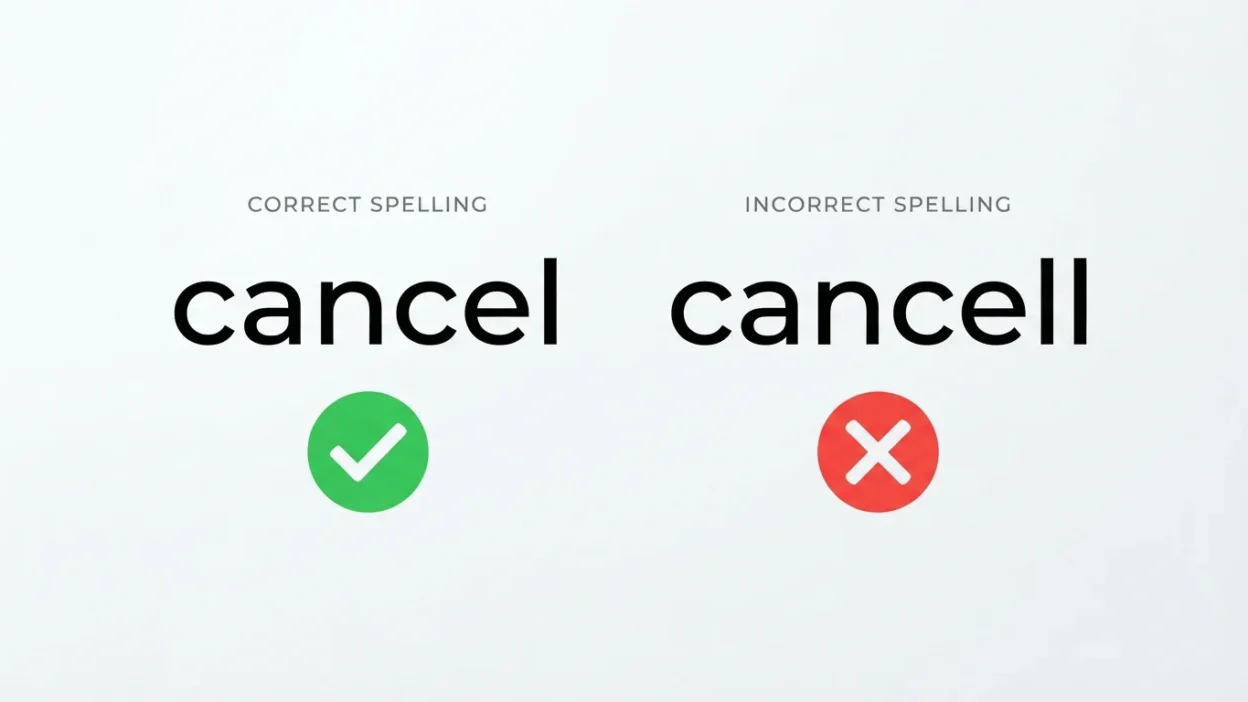
Cancel is the correct spelling. The word cancell does not exist in standard English and is simply a common misspelling.
The confusion often comes from words like cancelled or cancelling, where double “l” appears in British English. Always use cancel when writing correctly.
Why People Confuse It
Many people confuse cancel vs cancell because of how English spelling changes depending on grammar and region. When you see words like cancelled or cancelling, the double “l” can make it seem like the base word should also have two “l” letters.
Another reason is typing habits. People often add an extra letter by mistake, especially when typing quickly. Since English has many irregular spelling patterns, it becomes easy to assume “cancell” might be acceptable.
Also, exposure to mixed English styles online adds to the confusion. British and American spellings differ, and learners may not realize that only certain forms change, not the base word itself.
First Word
The word cancel is a verb that means to stop something from happening or to call it off. It is widely used in everyday English, from canceling meetings to canceling subscriptions.
In both American and British English, the base form remains the same. Whether you are writing an email or a formal document, cancel is always spelled with one “l”.
Examples of use include canceling plans, canceling orders, or canceling events. It is a simple and commonly used word that follows standard English spelling rules.
Second Word
The word cancell is not recognized as a correct English word. It does not appear in dictionaries and should be avoided in all forms of writing.
Most often, it appears due to confusion with words like cancelled or cancelling. Writers mistakenly assume the base form also needs two “l” letters.
If you use “cancell” in writing, it will likely be flagged as a spelling error. To maintain professionalism and clarity, always replace it with the correct form, cancel.
Definition and Meaning
The word cancel means to stop something planned or to make something no longer valid. It is used in many contexts such as business, travel, and daily life.
For example, canceling a flight means it will not happen. Canceling a subscription means ending a service. The meaning stays consistent across different uses.
Since “cancell” has no meaning, it should never be used. Understanding this difference helps you avoid confusion and write clearly.
Pronunciation Guide
The word cancel is pronounced as /ˈkæn.səl/. It has two syllables, with stress on the first part.
The pronunciation remains the same in both American and British English. There is no variation that would justify a double “l” in spelling.
Practicing the correct pronunciation can also help reinforce the correct spelling in your mind.
Grammar Rules Explained
In grammar, cancel is the base verb form. When adding endings, spelling may change slightly depending on the style of English used.
In American English, you typically write canceling and canceled. In British English, it becomes cancelling and cancelled.
However, the base word always stays cancel, never “cancell”. This is a key rule to remember.
Comparison Table
| Feature | Cancel | Cancell |
|---|---|---|
| Correct spelling | Yes | No |
| Used in English | Yes | No |
| Found in dictionaries | Yes | No |
| Example usage | Cancel the meeting | Incorrect |
| Grammar role | Verb | None |
When to Use Each
You should always use cancel when writing or speaking. It is the only correct base form of the word.
Use it in sentences like cancel plans, cancel orders, or cancel appointments. It works in both formal and informal contexts.
Never use “cancell” in any situation. If you see it, treat it as a spelling mistake and correct it immediately.
Examples
Here are real life examples using the correct word:
- I need to cancel my appointment today.
- She decided to cancel the trip due to weather.
- They had to cancel the event last minute.
- Please cancel my subscription.
- The airline canceled the flight.
- He forgot to cancel the meeting.
- We may cancel our plans tonight.
- Can you cancel the order for me?
- The show was canceled unexpectedly.
- I will cancel the booking tomorrow.
Real Life Usage
In daily life, the word cancel appears everywhere. From online services to travel bookings, it is a common action people perform.
For example, you may cancel a gym membership or cancel a food order. Businesses also use the word when communicating with customers.
Using the correct spelling ensures clear communication and professionalism, especially in emails and official messages.
Formal vs Informal Use
The word cancel works well in both formal and informal situations. It is appropriate in emails, reports, and casual conversations.
In formal writing, it is important to use correct spelling. Using “cancell” can make your writing look careless.
In informal contexts like texting, people may make mistakes, but using the correct form still improves clarity.
Synonyms and Alternatives
There are several alternatives to the word cancel, depending on context:
- Call off
- Stop
- End
- Terminate
- Abort
These words can sometimes replace “cancel” but may carry slightly different meanings.
Common Sentences
Here are common ways people use cancel in sentences:
- I had to cancel my plans.
- They canceled the meeting.
- Please cancel the order.
- We might cancel the trip.
These examples show how natural and frequent the word is.
Common Mistakes
One of the most common mistakes is writing cancell instead of cancel. This usually happens due to confusion with other forms.
Another mistake is mixing British and American spelling inconsistently. For example, writing cancel but then using cancelled incorrectly.
Always double check your spelling, especially in professional writing.
Mistakes to Avoid
Avoid adding extra letters when writing. Stick to the base form cancel.
Do not assume spelling based on how a word looks in another form. Always verify the correct base spelling.
Consistency is key. Choose either American or British style and stick with it.
Memory Trick
A simple way to remember is this:
Cancel has one “l” just like the word “call” without the extra letter.
If you see two “l” letters at the end, it is likely incorrect for the base word.
This quick trick helps you avoid mistakes instantly.
American vs British English
In American English, you write canceled and canceling. In British English, it becomes cancelled and cancelling.
However, the base form remains cancel in both versions. This is where many people get confused.
Understanding this difference clears up most spelling issues.
Similar Words
Some words that cause similar confusion include:
- Travel vs travelled
- Label vs labelled
- Model vs modelled
These follow similar patterns where only certain forms change.
Related Confusing Words
Other commonly confused words include:
- Occurring vs occuring
- Their vs there vs they’re
- Putting vs puting
Learning these helps improve your overall writing skills.
Expert Tips
Always rely on trusted dictionaries when unsure. Avoid guessing spelling based on memory alone.
Use spell check tools, but do not depend on them completely. Some errors may slip through.
Practice writing regularly to build confidence and accuracy.
Final Verdict
The answer is simple. Cancel is correct. Cancell is incorrect.
The confusion mainly comes from different spelling rules in extended forms like cancelled or cancelling.
Once you remember that the base word always has one “l”, you will never make this mistake again.
FAQs
Is cancell ever correct
No, cancell is always incorrect and should not be used.
Why does cancelled have two l letters
Because British English doubles the “l” when adding endings.
Is cancel American or British
It is used in both, but spelling variations appear in extended forms.
Can I use cancel in formal writing
Yes, it is perfectly correct and widely accepted.
What is the past tense of cancel
Canceled in American English and cancelled in British English.
How can I avoid spelling mistakes
Practice regularly and remember key spelling rules.
Conclusion
Understanding the difference between cancel vs cancell is simple once you know the rules. The correct spelling is always cancel, and the other version is just a mistake. Many people get confused because of double “l” forms in certain variations, but the base word never changes.
By applying the tips and examples in this guide, you can write with confidence and avoid common spelling errors. Clear and correct writing always leaves a better impression.
Remember This
Always use cancel with one “l”
Never write cancell
Double “l” appears only in certain forms like cancelled

Donald Andrew is a dedicated author at BiblyWord, passionate about sharing biblical teachings in a clear and inspiring way. He creates meaningful content that helps readers understand scripture, reflect on their faith, and apply God’s Word in daily life. His work supports spiritual growth, guidance, and a deeper connection with biblical wisdom.