English spelling can be tricky, especially when two words look similar but only one is correct. A common confusion people face is between “alterior” and “ulterior.” While both may seem valid, only one is recognized in proper English.
This mistake often appears in essays, formal writing, and even conversations. The word “ulterior” is usually used in serious contexts, so using the wrong spelling can completely change how your message is understood. The good news is that once you learn the correct form and meaning, you will never confuse them again.
Let’s explore this clearly so you can use the right word with confidence.
Quick Answer
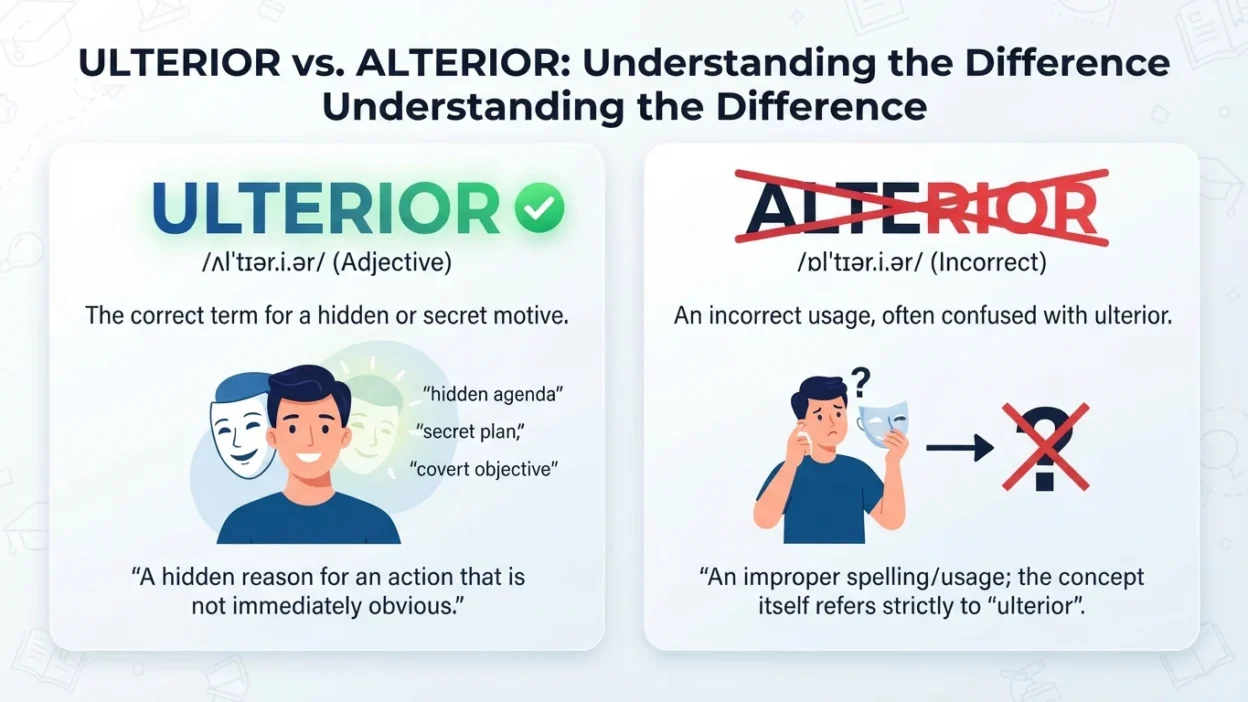
“Ulterior” is the correct word and means hidden or secret intention. “Alterior” is incorrect and not used in standard English. Always use “ulterior” in writing.
Definition and Meaning
The word “ulterior” refers to something that is hidden, not obvious, or kept secret, especially when talking about motives or intentions. It is often used when someone has a purpose that is not clearly shown.
For example, if a person helps someone but expects something in return, they may have an ulterior motive. The word carries a slightly negative tone because it suggests dishonesty or hidden plans.
“Alterior” has no meaning in English. It is simply a misspelling that comes from confusion with the correct form. Learning the true meaning of “ulterior” helps you use it properly in both writing and speech.
Why People Confuse It
People often confuse “alterior” and “ulterior” because of pronunciation and unfamiliar spelling patterns. When spoken, the beginning sound can feel unclear, leading writers to guess the spelling.
Another reason is that English has many words starting with different vowel combinations, and learners sometimes replace “ul” with “al” by mistake. Fast typing and lack of proofreading also increase the chances of this error.
Since “ulterior” is not used in everyday casual conversation as much as simpler words, many people are less familiar with its correct form. Once you recognize the correct spelling and meaning, the confusion becomes easy to avoid.
First Word
“Alterior” is incorrect and should never be used in proper English writing. It does not appear in dictionaries and has no recognized meaning.
Using “alterior” can make your writing look unprofessional or careless. Even though it may sound similar to the correct word, it is not accepted in any form of communication.
This mistake often happens when people rely on how a word sounds rather than how it is spelled. To avoid this, always double check unfamiliar words before using them.
In all situations, if formal or informal, “alterior” should be avoided completely.
Second Word
“Ulterior” is the correct and accepted word. It is commonly used to describe hidden motives or intentions that are not openly expressed.
For example, if someone appears kind but is secretly trying to gain something, they may have an ulterior motive. The word is often used in discussions about trust, honesty, and behavior.
“Ulterior” can also describe something that lies beyond what is visible or obvious. It adds depth to your writing by expressing complex ideas clearly.
Using “ulterior” correctly helps you communicate more precisely, especially in serious or thoughtful contexts.
Grammar Rules Explained
“Ulterior” is an adjective. This means it is used to describe nouns, usually related to motives, plans, or intentions.
Examples include phrases like ulterior motive or ulterior purpose. The word does not change form for plural or tense because adjectives remain the same.
The incorrect form “alterior” does not follow any grammar rule because it is not a valid word. Learning the correct structure of adjectives helps you understand how “ulterior” fits into sentences.
Using it correctly ensures your sentences are grammatically accurate and meaningful.
Pronunciation Guide
“Ulterior” is pronounced as ul teer ee or. The stress usually falls on the second syllable, making the word sound smooth and balanced.
The beginning sound “ul” is important because it distinguishes the correct spelling from the incorrect one. Many learners confuse this part, which leads to writing “alterior.”
Practicing the pronunciation can help you remember the correct spelling. When you say it slowly, you can hear the proper vowel sound at the start.
Clear pronunciation often leads to better spelling accuracy.
Comparison Table
| Word | Correct | Meaning | Usage |
|---|---|---|---|
| Ulterior | Yes | Hidden or secret motive | Always use |
| Alterior | No | Incorrect spelling | Never use |
This table clearly shows that only “ulterior” is correct and meaningful.
When to Use Each
Use “ulterior” when you want to describe a hidden intention or motive. It is especially useful in situations where someone’s true purpose is not obvious.
For example, in discussions about trust, relationships, or decision making, this word adds clarity. It helps explain that something is happening beneath the surface.
There is no situation where “alterior” should be used. It has no grammatical or practical role in English.
Remembering this simple rule will help you avoid mistakes in all types of writing.
Examples
Here are real life examples using “ulterior” correctly:
- He helped her, but he had an ulterior motive
- She suspected an ulterior purpose behind the offer
- The deal seemed simple, but there was an ulterior plan
- They questioned his ulterior intentions
- His kindness hid an ulterior reason
- She refused the offer due to ulterior concerns
- The story revealed an ulterior truth
- He acted friendly with an ulterior goal
- The proposal had an ulterior agenda
- She noticed his ulterior behavior
These examples show how the word is used in different contexts.
Common Sentences
You may often hear sentences like:
- He has an ulterior motive
- She sensed an ulterior intention
- They suspected an ulterior plan
These phrases are commonly used in both spoken and written English. Using the correct spelling ensures your sentences sound natural and clear.
Replacing “ulterior” with “alterior” would make these sentences incorrect and confusing.
Real Life Usage
“Ulterior” is commonly used in real life situations where trust or honesty is questioned. It appears in conversations about relationships, business deals, and personal decisions.
For example, in business, someone might suspect an ulterior motive behind a proposal. In personal relationships, people may question whether someone’s actions are genuine.
The word helps express deeper meaning and hidden intentions. Because of this, it is often used in serious discussions rather than casual conversation.
Using it correctly adds clarity and depth to your communication.
Formal vs Informal Use
“Ulterior” is mostly used in formal or semi formal contexts. It is common in writing such as essays, articles, and professional discussions.
However, it can also appear in everyday conversation when discussing serious topics. Even then, it maintains a thoughtful and slightly formal tone.
The incorrect form “alterior” is not acceptable in any context. Whether formal or informal, it should never be used.
Choosing the correct word ensures your message is clear and respected.
Common Mistakes
People often make the mistake of writing “alterior” instead of “ulterior.” This usually happens because of incorrect assumptions about spelling.
Another common error is using the word in the wrong context. Since “ulterior” often relates to hidden motives, using it casually can sound unnatural.
To avoid mistakes, focus on both spelling and meaning. Practice using the word in proper sentences to build confidence.
Correct usage improves both clarity and professionalism.
Mistakes to Avoid
Avoid using “alterior” in any type of writing. It is not a real word and will weaken your message.
Also avoid using “ulterior” when there is no hidden meaning involved. Overusing it can make your writing sound forced.
Always check your spelling and ensure the word fits the context. Simple proofreading can prevent these errors.
Clear and accurate language helps you communicate effectively.
Memory Trick
A simple trick to remember the correct spelling is to focus on the beginning “ul” in “ulterior.”
Think of “ultimate” or “under,” which also start with “u.” This can help you recall that the correct word begins with “u,” not “a.”
Associating the word with hidden meaning can also help. Imagine something under the surface, which connects with the “ul” sound.
This small trick can make a big difference in remembering the correct form.
American vs British English
There is no difference between American and British English for this word. Both use “ulterior” as the correct spelling and meaning.
The incorrect form “alterior” is not accepted in any variety of English. This makes the rule simple and consistent across regions.
Whether you are writing for a global audience or local use, the correct form remains the same.
Consistency makes it easier to learn and remember.
Similar Words
There are several words that carry a similar sense of hidden meaning or deeper purpose. These include words like secret, hidden, and concealed.
While these words are simpler, “ulterior” often adds a more formal or serious tone. It suggests intention rather than just something being unseen.
Learning similar words can help you expand your vocabulary. However, “ulterior” remains unique in expressing hidden motives specifically.
Using the right word for the right context improves clarity.
Synonyms and Alternatives
Depending on context, you can use alternatives such as hidden, secret, concealed, or underlying. These words can sometimes replace “ulterior” in simpler sentences.
However, “ulterior” is often more precise when referring to motives or intentions. It carries a stronger sense of purpose behind actions.
Choosing the right synonym depends on the tone and meaning you want to convey. In formal writing, “ulterior” is often the best choice.
Using a variety of words can make your writing more engaging.
Expert Tips
To master this word, focus on both spelling and usage. Practice writing sentences that include “ulterior” to build familiarity.
Reading books and articles can also help you see how the word is used naturally. Exposure to correct usage strengthens your understanding.
Avoid guessing spellings and always double check unfamiliar words. This habit will improve your overall writing skills.
Experts recommend learning words in context rather than in isolation.
Related Confusing Words
There are other words that cause similar confusion due to spelling. Examples include words where vowel order changes or where pronunciation does not match spelling.
Learning correct forms and practicing regularly can help you avoid these mistakes. Paying attention to detail is key.
Understanding patterns in English spelling makes it easier to recognize correct words.
This awareness improves both writing accuracy and confidence.
Final Verdict
“Ulterior” is the correct word and should always be used when referring to hidden motives or intentions. “Alterior” is incorrect and has no place in proper English.
By remembering the correct spelling and meaning, you can avoid this common mistake. Using the right word will make your writing clearer and more professional.
FAQs
Is alterior ever correct
No, it is always incorrect
What is the correct spelling
The correct spelling is ulterior
What does ulterior mean
It means hidden or secret intention
Can I use alterior informally
No, it is incorrect in all contexts
Is ulterior a formal word
Yes, it is mostly used in formal or serious contexts
Are there similar words like ulterior
Yes, such as hidden and secret
Conclusion
Understanding the difference between “alterior” and “ulterior” is simple once you know the correct spelling and meaning. While “alterior” may seem logical, it is not a valid word in English.
Using “ulterior” correctly helps you express ideas about hidden intentions clearly. This can improve your writing, especially in formal or thoughtful discussions.
By practicing and paying attention to spelling, you can avoid this mistake and communicate more effectively.
Remember This
Always use “ulterior” for hidden motives or intentions
“Alterior” is incorrect and should never be used

Donald Andrew is a dedicated author at BiblyWord, passionate about sharing biblical teachings in a clear and inspiring way. He creates meaningful content that helps readers understand scripture, reflect on their faith, and apply God’s Word in daily life. His work supports spiritual growth, guidance, and a deeper connection with biblical wisdom.