Spelling errors can easily slip into writing, especially when words sound similar. One common confusion is “visable vs visible.” While both may look acceptable at a glance, only one is correct in standard English.
This word is frequently used in everyday communication, academic writing, and professional contexts. Using the correct spelling helps your message appear clear, polished, and trustworthy.
Quick Answer
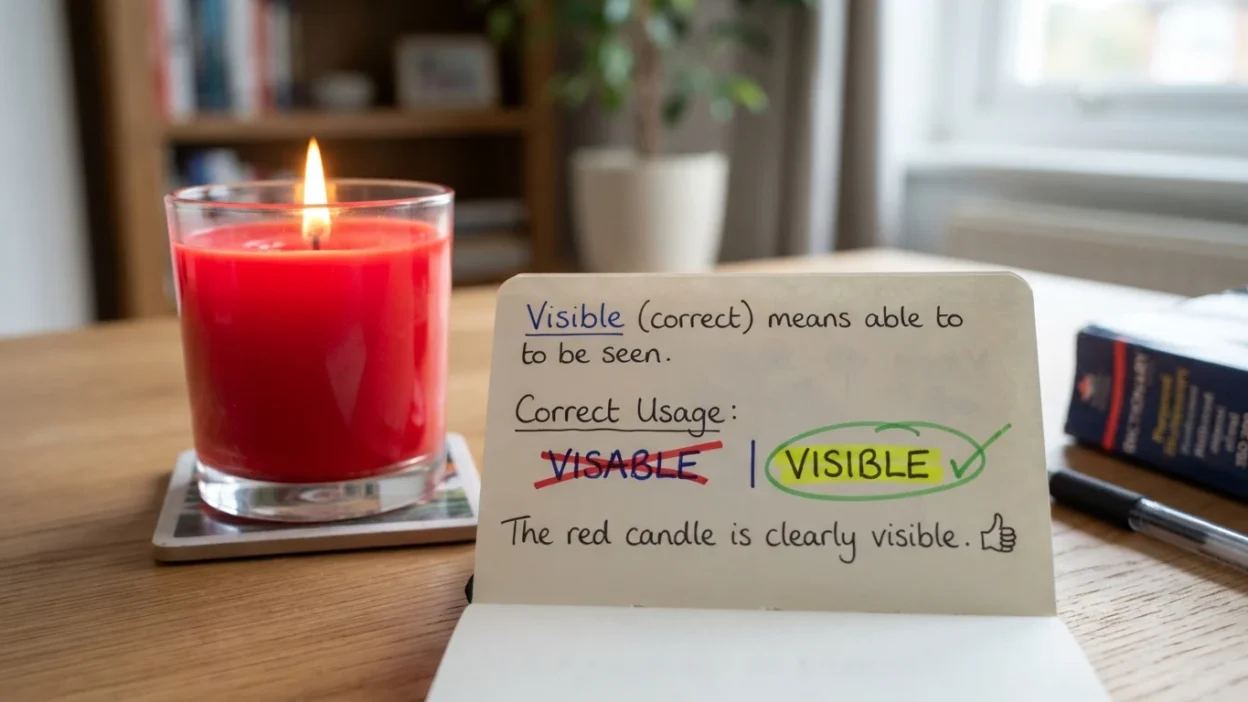
“Visible” is the correct spelling and means something that can be seen.
“Visable” is incorrect and not recognized in standard English. Always use visible in all contexts.
Why People Confuse It
The confusion mainly comes from pronunciation. In spoken English, “visible” can sound like “viz-uh-bul,” which may lead people to spell it as “visable.”
Another reason is the influence of similar words that end in “able,” such as “readable” or “comfortable.” This pattern makes “visable” seem logical even though it is incorrect.
Because of these factors, many writers mistakenly assume “visable” is acceptable.
Definition and Meaning
“Visible” is an adjective that describes something that can be seen or is noticeable.
For example, if something is clear to the eye or easy to notice, it is visible. The word can also be used figuratively to describe something obvious or apparent.
“Visable” has no meaning in English and is simply a misspelling.
First Word
“Visable” is not a valid English word. It does not appear in dictionaries and has no grammatical role.
It is usually written by mistake due to incorrect assumptions about spelling patterns. Even though it may look similar to other words, it is not correct.
Avoid using “visable” in any context.
Second Word
“Visible” is the correct and widely accepted spelling. It is used in both literal and figurative contexts.
Whether you are describing something you can see or something that is obvious, “visible” is the proper choice.
Using the correct spelling ensures your writing is clear and professional.
Pronunciation Guide
“Visible” is pronounced as /ˈvɪz.ə.bəl/.
It has three syllables:
- vi
- zi
- ble
The pronunciation can be misleading, which is why spelling confusion occurs.
Grammar Rules Explained
“Visible” is an adjective. It is used to describe nouns.
Examples:
- The stars are visible tonight.
- The difference is clearly visible.
“Visable” does not follow any grammar rules because it is not a real word.
Real Life Usage
“Visible” is used in many real life situations. It appears in conversations, writing, science, and everyday descriptions.
For example, people talk about visible signs, visible changes, or objects that are clearly seen. It is also used in digital contexts, such as making something visible on a screen.
Because of its frequent use, correct spelling is essential.
Comparison Table
| Feature | Visable | Visible |
|---|---|---|
| Correctness | Incorrect | Correct |
| Word Type | Not a word | Adjective |
| Usage | None | Very common |
| Dictionary | Not listed | Recognized |
| Recommendation | Avoid | Always use |
When to Use Each
Use “visible” whenever you describe something that can be seen or noticed.
Examples:
- Visible light
- Clearly visible
- Visible improvement
Never use “visable,” as it is incorrect in all contexts.
Examples in Sentences
Here are correct examples:
- The stars are visible tonight.
- The damage is clearly visible.
- Her happiness was visible to everyone.
- The mountain is visible from here.
- There was a visible change in his attitude.
- The sign is visible from a distance.
- The improvement is visible.
- The results are clearly visible.
- The object became visible slowly.
- The difference is easily visible.
Incorrect:
- The stars are visable tonight.
Common Sentences
“Visible” appears in many common phrases:
- Clearly visible
- Easily visible
- Visible change
- Visible difference
These are widely used in both formal and informal contexts.
Common Mistakes
A common mistake is writing “visable” instead of “visible.” This usually happens because of confusion with “able” endings.
Another mistake is relying on pronunciation rather than correct spelling. Since the sound can be misleading, errors are common.
Proofreading can help catch these mistakes.
Mistakes to Avoid
Avoid these errors:
- Writing “visable” instead of “visible”
- Assuming all words follow “able” patterns
- Skipping proofreading
Careful attention improves accuracy.
Memory Trick
Here is a simple trick:
Visible has “ible,” not “able.”
Think of:
- vis + ible
This helps you remember the correct spelling.
American vs British English
Both American and British English use “visible” with the same spelling and meaning.
There is no regional difference, making it easy to use consistently.
“Visable” is incorrect everywhere.
Similar Words
Related words include:
- Seen
- Noticeable
- Apparent
- Clear
These words have similar meanings depending on context.
Synonyms and Alternatives
You can use alternatives such as:
- Noticeable
- Apparent
- Clear
- Observable
These help add variety to your writing.
Formal vs Informal Use
“Visible” works in both formal and informal contexts. It is commonly used in academic writing, professional communication, and everyday speech.
Because of its versatility, correct spelling is important.
Expert Tips
To improve your writing:
- Learn common “ible” words
- Practice spelling regularly
- Use spell check tools
- Proofread carefully
These steps help avoid mistakes.
Related Confusing Words
Other similar confusions include:
- Possible vs possable
- Responsible vs responsable
- Eligible vs eligable
Learning these improves your spelling skills.
FAQs
Is visable a real word?
No, it is incorrect.
Which is correct visable or visible?
Visible is correct.
What does visible mean?
It means something that can be seen.
Why do people write visable?
Because they confuse “able” and “ible” endings.
Is visible formal or informal?
It is used in both contexts.
Is there any regional difference?
No, both British and American English use “visible.”
Final Verdict
“Visible” is the correct and only acceptable spelling in English. It is widely used to describe something that can be seen or noticed.
“Visable” is incorrect and should be avoided completely. Using the correct spelling ensures clarity and professionalism.
Remember This
Always write visible, never visable.
Think of “ible” at the end to remember the correct form.
Conclusion
The difference between “visable” and “visible” is simple once you understand the spelling rule. One is correct, and the other is not.
By using “visible” correctly, you can improve your writing and avoid a common mistake. Clear spelling helps your communication look polished and professional.

Kevin Brian is a passionate author at BiblyWord, dedicated to sharing the message of the Bible through thoughtful and inspiring content. He focuses on creating clear and meaningful writings that help readers understand scripture, strengthen their faith, and find guidance in everyday life through God’s Word.