English spelling can be tricky, especially when words don’t follow expected patterns. A common confusion is between “superseded” and “superceded.” Both look reasonable, but only one is correct in standard English.
This word is often used in legal, academic, and professional contexts to describe something being replaced or made obsolete. Because it appears in formal writing, using the correct spelling is important. In this guide, you will learn the difference, correct usage, and simple ways to remember the right form.
Quick Answer
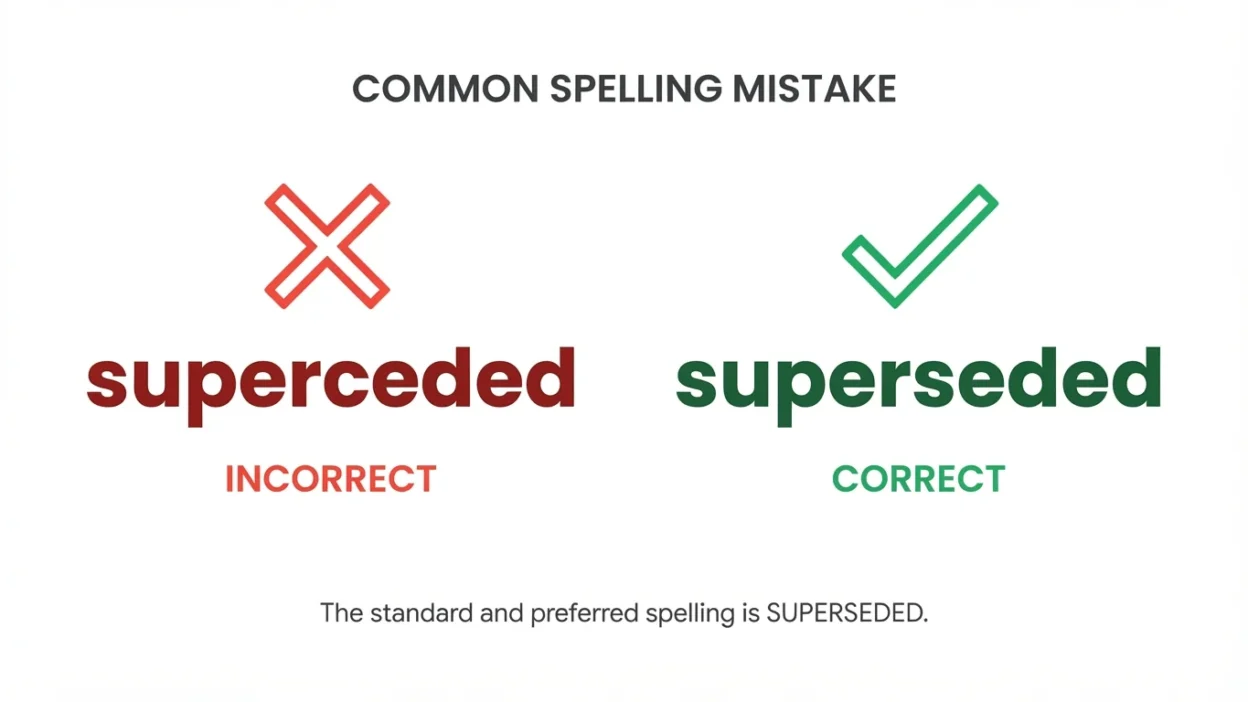
The correct spelling is “superseded.” The word “superceded” is incorrect and should never be used. Always use “superseded” when referring to something that has been replaced.
Why People Confuse It
People confuse “superseded” and “superceded” mainly because of spelling patterns. Many English words use “cede,” such as “precede” and “concede,” so people assume the same pattern applies here.
Another reason is pronunciation. The word sounds similar regardless of spelling, making it easy to guess incorrectly.
Also, “supersede” is an exception in English spelling rules, which makes it harder to remember.
First Word
“Superceded” is not a correct English spelling. It does not follow standard usage and should not be used in any context.
This mistake usually happens when people apply the common “cede” pattern incorrectly.
Using “superceded” can make your writing look unprofessional and inaccurate.
Second Word
“Superseded” is the correct spelling. It is the past form of “supersede,” which means to replace or take the place of something.
For example, a new law may supersede an older one, or a new version of software may supersede a previous version.
Using “superseded” correctly ensures clarity and professionalism.
Definition and Meaning
“Superseded” means replaced, overridden, or made obsolete by something newer or better.
It is often used in formal contexts such as legal documents, policies, and technology updates.
Understanding the meaning helps you use the word correctly in different situations.
Pronunciation Guide
“Superseded” is pronounced as soo per see did. The pronunciation does not clearly reveal the spelling difference.
This is why many people write “superceded” based on sound rather than correct form.
Practicing pronunciation with spelling can help reinforce accuracy.
Grammar Rules Explained
“Superseded” is the past tense and past participle of the verb “supersede.”
Unlike similar words ending in “cede,” this word is spelled with “sede.” It is an exception that must be memorized.
The incorrect form “superceded” does not follow standard rules.
Comparison Table
| Word | Correct | Meaning |
|---|---|---|
| superceded | No | Incorrect spelling |
| superseded | Yes | Replaced or overridden |
This table clearly shows the correct choice.
When to Use Each
Use “superseded” when describing something that has been replaced or made outdated.
Do not use “superceded” in any situation. It is always incorrect.
Choosing the correct word ensures clear and professional communication.
Real Life Usage
“Superseded” is commonly used in official documents, policies, and technology updates. For example, a new rule may supersede an old one.
It is also used in everyday language when talking about improvements or replacements.
Using the correct spelling strengthens your writing.
Formal vs Informal Use
“Superseded” is mostly used in formal writing, but it can also appear in general communication.
The incorrect form “superceded” should never be used, even informally.
Correct spelling builds credibility.
Synonyms and Alternatives
Here are some alternatives for “superseded”:
- Replaced
- Overridden
- Updated
- Outdated
- Substituted
These words can add variety to your writing.
Common Sentences
Here are some natural sentences using “superseded”:
- The new policy superseded the old one
- This version has been superseded
- The law was superseded by new legislation
- The update superseded earlier features
These examples show everyday usage.
Examples
Here are ten real examples:
- The new system superseded the old one
- This rule has been superseded
- The policy was superseded last year
- The latest version superseded the previous one
- The agreement was superseded by a new contract
- The law superseded earlier regulations
- The update superseded older software
- The guideline was superseded recently
- The decision superseded previous rulings
- The model was superseded by a newer design
These examples show correct usage in context.
Common Mistakes
A common mistake is writing “superceded” instead of “superseded.” This happens due to confusion with similar words.
Another mistake is relying on spelling patterns without checking exceptions.
Being aware of these mistakes helps you avoid them.
Mistakes to Avoid
Do not assume all words follow common spelling patterns.
Avoid writing based only on pronunciation.
Always verify unusual words in a dictionary.
Memory Trick
A simple trick is to remember that “superseded” contains “seed” in the middle.
Think of a new seed replacing the old one.
This helps you recall the correct spelling.
American vs British English
“Superseded” is spelled the same in both American and British English.
There is no variation, making it easy to remember.
You can use it confidently worldwide.
Similar Words
Other confusing words include:
- Precede and proceed
- Concede and concede variations
- Exceed and accede
These words share similar patterns.
Related Confusing Words
Words like “precede” and “supersede” may look similar but have different meanings.
Understanding these differences improves your vocabulary.
Practice helps you master such words.
Expert Tips
Always learn exceptions in English spelling.
Use reliable sources to confirm difficult words.
Practice writing regularly to improve accuracy.
Comparison Table
| Feature | Superseded | Superceded |
|---|---|---|
| Spelling | Correct | Incorrect |
| Usage | Standard English | Not used |
| Meaning | Replaced | No meaning |
This second table reinforces the correct choice.
Final Verdict
“Superseded” is the correct spelling and should always be used. The word “superceded” is incorrect and should be avoided in all contexts.
Understanding this exception helps improve your spelling accuracy and writing clarity.
FAQs
Is superceded a real word
No, it is a spelling mistake.
What is the correct spelling
The correct spelling is “superseded.”
Why do people write superceded
Because of confusion with words ending in “cede.”
Can superceded be used informally
No, it is incorrect in all contexts.
What does superseded mean
It means replaced or made outdated.
Is superseded used worldwide
Yes, it is used in both American and British English.
Conclusion
Spelling accuracy is essential for clear communication. Choosing between “superceded” and “superseded” becomes simple once you understand that this word is an exception.
With practice and careful proofreading, you can avoid this common mistake. Over time, correct spelling becomes natural and improves your overall writing skills.
Remember This
Always write “superseded” with “sede,” not “cede.” Never use “superceded.”

Carol Amanda is a passionate writer and faith-driven author dedicated to sharing the wisdom of the Bible. At BiblyWord, she creates inspiring and meaningful content that encourages spiritual growth and daily reflection. Her work focuses on helping readers connect with God’s Word and find guidance, peace, and strength in their faith journey.