Have you ever hesitated while typing and wondered if it should be panic or panick? You are not alone. This is a very common spelling confusion because English words sometimes change form when endings are added.
The tricky part is that the word panic does change slightly in some forms, which leads people to incorrectly write panick. But once you understand the rule, it becomes easy to remember. Let’s break down panic vs panick so you can write with confidence every time.
Quick Answer
Panic is the correct spelling.
Panick is incorrect and not used in standard English.
Use panic as the base word. In some forms like panicked, a k is added, but never in the base word.
Why People Confuse It
This confusion happens because of spelling changes in verb forms. For example, panic becomes panicked or panicking, which includes a k.
Because of this, many people assume the base word also ends with k. Fast typing and guessing from sound also increase mistakes. Understanding that panic is the root word helps eliminate this confusion quickly.
Definition and Meaning
Panic means a sudden feeling of fear or anxiety that causes people to act quickly without thinking clearly.
It can be used as both a noun and a verb. As a noun, it describes the feeling. As a verb, it describes the action of becoming afraid.
Pronunciation Guide
Panic is pronounced as
pan ik
The sound does not include a strong ending that requires an extra letter. This is why the base spelling stays simple.
Grammar Rules Explained
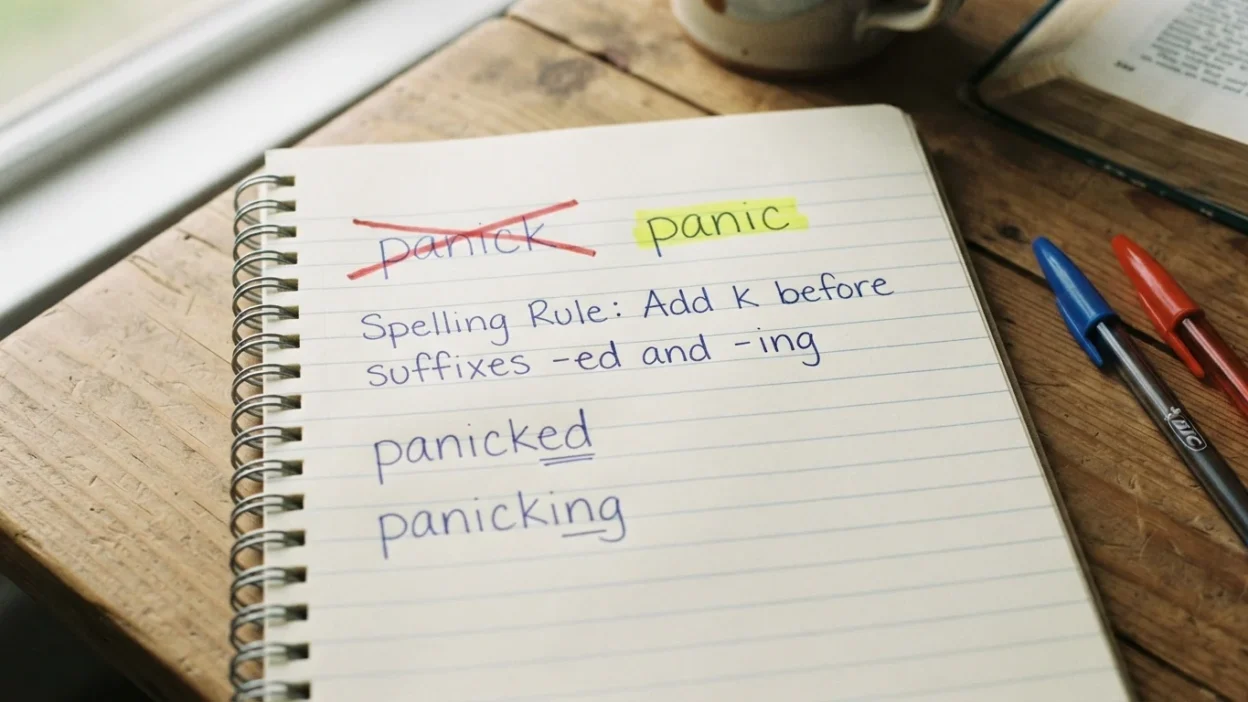
The base word is panic. When adding endings like ed or ing, English adds a k to keep the correct sound.
Panic becomes panicked
Panic becomes panicking
However, the base form remains panic without the k.
First Word
Panick is not a real English word. It is a spelling mistake.
It often appears when people incorrectly assume the base word includes k. This form should never be used in correct writing.
Second Word
Panic is the correct and standard spelling.
It is widely used in everyday communication, news, academic writing, and conversations.
Comparison Table
| Feature | Panick | Panic |
|---|---|---|
| Correct | No | Yes |
| Usage | Incorrect | Standard |
| Meaning | None | Sudden fear or anxiety |
| Recommendation | Avoid | Always use |
When to Use Each
Use panic when:
- Describing fear or anxiety
- Talking about sudden reactions
- Writing in both formal and informal contexts
Never use panick in correct English.
Real Life Usage
In real life, panic is used in many situations. People panic during emergencies, stressful moments, or unexpected events.
You might hear it in conversations, news reports, or everyday discussions. Because it is a common word, using the correct spelling is important for clear communication.
Examples
Correct examples with panic:
- She felt panic during the storm.
- He began to panic before the exam.
- The crowd was in panic.
- Do not panic in difficult situations.
- She tried not to panic.
- Panic spread quickly among the people.
- He panicked when he lost his phone.
- They are panicking about the deadline.
- The news caused panic in the city.
- She controlled her panic and stayed calm.
- Panic can lead to poor decisions.
Incorrect example:
- He felt panick during the test.
Common Sentences
- Do not panic, everything will be fine
- She panicked suddenly
- The situation caused panic
These sentences show how naturally the word is used.
Formal vs Informal Use
Panic works in both formal and informal writing.
It appears in academic articles, reports, and professional communication. It is also common in everyday conversations and casual writing.
Synonyms and Alternatives
You can use similar words depending on context:
- Fear
- Anxiety
- Alarm
- Distress
- Worry
These words help add variety to your writing.
Similar Words
- Traffic
- Picnic
- Public
These words also follow similar spelling patterns with endings.
Related Confusing Words
- Panic vs panicked
- Picnic vs picnicking
- Mimic vs mimicking
These show how spelling changes when adding endings.
Mistakes to Avoid
Avoid these common errors:
- Adding unnecessary k
- Confusing base and verb forms
- Guessing spelling
Always remember the base form stays simple.
Expert Tips
- Learn the root word first
- Practice different forms like panicked and panicking
- Read more to recognize correct spelling patterns
Memory Trick
Think of this:
Panic is simple and clean, no k at the end
Only add k when adding endings like ed or ing.
American vs British English
Both American and British English use panic with the same spelling.
There is no difference, making it easier to remember.
Why Correct Spelling Matters
Correct spelling improves:
- Clarity
- Professionalism
- Reader trust
Small mistakes like panick can reduce the quality of your writing.
SEO Insight for This Keyword
People often search:
- panic vs panick
- correct spelling panic
- panic meaning
Using accurate spelling helps your content rank better and reach more readers.
Final Verdict
The answer is simple. Panic is correct.
Panick is incorrect and should never be used.
Understanding this rule helps you avoid a very common mistake.
FAQs
Is panick a real word
No, it is a spelling mistake.
What is the correct spelling
The correct spelling is panic.
Why does panicked have a k
Because of spelling rules when adding endings.
Can I use panick informally
No, it is incorrect in all contexts.
Is panic used in formal writing
Yes, it is used in both formal and informal writing.
Do British and American English differ
No, both use panic.
Conclusion
Understanding panic vs panick is simple once you learn the rule. The base word panic never includes a k, but it appears in some forms like panicked.
Using the correct spelling improves your writing clarity and confidence. With practice, this will become natural in your daily communication.
Remember This
Write panic without k
Only add k in forms like panicked or panicking

Carol Amanda is a passionate writer and faith-driven author dedicated to sharing the wisdom of the Bible. At BiblyWord, she creates inspiring and meaningful content that encourages spiritual growth and daily reflection. Her work focuses on helping readers connect with God’s Word and find guidance, peace, and strength in their faith journey.