The phrases make do and make due often confuse English learners because they sound identical. However, only one of them is correct in standard English. Using the wrong phrase can make your writing look unprofessional or unclear.
This confusion usually happens because both words are pronounced the same, and “due” is a familiar word in other contexts. In this guide, you’ll learn the correct meaning, usage, examples, and simple memory tricks to master make do vs make due with confidence.
Quick Answer
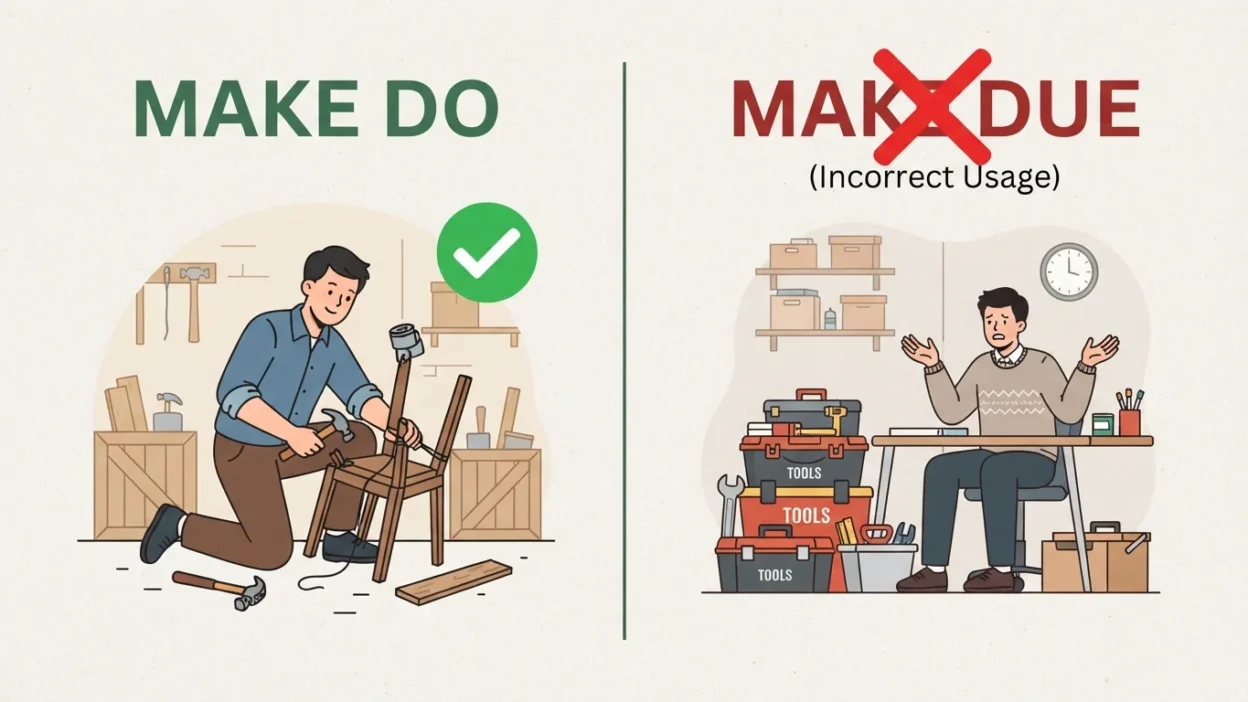
Make do is correct and means to manage with what you have.
Make due is incorrect in this context.
Always use make do when talking about coping or managing without enough resources.
Definition and Meaning
Make do is a phrasal verb that means to manage or cope with limited resources.
Make due is not a correct phrase in standard English for this meaning. The word due has different meanings, such as “owed” or “expected.”
So:
- Make do = manage with what you have
- Make due = incorrect usage
Why People Confuse It
The confusion comes from identical pronunciation.
Many people assume “due” fits because it is a common English word.
However, the correct phrase is fixed, and “do” must be used.
First Phrase: Make Do
Make do means to cope or manage in a difficult situation.
It is often used when resources are limited.
Examples:
- We had to make do with limited supplies.
- She made do without electricity.
It expresses adaptability.
Second Phrase: Make Due
Make due is incorrect in this context.
The word due means:
- Owed
- Expected
- Scheduled
But it does not fit the meaning of managing with less.
Grammar Rules Explained
Make do is a phrasal verb and should always be used together.
It does not change form.
Example:
- We will make do with what we have.
Avoid replacing “do” with “due.”
Comparison Table
| Feature | Make Do | Make Due |
|---|---|---|
| Correct usage | Yes | No |
| Meaning | Manage with less | Incorrect phrase |
| Type | Phrasal verb | Not valid |
| Example | Make do with this | ❌ Incorrect |
When to Use Each
Use make do when:
- You have limited resources
- You need to manage a situation
Do not use make due in this context.
Real Life Usage
People often use make do in daily life when facing shortages.
Examples include cooking with limited ingredients or working with fewer tools.
It is common in both spoken and written English.
Formal vs Informal Use
Make do is used in both formal and informal contexts.
It is acceptable in professional writing.
Make due should be avoided entirely.
Pronunciation Guide
Both phrases sound the same: /meɪk duː/
This identical pronunciation causes confusion.
Synonyms and Alternatives
For make do:
- Manage
- Cope
- Get by
These can be used in similar contexts.
Common Sentences
Examples:
- We had to make do with what we had.
- They made do during tough times.
- She learned to make do without luxury.
Examples
Here are 10 examples:
- We had to make do with basic tools.
- They made do with limited food.
- She made do without help.
- We will make do for now.
- He made do in difficult conditions.
- The team made do with fewer players.
- She made do during the shortage.
- We made do until things improved.
- They made do with old equipment.
- He made do with what was available.
Common Mistakes
A common mistake is writing make due instead of make do.
This happens because of similar pronunciation.
Mistakes to Avoid
Avoid:
- Writing “make due”
- Assuming both forms are correct
- Ignoring fixed phrases
Always use make do.
Memory Trick
Remember:
Make do = do your best
Make due = wrong
Think: “do” means action, which fits the meaning.
American vs British English
There is no difference between American and British English.
Both use make do as the correct phrase.
Similar Words
Other similar confusions:
- Would have vs Would of
- Could have vs Could of
- Should have vs Should of
Related Confusing Words
More examples:
- Affect vs Effect
- Accept vs Except
- Advice vs Advise
Expert Tips
Always check fixed expressions in English.
If you mean managing with less, use make do.
Avoid guessing based on sound.
When Does It Apply
Use make do when:
- Facing shortages
- Adapting to situations
- Describing resilience
Final Verdict
Make do is correct and widely used.
Make due is incorrect.
Always use make do to express managing with limited resources.
FAQs
1. Is “make due” correct?
No, it is incorrect.
2. What does “make do” mean?
It means to manage with what you have.
3. Why do people say “make due”?
Because it sounds similar.
4. Can I use “make due” in writing?
No, avoid it.
5. Is “make do” formal?
Yes, it works in all contexts.
6. How do I remember it?
Think “do your best.”
Remember This
Make do is correct.
Make due is wrong.
Always use “do” for managing situations.
Conclusion
The difference between make do and make due is simple but important. Make do is the correct phrase used to describe managing with limited resources, while make due is a common mistake that should be avoided. Even though both sound the same, only one is grammatically correct.
By remembering simple tricks like “make do means do your best,” you can avoid this error easily. With practice, using the correct phrase will become natural, improving your writing and communication skills.

Donald Andrew is a dedicated author at BiblyWord, passionate about sharing biblical teachings in a clear and inspiring way. He creates meaningful content that helps readers understand scripture, reflect on their faith, and apply God’s Word in daily life. His work supports spiritual growth, guidance, and a deeper connection with biblical wisdom.