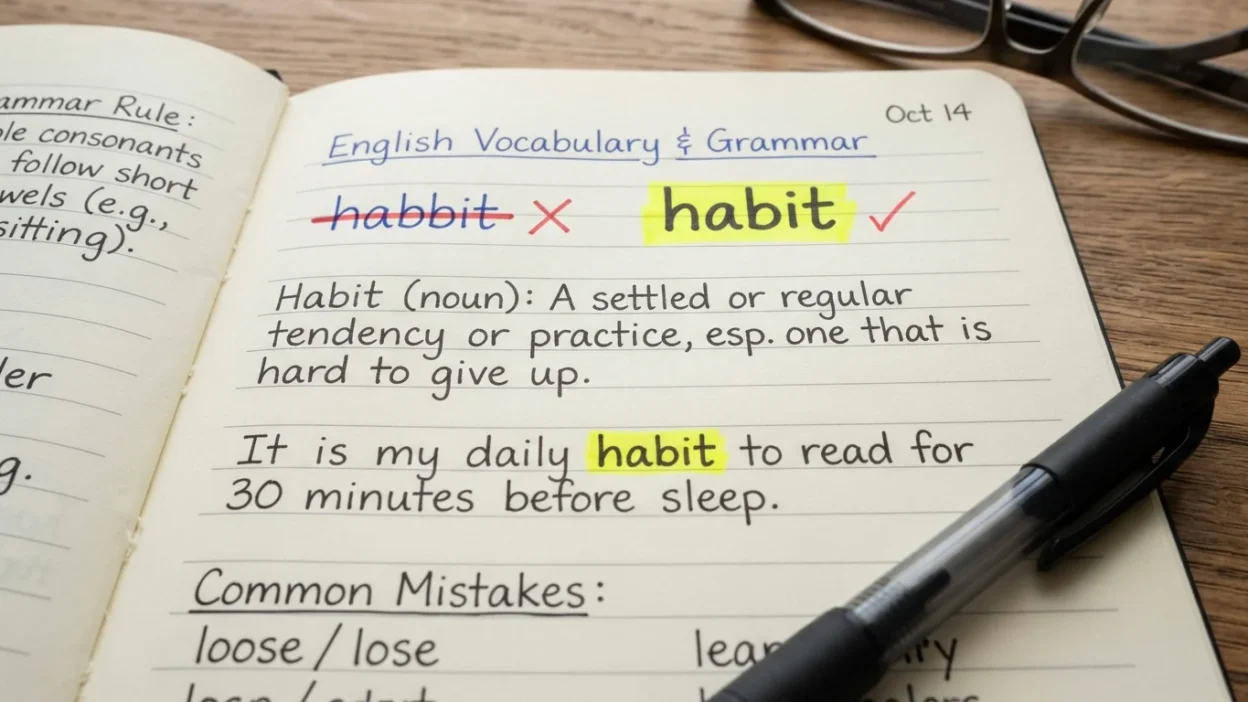
Have you ever paused while writing and wondered whether it should be habbit or habit? This is a very common spelling confusion, especially because many English words use double letters.
Spelling matters more than we think. A small mistake can make your writing look less clear or less professional. The good news is that this one is simple once you understand it.
Let’s break down habbit vs habit in an easy and clear way so you never get confused again.
Quick Answer
Habit is the correct spelling.
Habbit is incorrect and not used in standard English.
Always use habit when talking about a repeated action or behavior.
Why People Confuse It
This confusion happens because English often doubles letters in words like rabbit or letter. So people assume the same rule applies here.
Common reasons:
- Confusion with double letter patterns
- Sound based spelling guesses
- Typing quickly without checking
But this word does not follow that pattern.
First Word: Habbit
Habbit is not a correct English word. It appears only as a spelling mistake.
Incorrect example:
Reading daily is a good habbit.
This should always be corrected.
Second Word: Habit
Habit is the correct spelling. It means something you do regularly, often without thinking.
Examples:
- Drinking water daily is a healthy habit.
- She has a habit of waking up early.
- Reading books is a great habit.
It is widely used in both casual and formal writing.
Comparison Table
| Feature | Habbit | Habit |
|---|---|---|
| Correct | No | Yes |
| Usage | Incorrect | Standard |
| Meaning | None | Repeated behavior |
| Recommendation | Avoid | Always use |
When to Use Each
Use habit when:
- Talking about routines or behaviors
- Writing in school, work, or daily life
- Describing actions done regularly
Never use habbit in correct writing.
Examples
Correct examples with habit:
- He has a habit of checking his phone often.
- Exercise is a healthy habit.
- She formed a habit of reading every night.
- It is a bad habit to skip meals.
- They are trying to change their habits.
- Writing daily improves your habit of learning.
- She broke the habit of late sleeping.
- He developed a habit of saving money.
- Good habits lead to success.
- It takes time to build a habit.
- Meditation became his daily habit.
Incorrect example:
- She has a bad habbit.
Common Mistakes
Writers often:
- Add an extra b by mistake
- Confuse it with words like rabbit
- Rely on sound instead of correct spelling
Always check spelling when unsure.
Memory Trick
Think of this simple idea:
Habit has one b, just like it takes one step to start a routine
Keep it simple and avoid adding extra letters.
American vs British English
Both American and British English use habit. There is no difference in spelling.
Habbit is incorrect in both.
Similar Words
Here are similar words with single consonants:
- Visit
- Limit
- Credit
These also do not double the middle letter.
Final Verdict
The answer is clear. Habit is correct and widely used.
Habbit is incorrect and should be avoided.
Using the right spelling improves your writing and confidence.
FAQs
Is habbit a real word
No, it is a spelling mistake and not used in standard English.
Why is habit spelled with one b
Because it follows its own spelling pattern and does not require doubling.
Can I ever use habbit
No, it should always be corrected to habit.
Is habit used in formal writing
Yes, it is commonly used in both formal and informal contexts.
Do British and American English differ here
No, both use habit.
What does habit mean
It means a repeated action or behavior done regularly.
Conclusion
Understanding habbit vs habit is simple once you know the correct form. Small spelling mistakes are easy to fix and can greatly improve your writing quality.
By using habit correctly, your writing becomes clearer and more professional. Keep practicing, and these small rules will become natural over time.
Remember This
Always use habit with one b.
Never write habbit in correct English.

Kevin Brian is a passionate author at BiblyWord, dedicated to sharing the message of the Bible through thoughtful and inspiring content. He focuses on creating clear and meaningful writings that help readers understand scripture, strengthen their faith, and find guidance in everyday life through God’s Word.