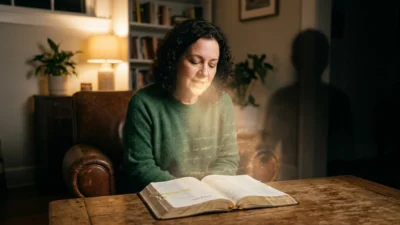

Imagine a quiet, shadowy place. No noise. No movement. Just stillness. It feels deep and hidden, like a place no one can fully see.
In the Bible, this place is called Sheol.
You may have come across this word while reading Scripture. It can feel mysterious, even a little heavy. You might ask, What does Sheol mean in the Bible? Is it something to fear?
The truth is gentle and important. Sheol is part of the Bible’s way of describing what happens beyond this life. But it also points us to a deeper hope in God.
Let’s explore the sheol meaning in the Bible with peace and clarity.
Biblical Meaning of Sheol
In the Old Testament, Sheol is a Hebrew word that means the place of the dead.
It is often described as a realm beneath the earth where all people go after death, both the righteous and the wicked.
In Psalm 16:10, it says
“For you will not abandon me to the realm of the dead…”
Here, Sheol is shown as a place where the soul goes after life ends.
A Place of Silence and Stillness
The Bible often describes Sheol as quiet and shadowy.
In Ecclesiastes 9:10, it says
“There is neither working nor planning… in the realm of the dead, where you are going.”
This shows Sheol as a place without activity. It is a state of rest and stillness, not life as we know it.
Not the Final Destination
It is important to understand that Sheol is not the final end in the Bible story.
As Scripture unfolds, we see a clearer picture of what comes after death.
In the New Testament, the focus shifts to eternal life through Jesus Christ.
This shows that Sheol is part of an earlier understanding, pointing forward to a greater hope.
God’s Power Even Over Sheol
Even in Sheol, God is still in control.
In Psalm 139:8, it says
“If I go down to the depths, you are there.”
This means no place is beyond God’s presence.
Even in the unknown, God is near.
Spiritual Significance and Symbolism
The spiritual symbolism of Sheol is deep and reflective.
It speaks about the reality of life, death, and the need for God.
A Reminder of Life’s Fragility
Sheol reminds us that life on earth is not forever.
It invites us to:
- Reflect on our choices
- Value our time
- Seek God while we can
It is not meant to bring fear, but awareness.
A Call to Trust in God
Because Sheol represents the unknown, it calls us to trust God more deeply.
It reminds us that:
- God holds our future
- God understands what we cannot see
- God offers hope beyond death
A Contrast With Eternal Life
Sheol helps us see the beauty of God’s promise.
Through Jesus, we are given something greater than the silence of Sheol.
In John 11:25, Jesus says
“I am the resurrection and the life.”
This is the turning point. From stillness to eternal life and hope.
Biblical Interpretations in Dreams or Real Life
Seeing or sensing something like Sheol in dreams or thoughts can carry a spiritual message.
Dark or Silent Places in Dreams
This may reflect:
- Feelings of emptiness or distance
- A need for spiritual renewal
- A call to reconnect with God
It is often a sign to seek light and guidance.
Feeling Spiritually Distant
If you feel far from peace or purpose, it may feel like a “Sheol moment.”
This is not the end. It is an invitation to return to God’s presence.
Moving From Darkness to Light
If you experience a shift from heaviness to peace, it may reflect God lifting you out of that place.
He brings life where there was stillness.
Practical Lessons and Faith Insights
Value your life and your relationship with God.
Seek Him in every season.
Trust His promise of eternal life.
God’s plan goes beyond what we see.
Conclusion
The sheol meaning in the Bible shows a place of stillness and the unknown after death. But it also points us toward something greater.
It reminds us that life is precious and that God holds the future.
Through Him, there is hope beyond darkness.
Rest in His promise. Walk in His light. And trust that His presence is with you, always.

Carol Amanda is a passionate writer and faith-driven author dedicated to sharing the wisdom of the Bible. At BiblyWord, she creates inspiring and meaningful content that encourages spiritual growth and daily reflection. Her work focuses on helping readers connect with God’s Word and find guidance, peace, and strength in their faith journey.