
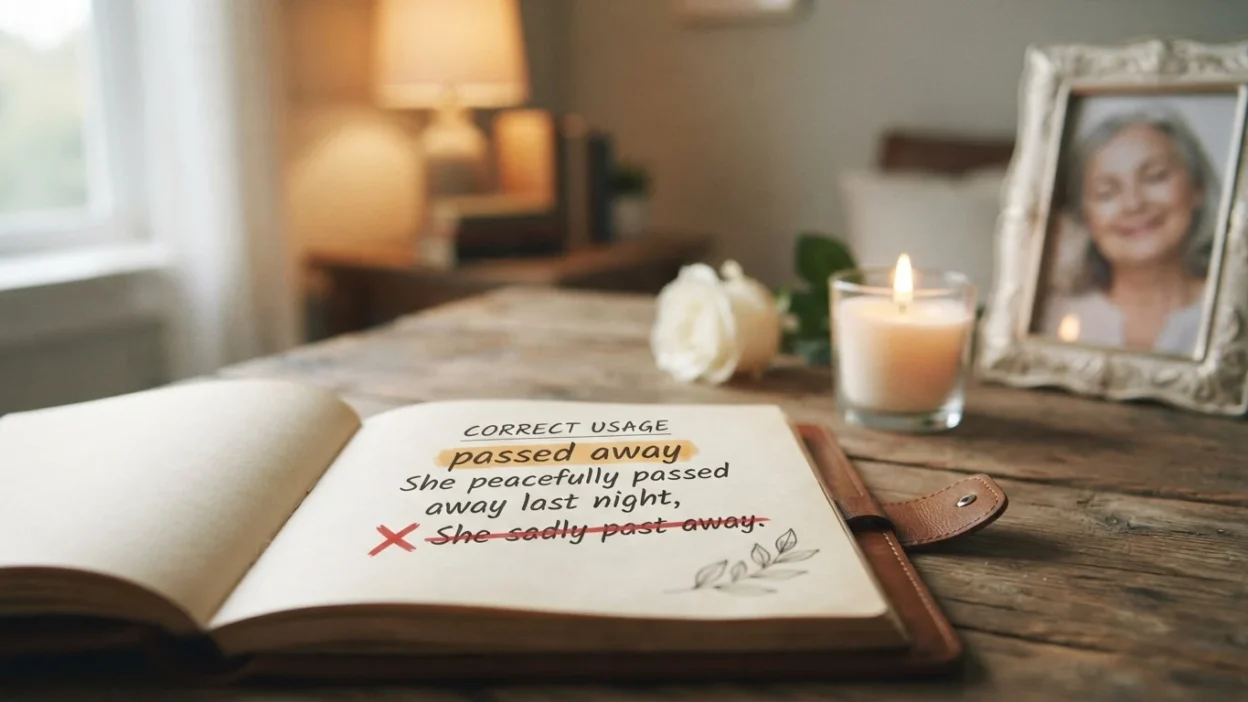
English phrases can sometimes be misleading, especially when two versions sound identical. A very common confusion is “past away vs passed away.” Many people use these interchangeably, but only one is grammatically correct.
This phrase is especially important because it is used in sensitive situations. Whether you are writing a message, obituary, or formal communication, using the correct form shows respect, clarity, and professionalism.
Quick Answer
“Passed away” is the correct phrase used to politely say that someone has died.
“Past away” is incorrect and does not make sense in standard English. Always use passed away in all contexts.
Why People Confuse It
The confusion comes from pronunciation. “Past” and “passed” sound exactly the same in spoken English, which leads people to guess the spelling when writing.
Another reason is the similarity in appearance. Both words look almost identical, differing by just one letter. This makes it easy to overlook mistakes, especially when typing quickly.
Additionally, many people are unsure about the meanings of “past” and “passed,” which further increases the chance of mixing them up.
Definition and Meaning
“Passed away” is a polite and respectful way to say that someone has died. It is commonly used in both formal and informal communication to soften the impact of the statement.
For example, instead of saying someone died, people often say they passed away to show sensitivity.
“Past away” does not have a clear meaning in English. The word “past” refers to time or position, so the phrase does not make sense grammatically.
First Word
“Past” is usually a noun, adjective, or preposition. It refers to time that has already happened or something beyond a point.
Examples include:
- In the past
- Walk past the building
When combined as “past away,” it creates a phrase that has no logical meaning. That is why it is incorrect.
Second Word
“Passed” is the past tense of the verb “pass,” which means to move, go by, or transition.
In the phrase “passed away,” it describes the act of someone transitioning from life. This makes it grammatically and contextually correct.
Because it is a verb form, “passed” fits perfectly in this expression.
Pronunciation Guide
Both “past away” and “passed away” are pronounced as /pɑːst əˈweɪ/ or /pæst əˈweɪ/ depending on accent.
Since they sound identical, pronunciation does not help distinguish them. This is why understanding spelling and meaning is essential.
Grammar Rules Explained
“Passed” is a verb, while “past” is not used as a verb in this context.
Correct structure:
- Subject + passed away
Example:
- She passed away peacefully.
“Past away” is incorrect because it replaces a verb with a noun or adjective, breaking the sentence structure.
Real Life Usage
“Passed away” is widely used in real life, especially in respectful communication. It appears in obituaries, news reports, and personal messages.
People often choose this phrase because it sounds gentler and more compassionate than saying someone died.
Using the correct phrase is important when expressing condolences or discussing sensitive topics.
Comparison Table
| Feature | Past Away | Passed Away |
|---|---|---|
| Correctness | Incorrect | Correct |
| Grammar | Wrong structure | Proper verb usage |
| Meaning | None | Someone has died |
| Usage | Not used | Very common |
| Recommendation | Avoid | Always use |
When to Use Each
Use “passed away” when referring to someone’s death in a respectful manner.
Examples:
- He passed away last year.
- She passed away peacefully.
Never use “past away,” as it is grammatically incorrect and may confuse readers.
Examples in Sentences
Here are correct examples:
- Her grandfather passed away peacefully.
- He passed away after a long illness.
- She passed away surrounded by family.
- The actor passed away last night.
- Their neighbor passed away recently.
- He passed away at home.
- She passed away in her sleep.
- The leader passed away unexpectedly.
- His friend passed away years ago.
- The patient passed away quietly.
Incorrect:
- Her grandfather past away peacefully.
Common Sentences
You will often see “passed away” in phrases like:
- Passed away peacefully
- Passed away suddenly
- Passed away last night
- Passed away at home
These are widely used in both formal and informal contexts.
Common Mistakes
A common mistake is writing “past away” instead of “passed away.” This usually happens because people rely on sound rather than meaning.
Another mistake is not proofreading, especially when writing quickly. Since both words look similar, errors can easily slip through.
Understanding the difference between “past” and “passed” helps prevent this mistake.
Mistakes to Avoid
Avoid these errors:
- Using “past away” in any context
- Confusing “past” with “passed”
- Skipping proofreading
Being careful with spelling ensures clarity and respect.
Memory Trick
Here is a simple trick:
Passed has “ed,” which shows past tense action.
Since death is an action that happened, you use “passed,” not “past.”
American vs British English
Both American and British English use “passed away” as the correct phrase.
There is no difference in spelling or usage between regions.
“Past away” is incorrect everywhere.
Similar Words
Related confusing pairs include:
- Past vs passed
- Affect vs effect
- Accept vs except
Learning these helps improve your overall grammar.
Synonyms and Alternatives
You can use alternatives such as:
- Died
- Departed
- Passed on
- Left us
These can be chosen depending on tone and context.
Formal vs Informal Use
“Passed away” is appropriate in both formal and informal situations. It is especially common in respectful or sensitive communication.
Because of its tone, it is preferred over more direct expressions in many contexts.
Expert Tips
To avoid mistakes:
- Remember that “passed” is a verb
- Check your spelling carefully
- Use grammar tools when writing
- Focus on meaning, not just sound
These tips will help you write accurately.
Related Confusing Words
Other similar confusions include:
- Led vs lead
- Then vs than
- Lose vs loose
Learning these improves writing accuracy.
FAQs
Is past away correct?
No, it is incorrect.
Which is correct past away or passed away?
Passed away is correct.
What does passed away mean?
It means someone has died.
Why do people write past away?
Because both words sound the same.
Is passed away formal?
Yes, it is used in both formal and informal contexts.
Is there any regional difference?
No, both forms of English use “passed away.”
Final Verdict
“Passed away” is the correct and respectful phrase used to describe someone’s death. It follows proper grammar and is widely accepted.
“Past away” is incorrect and should be avoided completely. Using the correct phrase ensures clarity, sensitivity, and professionalism.
Remember This
Always write passed away, never past away.
Think of passed as an action to remember the correct form.
Conclusion
Understanding the difference between “past away” and “passed away” is simple once you know the rule. One is correct, and the other is not. By focusing on grammar and meaning, you can avoid this common mistake.
Using the correct phrase is especially important in sensitive situations. It shows respect, clarity, and care in your communication. Stick with “passed away” to ensure your writing is accurate and appropriate.

Donald Andrew is a dedicated author at BiblyWord, passionate about sharing biblical teachings in a clear and inspiring way. He creates meaningful content that helps readers understand scripture, reflect on their faith, and apply God’s Word in daily life. His work supports spiritual growth, guidance, and a deeper connection with biblical wisdom.