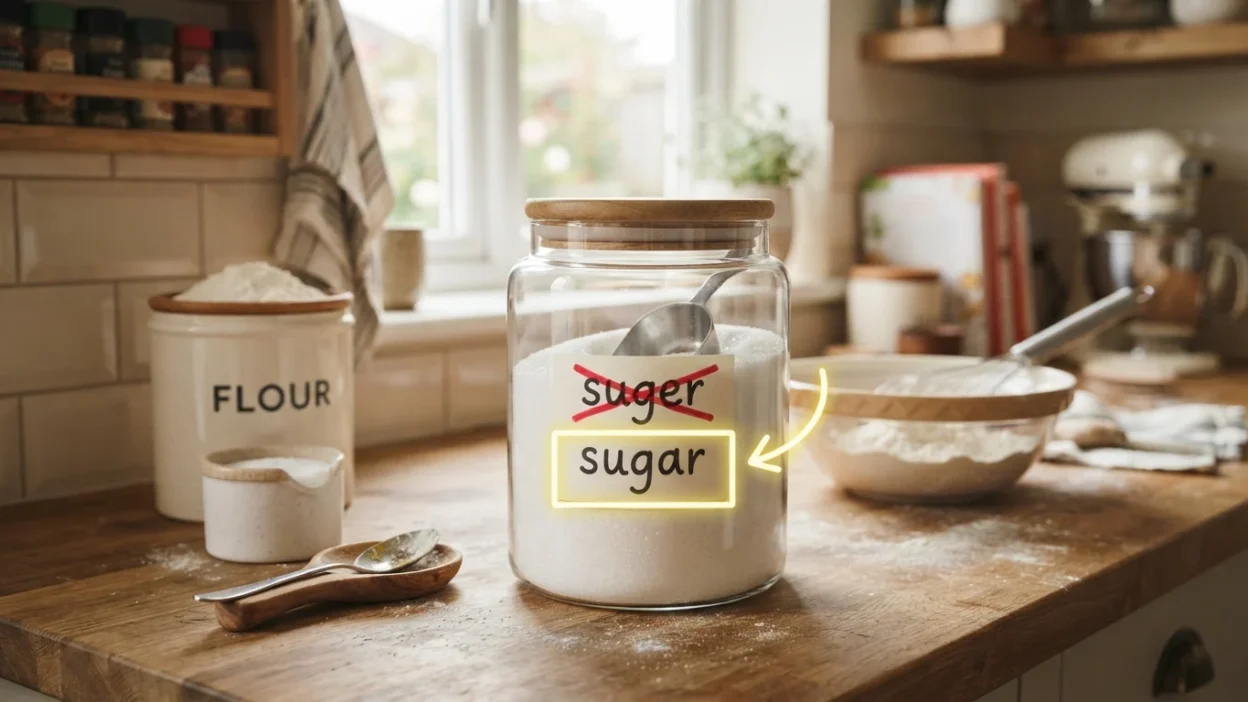
Spelling mistakes can easily slip into everyday writing, especially when words sound exactly the same. One common confusion is “suger vs sugar.” While both may look acceptable at a glance, only one is correct in standard English.
This mistake often appears in casual messages, schoolwork, and even online content. Using the wrong spelling can make your writing look careless. Understanding the difference between these two will help you write more clearly and confidently.
Quick Answer
“Sugar” is the correct spelling and refers to a sweet substance used in food and drinks.
“Suger” is incorrect and not recognized in standard English. Always use sugar in all contexts.
Why People Confuse It
The confusion mainly comes from pronunciation. In many accents, “sugar” sounds like “shug-er,” which can mislead writers into spelling it as “suger.”
Another reason is typing habits. People often spell words the way they hear them, and English does not always follow consistent phonetic rules.
Also, the “a” in “sugar” is not strongly pronounced, making it easy to replace it with “e” by mistake.
Definition and Meaning
“Sugar” is a noun that refers to a sweet crystalline substance obtained from plants like sugarcane or sugar beet. It is widely used to sweeten food and drinks.
It can also be used figuratively to describe affection or something pleasant.
“Suger” has no meaning in English and is simply a misspelling of “sugar.”
First Word
“Suger” is not a valid English word. It does not appear in dictionaries and has no grammatical use.
It is usually written by mistake when someone relies on pronunciation instead of correct spelling. While it may look close to the correct word, it is not acceptable in proper writing.
Avoid using “suger” in any context.
Second Word
“Sugar” is the correct and widely accepted spelling. It is used in both literal and figurative contexts.
Whether you are talking about food, chemistry, or affection, “sugar” is the proper word to use. It appears in everyday conversations, recipes, and formal writing.
Using “sugar” correctly ensures clarity and accuracy.
Pronunciation Guide
“Sugar” is pronounced as /ˈʃʊɡ.ər/.
It has two syllables:
- shu
- gar
The pronunciation does not clearly match the spelling, which is why confusion occurs.
Grammar Rules Explained
“Sugar” is a noun. It can be both countable and uncountable depending on context.
Examples:
- I added sugar to my tea.
- The recipe requires two sugars.
“Suger” does not follow any grammar rules because it is not a real word.
Real Life Usage
“Sugar” is used in many real life situations. It is commonly mentioned in cooking, nutrition, and daily conversation.
People talk about reducing sugar intake, adding sugar to drinks, or buying sugar from the store. It is also used in affectionate expressions like “Oh, sugar!”
Because it is so common, correct spelling is important.
Comparison Table
| Feature | Suger | Sugar |
|---|---|---|
| Correctness | Incorrect | Correct |
| Word Type | Not a word | Noun |
| Usage | None | Very common |
| Dictionary | Not listed | Recognized |
| Recommendation | Avoid | Always use |
When to Use Each
Use “sugar” whenever you refer to the sweet substance or use it figuratively.
Examples:
- Add sugar to coffee
- Too much sugar is unhealthy
Never use “suger,” as it is incorrect in all contexts.
Examples in Sentences
Here are correct examples:
- She added sugar to her tea.
- Too much sugar can harm your health.
- The recipe needs one cup of sugar.
- He avoids sugar in his diet.
- Sugar makes desserts sweet.
- They bought sugar from the market.
- She reduced her sugar intake.
- The cake contains a lot of sugar.
- Sugar dissolves in water.
- He prefers coffee without sugar.
Incorrect:
- She added suger to her tea.
Common Sentences
“Sugar” appears in many everyday phrases:
- Add sugar
- Cut down on sugar
- Sugar intake
- Sugar level
These expressions are widely used in both casual and formal contexts.
Common Mistakes
A common mistake is spelling “sugar” as “suger.” This usually happens because of pronunciation confusion.
Another mistake is not proofreading written content. Since the incorrect version looks similar, it may go unnoticed.
Using spelling tools can help catch such errors.
Mistakes to Avoid
Avoid these errors:
- Writing “suger” instead of “sugar”
- Relying only on pronunciation
- Skipping proofreading
Careful writing improves accuracy.
Memory Trick
Here is a simple trick:
Sugar has “gar” at the end, like “jar.”
Think of a jar full of sugar to remember the correct spelling.
American vs British English
Both American and British English use “sugar” with the same spelling and meaning.
There is no regional difference, making it easy to use universally.
“Suger” is incorrect everywhere.
Similar Words
Related words include:
- Sweet
- Syrup
- Honey
- Candy
These words are often used in similar contexts.
Synonyms and Alternatives
You can use alternatives such as:
- Sweetener
- Glucose
- Fructose
- Honey
These depend on context and usage.
Formal vs Informal Use
“Sugar” is used in both formal and informal contexts. It appears in scientific writing, recipes, and everyday conversation.
Because of its versatility, correct spelling is essential.
Expert Tips
To avoid mistakes:
- Practice correct spelling
- Use spell check tools
- Read carefully before publishing
- Learn common word patterns
These habits improve writing accuracy.
Related Confusing Words
Other similar confusions include:
- Suger vs sugar
- Salt vs solt
- Flower vs flour
Learning these pairs improves your spelling skills.
FAQs
Is suger a real word?
No, it is incorrect.
Which is correct suger or sugar?
Sugar is correct.
What does sugar mean?
It is a sweet substance used in food and drinks.
Is sugar formal or informal?
It is used in both contexts.
Why do people write suger?
Because of pronunciation confusion.
Is there any regional difference?
No, both British and American English use “sugar.”
Final Verdict
“Sugar” is the correct and only acceptable spelling in English. It is widely used in everyday language and formal writing.
“Suger” is incorrect and should be avoided completely. Using the correct spelling ensures clarity and professionalism.
Remember This
Always write sugar, never suger.
Think of a jar of sugar to remember the correct spelling.
Conclusion
The difference between “suger” and “sugar” is simple. One is correct, and the other is not. By remembering the correct spelling, you can avoid a very common mistake.
Using “sugar” properly helps your writing look clear, accurate, and professional. Small details like this make a big difference in communication.

Carol Amanda is a passionate writer and faith-driven author dedicated to sharing the wisdom of the Bible. At BiblyWord, she creates inspiring and meaningful content that encourages spiritual growth and daily reflection. Her work focuses on helping readers connect with God’s Word and find guidance, peace, and strength in their faith journey.