Spelling mistakes can easily affect the clarity of your writing, especially when two words look and sound similar. A common confusion is between “compair” and “compare.” While both may seem possible, only one is correct in standard English.
This word is widely used in academic writing, business communication, and everyday conversations when analyzing differences or similarities. Because it appears so frequently, it is important to use the correct spelling. In this guide, you will learn the difference, correct usage, and simple ways to avoid mistakes.
Quick Answer
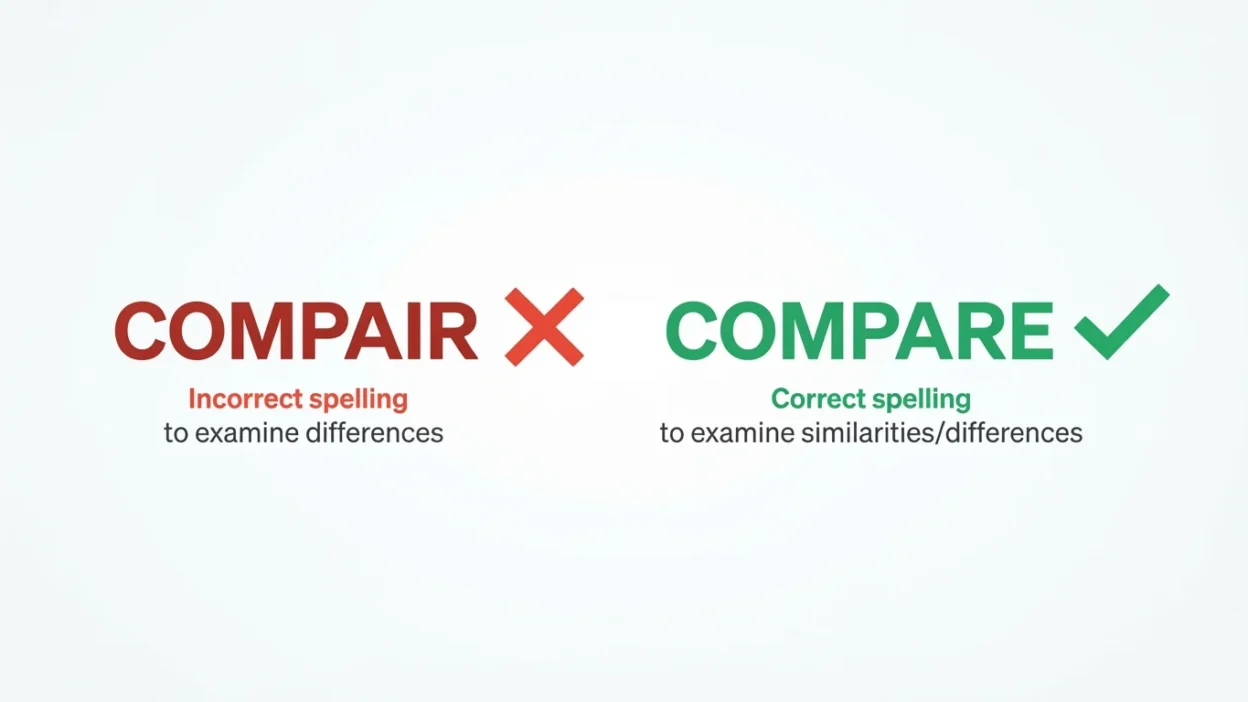
The correct spelling is “compare.” The word “compair” is incorrect and should never be used. Always use “compare” when talking about examining similarities or differences.
Why People Confuse It
People confuse “compair” and “compare” mainly because of pronunciation. The vowel sound in the middle can make “pare” sound like “pair,” leading to the incorrect spelling.
Another reason is familiarity with the word “pair.” Since “pair” is a real word, people mistakenly insert it into “compare.”
Typing errors also play a role. A small spelling change can easily go unnoticed if you do not proofread your work.
First Word
“Compair” is not a correct English word. It does not appear in standard dictionaries and should not be used in any context.
This mistake usually comes from writing the word based on how it sounds rather than its correct spelling.
Using “compair” can make your writing look unprofessional and inaccurate. It should always be avoided.
Second Word
“Compare” is the correct spelling. It means to examine two or more things to identify similarities and differences.
For example, you can compare products, ideas, or results. The word is commonly used in both formal and informal contexts.
Using “compare” correctly ensures your writing is clear and effective.
Definition and Meaning
“Compare” means to analyze two or more items by looking at how they are alike or different.
It can be used in various fields, including education, business, and everyday discussions.
Understanding the meaning helps you use the word correctly in different situations.
Pronunciation Guide
“Compare” is pronounced as kum pair. The ending sounds like “pair,” but the spelling is “pare.”
This difference between sound and spelling is why many people write “compair” incorrectly.
Practicing pronunciation can help reinforce the correct spelling.
Grammar Rules Explained
“Compare” is a verb. It can be used in different forms such as compare, compared, and comparing.
The incorrect form “compair” does not follow any grammar rules because it is not a valid word.
Learning correct spelling ensures proper usage in sentences.
Comparison Table
| Word | Correct | Meaning |
|---|---|---|
| compair | No | Incorrect spelling |
| compare | Yes | Examine similarities or differences |
This table clearly shows the correct choice.
When to Use Each
Use “compare” whenever you want to analyze similarities or differences between things.
Do not use “compair” in any situation. It is always incorrect.
Choosing the correct word ensures clarity and professionalism.
Real Life Usage
“Compare” is used in everyday life. People compare prices, products, and ideas to make better decisions.
Students compare topics in essays, and businesses compare performance data.
Using the correct spelling helps your message sound clear and professional.
Formal vs Informal Use
“Compare” works in both formal and informal writing. It appears in reports, essays, emails, and conversations.
The incorrect form “compair” should never be used, even in casual writing.
Correct spelling improves credibility and readability.
Synonyms and Alternatives
Here are some alternatives for “compare”:
- Analyze
- Contrast
- Examine
- Evaluate
- Review
These words can help vary your writing.
Common Sentences
Here are some natural sentences using “compare”:
- Please compare the two options
- She will compare the results
- We compare prices before buying
- He compared the data carefully
These examples show everyday usage.
Examples
Here are ten real examples:
- She compared the two products
- We compare prices online
- He compared the results with last year
- They compare different strategies
- I will compare the options
- She compared the designs carefully
- We compare features before buying
- He compared the data accurately
- They compare results regularly
- I compared the two reports
These examples show correct usage across contexts.
Common Mistakes
A common mistake is writing “compair” instead of “compare.” This happens because the word sounds like “pair.”
Another mistake is not proofreading carefully.
Being aware of these mistakes helps you avoid them.
Mistakes to Avoid
Do not rely only on pronunciation when spelling words.
Avoid copying incorrect spellings from unreliable sources.
Always review your writing before finalizing it.
Memory Trick
A simple trick is to remember that “compare” ends with “pare,” not “pair.”
Think of “prepare” which also uses “pare.”
This helps you recall the correct spelling.
American vs British English
“Compare” is spelled the same in both American and British English.
There is no variation, making it easy to remember.
You can use it confidently worldwide.
Similar Words
Other confusing words include:
- Pair and pare
- Affect and effect
- Accept and except
These words also involve similar sounds.
Related Confusing Words
Words like “contrast” and “compare” are related but used differently.
Understanding these differences improves your vocabulary.
Practice helps you master such terms.
Expert Tips
Always proofread your writing carefully.
Use a dictionary to confirm spelling if unsure.
Practice writing regularly to improve accuracy.
Comparison Table
| Feature | Compare | Compair |
|---|---|---|
| Spelling | Correct | Incorrect |
| Usage | Standard English | Not used |
| Meaning | Analyze similarities or differences | No meaning |
This second table reinforces the correct choice.
Final Verdict
“Compare” is the correct spelling and should always be used. The word “compair” is incorrect and should be avoided in all contexts.
Understanding this difference helps improve clarity and professionalism in your writing.
FAQs
Is compair a real word
No, it is a spelling mistake.
What is the correct spelling
The correct spelling is “compare.”
Why do people write compair
Because it sounds like “pair.”
Can compair be used informally
No, it is incorrect in all contexts.
What does compare mean
It means to examine similarities or differences.
Is compare used worldwide
Yes, it is used in both American and British English.
Conclusion
Spelling accuracy is essential for clear communication. Choosing between “compair” and “compare” becomes simple once you understand the correct form. Using the right spelling ensures your writing is clear and professional.
With practice and careful proofreading, you can avoid this common mistake. Over time, correct spelling becomes natural and improves your overall language skills.
Remember This
Always write “compare” with “pare.” Never use “compair.”

Carol Amanda is a passionate writer and faith-driven author dedicated to sharing the wisdom of the Bible. At BiblyWord, she creates inspiring and meaningful content that encourages spiritual growth and daily reflection. Her work focuses on helping readers connect with God’s Word and find guidance, peace, and strength in their faith journey.