Spelling confusion can make even simple words look complicated. A common example is “rehireable” vs “rehirable.” Both seem logical, but only one follows correct English spelling rules.
This word is often used in job applications, HR discussions, and workplace evaluations. Because it reflects professionalism and clarity, it is important to use the correct form. In this guide, you will learn the difference, correct usage, and easy ways to remember the right spelling.
Quick Answer
The correct spelling is “rehirable.” The word “rehireable” is incorrect because it does not follow standard spelling rules. Always use “rehirable” when referring to someone who can be hired again.
Why People Confuse It
People confuse “rehireable” and “rehirable” because of how English forms adjectives. Many words ending in “e” simply add “able,” which makes “rehireable” seem logical.
Another reason is the influence of similar words like “hireable,” which can create uncertainty when adding the prefix “re.”
Also, pronunciation plays a role. Both versions sound similar when spoken, so the spelling difference is not obvious.
First Word
“Rehireable” is not the correct spelling. It adds an extra “e” that is not needed when forming the adjective.
This mistake happens when people apply incorrect word formation rules. While it may look acceptable, it is not standard.
Using “rehireable” can make your writing appear less polished. It is best to avoid it.
Second Word
“Rehirable” is the correct spelling. It means capable of being hired again, usually after leaving a job.
This word is commonly used in human resources to describe former employees who are eligible for reemployment.
Using “rehirable” correctly ensures clarity and professionalism.
Definition and Meaning
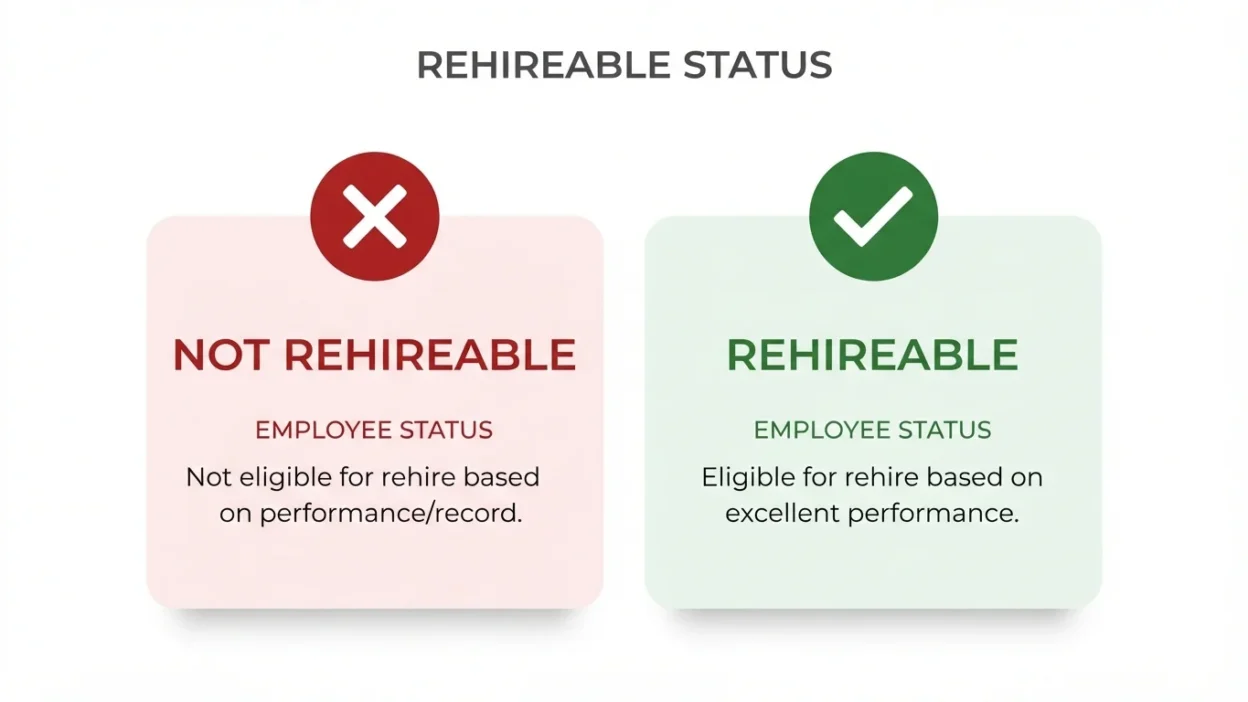
“Rehirable” means suitable or eligible to be hired again. It is often used in workplace evaluations.
For example, an employee who left on good terms may be marked as rehirable.
Understanding the meaning helps you use the word correctly in professional contexts.
Pronunciation Guide
“Rehirable” is pronounced as ree hy ruh buhl. The word flows smoothly without an extra vowel sound.
The incorrect form “rehireable” may sound slightly longer, but the difference is subtle.
Practicing pronunciation can help reinforce the correct spelling.
Grammar Rules Explained
When forming adjectives with “able,” if a word ends in “e,” the “e” is usually dropped before adding “able.”
For example:
- Hire becomes hirable
- Rehire becomes rehirable
This rule explains why “rehirable” is correct and “rehireable” is not.
Comparison Table
| Word | Correct | Meaning |
|---|---|---|
| rehireable | No | Incorrect spelling |
| rehirable | Yes | Able to be hired again |
This table clearly shows the correct choice.
When to Use Each
Use “rehirable” in professional and workplace contexts when describing someone eligible for reemployment.
Do not use “rehireable” in any situation. It is always incorrect.
Choosing the correct word improves clarity and professionalism.
Real Life Usage
“Rehirable” is commonly used in HR departments. Employers often mark former employees as rehirable or not.
For example, a company may note that a worker is rehirable after leaving on good terms.
Using the correct spelling ensures clear communication in professional settings.
Formal vs Informal Use
“Rehirable” is mostly used in formal and professional writing, especially in business and HR contexts.
It can also appear in informal discussions about jobs, but the correct spelling should always be used.
The incorrect form “rehireable” should be avoided everywhere.
Synonyms and Alternatives
Here are some alternatives for “rehirable”:
- Eligible for reemployment
- Suitable for rehiring
- Reemployment ready
- Qualified to return
These phrases can help vary your writing.
Common Sentences
Here are some natural sentences using “rehirable”:
- The employee is marked as rehirable
- She is considered rehirable by the company
- He left on good terms and is rehirable
- The HR report listed him as rehirable
These examples show practical usage.
Examples
Here are ten real examples:
- The manager confirmed she is rehirable
- He was listed as rehirable after resignation
- The company considers former staff rehirable
- She remained rehirable due to good performance
- The HR file marked him as rehirable
- Employees who follow policy stay rehirable
- He is rehirable after completing his contract
- The supervisor noted she is rehirable
- They prefer hiring rehirable candidates
- The report shows he is rehirable
These examples show correct usage across contexts.
Common Mistakes
A common mistake is writing “rehireable” with an extra “e.” This happens due to misunderstanding spelling rules.
Another mistake is not checking professional terms carefully.
Being aware of these mistakes helps you avoid them.
Mistakes to Avoid
Do not assume all words keep the final “e” when adding “able.”
Avoid copying incorrect spellings from unreliable sources.
Always proofread your writing before submitting it.
Memory Trick
A simple trick is to remember “hire” becomes “hirable,” so “rehire” becomes “rehirable.”
Think of removing the extra “e” before adding “able.”
This helps you recall the correct spelling quickly.
American vs British English
“Rehirable” is used in both American and British English. The spelling remains the same.
There is no regional variation, which makes it easy to remember.
You can use it confidently in any context.
Similar Words
Other confusing words include:
- Manageable and managable
- Noticeable and noticeble
- Changeable and changable
These words also follow similar spelling rules.
Related Confusing Words
Words like “hireable” and “rehirable” are closely related. Both follow the same rule of dropping the “e.”
Understanding these patterns improves spelling accuracy.
Practice helps reinforce these rules.
Expert Tips
Always learn common suffix rules like “able” to avoid spelling mistakes.
Use spell check tools, but also understand the rules behind them.
Practice writing professional terms regularly.
Comparison Table
| Feature | Rehirable | Rehireable |
|---|---|---|
| Spelling | Correct | Incorrect |
| Rule | Drops final e | Keeps extra e |
| Usage | Standard English | Not used |
This second table reinforces the correct choice.
Final Verdict
“Rehirable” is the correct spelling and should always be used. The word “rehireable” is incorrect and should be avoided.
Understanding this rule helps improve your spelling and professional communication.
FAQs
Is rehireable a real word
No, it is a spelling mistake.
What is the correct spelling
The correct spelling is “rehirable.”
Why do people write rehireable
Because they do not drop the final “e” before adding “able.”
Can rehireable be used informally
No, it is incorrect in all contexts.
What does rehirable mean
It means eligible to be hired again.
Is rehirable used worldwide
Yes, it is used in both American and British English.
Conclusion
Spelling accuracy is important for professional communication. Choosing between “rehireable” and “rehirable” becomes easy once you understand the rule of dropping the final “e.” Using the correct spelling ensures your writing is clear and credible.
With practice and attention to detail, you can avoid this common mistake. Over time, correct spelling becomes natural and improves your overall language skills.
Remember This
Always write “rehirable” without the extra “e.” Never use “rehireable” because it is incorrect.

Donald Andrew is a dedicated author at BiblyWord, passionate about sharing biblical teachings in a clear and inspiring way. He creates meaningful content that helps readers understand scripture, reflect on their faith, and apply God’s Word in daily life. His work supports spiritual growth, guidance, and a deeper connection with biblical wisdom.