Spelling variations in English can be confusing, especially when both versions appear correct. A common example is “drily” vs “dryly.” Unlike many spelling mistakes, both of these forms are actually correct, which makes the confusion even greater.
These words are often used in writing to describe a tone that is calm, unemotional, or slightly sarcastic. Because they appear in both formal and informal contexts, it is important to understand when and how to use them. In this guide, you will learn the difference, usage rules, and practical tips to choose the right form confidently.
Quick Answer
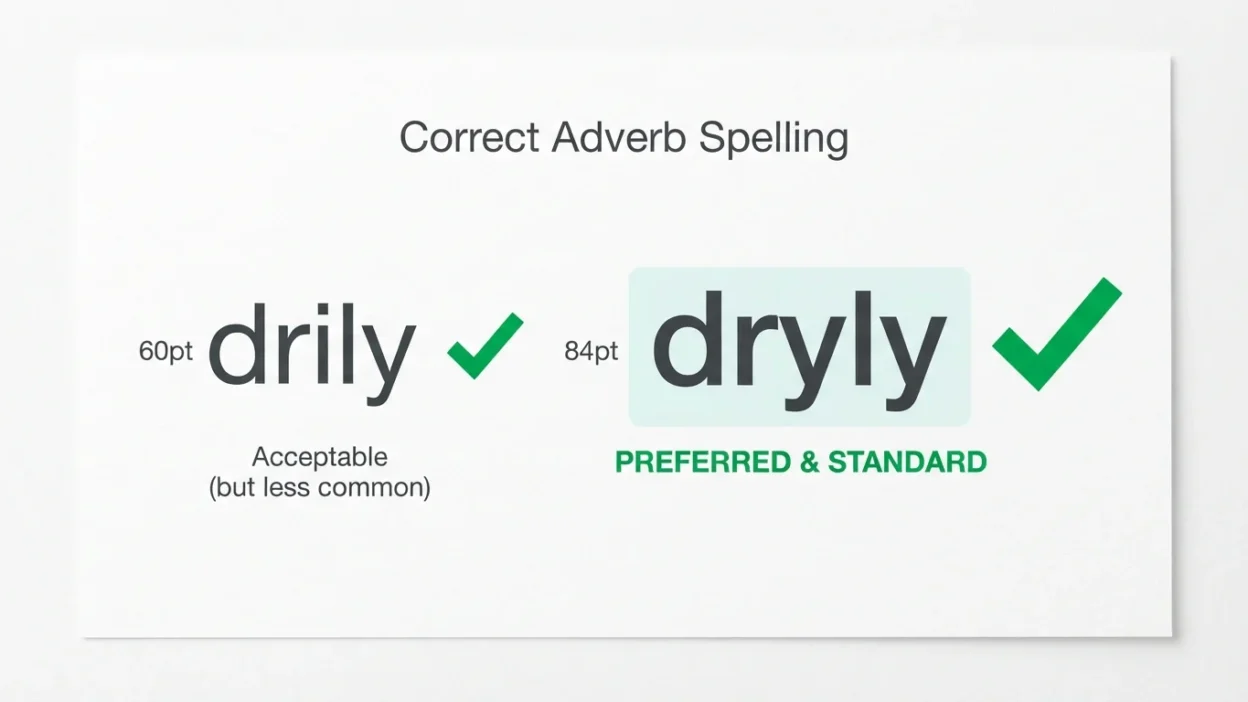
Both “drily” and “dryly” are correct. “Dryly” is more common in modern usage, especially in American English, while “drily” is less common but still acceptable. You can safely use “dryly” in most situations.
Why People Confuse It
Many people get confused between “drily” and “dryly” because both are accepted spellings of the same word. This creates uncertainty about which one should be used in writing. Unlike typical spelling mistakes, this confusion comes from variation rather than error.
Another reason is pronunciation. Both words are pronounced the same way, so there is no spoken difference to guide correct spelling. This makes it harder for learners to choose the right version when writing.
Additionally, exposure plays a role. Some books and articles use “drily,” while others use “dryly.” Seeing both forms in different contexts leads people to question which is standard. Over time, “dryly” has become more popular, which is why it is generally recommended today.
First Word
“Drily” is a correct but less common spelling of the adverb form of “dry.” It means speaking or expressing something in a calm, unemotional, or slightly ironic way. You may see it used in older texts or more traditional writing styles.
This spelling follows a pattern where the base word changes slightly before adding “ly.” While this form is correct, it may look unusual to modern readers who are more familiar with “dryly.” Because of this, it can sometimes distract from the message.
Despite being less common, “drily” is still accepted in dictionaries and can be used in formal writing. However, writers often prefer “dryly” for clarity and familiarity. Choosing between the two depends on your style and audience.
Second Word
“Dryly” is the more commonly used spelling in modern English. It carries the same meaning as “drily,” describing speech or expression that is subtle, unemotional, or slightly sarcastic. This form is widely accepted and preferred in everyday writing.
The spelling “dryly” is more intuitive because it directly follows the base word “dry” with the addition of “ly.” This makes it easier to recognize and remember. As a result, it has become the dominant form in both casual and professional contexts.
Using “dryly” helps ensure your writing feels natural and modern. Most readers will find this spelling familiar, which improves readability. For this reason, it is usually the safest and best choice in most situations.
Definition and Meaning
Both “drily” and “dryly” mean expressing something in a restrained, unemotional, or subtly humorous way. They are often used to describe speech that carries irony or quiet sarcasm without strong emotion.
For example, if someone responds to a joke with a calm and slightly sarcastic remark, they might speak dryly. This tone is common in literature, humor, and conversation.
Understanding the meaning helps you use the word effectively. It is especially useful when describing tone in storytelling or dialogue. Both forms share the exact same definition, so the choice depends only on spelling preference.
Pronunciation Guide
Both “drily” and “dryly” are pronounced the same way as dry lee. There is no difference in sound between the two spellings, which is why confusion often arises.
The pronunciation is simple, with the word “dry” followed by a soft “lee” sound. Because the spoken form does not change, writers must rely on memory or style preference when choosing the spelling.
Practicing the pronunciation can help reinforce the connection between the word and its meaning. However, it will not help distinguish between the two spellings, so it is important to remember that both are correct.
Grammar Rules Explained
“Drily” and “dryly” are adverbs formed from the adjective “dry.” Adverbs describe how an action is performed, which is why these words are used to describe tone or manner of speaking.
In standard grammar, adjectives usually form adverbs by adding “ly.” The word “dry” becomes “dryly” following this rule directly. The alternative spelling “drily” reflects a slight change in form but remains acceptable.
Both spellings follow grammatical rules, which is why neither is considered incorrect. However, “dryly” aligns more closely with common patterns, making it easier for readers to recognize and understand.
Comparison Table
| Word | Correct | Usage |
|---|---|---|
| drily | Yes | Less common |
| dryly | Yes | More common |
This table shows that both forms are correct, but one is preferred.
When to Use Each
Use “dryly” in most situations, especially in modern writing. It is widely accepted and easily understood by readers.
“Drily” can be used if you prefer a traditional or stylistic approach. However, it may feel unusual to some readers.
Choosing the right form depends on your audience. For clarity and simplicity, “dryly” is usually the better option.
Real Life Usage
Both “drily” and “dryly” are used in real life to describe tone. You might hear someone speak dryly when making a sarcastic comment without showing much emotion.
In writing, authors often use these words to describe dialogue. For example, a character may respond dryly to a situation to show subtle humor.
Using the correct form helps your writing feel natural and expressive. Most writers choose “dryly” for consistency.
Formal vs Informal Use
Both forms can be used in formal and informal writing. However, “dryly” is more common in modern professional contexts.
“Drily” may appear in older or more traditional texts. While it is still correct, it is less frequently used today.
For clarity and professionalism, “dryly” is usually the better choice.
Synonyms and Alternatives
Here are some alternatives for “dryly”:
- Calmly
- Subtly
- Ironically
- Coolly
- Sarcastically
These words can help vary your writing while keeping the meaning clear.
Common Sentences
Here are some natural sentences using “dryly”:
- He replied dryly to the question
- She smiled dryly at the joke
- He remarked dryly during the meeting
- She answered dryly without emotion
These examples show how the word fits into everyday language.
Examples
Here are ten real examples:
- He spoke dryly about the situation
- She responded dryly to the comment
- The teacher replied dryly to the student
- He joked dryly about the mistake
- She remarked dryly during the discussion
- He answered dryly without smiling
- She said it dryly with a calm tone
- He commented dryly on the issue
- She laughed dryly at the remark
- He reacted dryly to the news
These examples show correct usage in different contexts.
Common Mistakes
A common mistake is thinking one spelling is completely wrong. In reality, both “drily” and “dryly” are correct.
Another mistake is using inconsistent spelling within the same piece of writing. Switching between forms can confuse readers.
Being aware of these mistakes helps improve clarity.
Mistakes to Avoid
Do not assume that less common spelling is incorrect. “Drily” is still valid.
Avoid mixing both spellings in the same document. Choose one and stay consistent.
Always consider your audience when selecting the spelling.
Memory Trick
A simple trick is to remember that “dryly” follows the standard rule of adding “ly” to “dry.”
If you are unsure, choose “dryly” because it is more common and easier to remember.
This helps you avoid confusion quickly.
American vs British English
“Dryly” is more common in American English, while “drily” may appear slightly more in British English. However, both forms are accepted in both regions.
The difference is not strict, so you can use either spelling depending on preference.
For global clarity, “dryly” is usually the safer option.
Similar Words
Other words with spelling variations include:
- Grey and gray
- Colour and color
- Travelling and traveling
These variations are also correct depending on usage and region.
Related Confusing Words
Words like “dry” and “drier” can also cause confusion in spelling. Understanding patterns helps avoid mistakes.
Learning similar variations improves your overall spelling skills.
Practice helps you become more confident.
Expert Tips
Choose one spelling style and stay consistent throughout your writing.
Use “dryly” if you want a modern and widely accepted form.
Always proofread your work to maintain consistency and clarity.
Comparison Table
| Feature | Dryly | Drily |
|---|---|---|
| Usage | More common | Less common |
| Style | Modern | Traditional |
| Clarity | High | Slightly less familiar |
This second table reinforces the difference.
Final Verdict
Both “drily” and “dryly” are correct, but “dryly” is the preferred choice in modern writing. It is clearer, more familiar, and widely accepted.
If you want to ensure readability and consistency, choose “dryly.” While “drily” is not wrong, it is less common and may feel outdated to some readers.
FAQs
Is drily a real word
Yes, it is correct but less commonly used.
Which is better dryly or drily
“Dryly” is more common and preferred.
Are both spellings correct
Yes, both are accepted in English.
Can I use drily in formal writing
Yes, but “dryly” is more common.
What does dryly mean
It means speaking in a calm or slightly sarcastic way.
Is there a difference in meaning
No, both have the same meaning.
Conclusion
Understanding spelling variations like “drily” and “dryly” helps improve your writing clarity. Both forms are correct, but choosing the more common option makes your writing easier to read.
By practicing consistency and following common usage, you can avoid confusion. Over time, selecting the right spelling becomes natural and improves your overall language skills.
Remember This
Both are correct, but “dryly” is the safer and more common choice. Use it for clear and modern writing.

Kevin Brian is a passionate author at BiblyWord, dedicated to sharing the message of the Bible through thoughtful and inspiring content. He focuses on creating clear and meaningful writings that help readers understand scripture, strengthen their faith, and find guidance in everyday life through God’s Word.