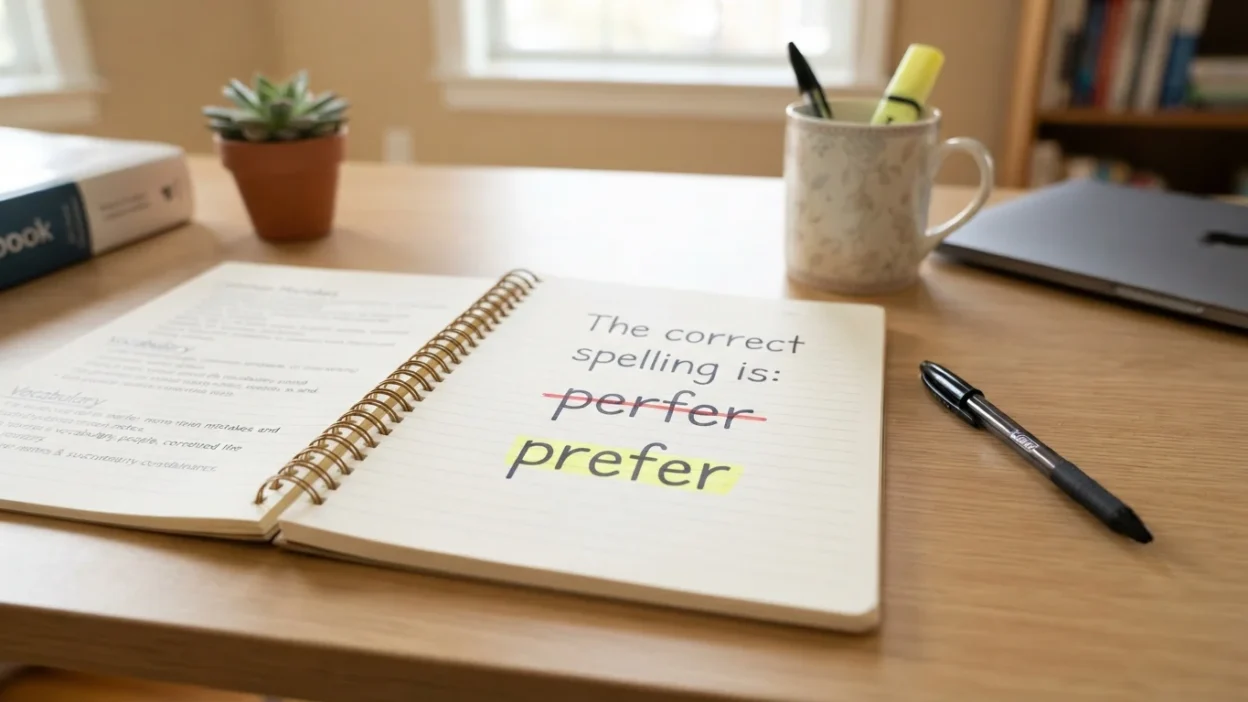
Spelling mistakes can quietly weaken your writing, and one of the most common errors people make is confusing “perfer” and “prefer.” At first glance, the difference looks minor, but only one of these words is actually correct in standard English.
If you are writing emails, essays, or social media captions, using the right spelling helps you sound more professional and trustworthy. Let’s break down the difference so you never second guess yourself again.
Quick Answer
“Prefer” is the correct spelling and means to like something more than another option.
“Perfer” is a common misspelling and is not a real word in standard English. Always use prefer in both formal and informal writing.
Why People Confuse It
The confusion between “perfer” and “prefer” mainly comes from how the word sounds when spoken. The pronunciation is quick, and the middle letters can blend together, making it easy to mix up the order of “r” and “e.”
Another reason is typing speed. Many people accidentally switch letters while typing, especially on mobile devices. Since both versions look somewhat similar, the mistake often goes unnoticed.
Additionally, English spelling rules are not always predictable. This leads learners and even native speakers to guess spellings based on sound rather than structure.
Definition and Meaning
“Prefer” is a verb that means choosing one thing over another because you like it more or find it more suitable.
For example, if you like tea more than coffee, you say you prefer tea. The word is widely used in everyday conversations, writing, and formal communication.
“Perfer” has no recognized meaning in English. It is simply a misspelling of “prefer” and should be avoided in all types of writing.
First Word
“Perfer” is not a valid English word. It does not appear in dictionaries and has no grammatical function.
It usually appears due to spelling mistakes, especially when someone is unsure about the correct letter order. While it may seem harmless, using “perfer” can reduce the clarity and credibility of your writing.
To maintain accuracy, always double check and replace “perfer” with the correct form.
Second Word
“Prefer” is the correct and standard spelling. It is a commonly used verb in both spoken and written English.
It fits naturally into many sentence structures and is essential for expressing choices and opinions. Whether you are writing formally or casually, “prefer” is always appropriate.
Using the correct spelling ensures your message is clear and professional.
Pronunciation Guide
The correct pronunciation of “prefer” is /prɪˈfɜːr/ or /prɪˈfɝː/ depending on accent.
The stress falls on the second syllable, “fer.” The word is pronounced as “pri-FER,” which can sometimes confuse learners into rearranging letters when writing.
Remembering the stress pattern can help reinforce the correct spelling.
Grammar Rules Explained
“Prefer” is a verb and follows standard verb rules. It can be used in different tenses:
- Present: prefer
- Past: preferred
- Continuous: preferring
When adding endings, the final consonant is doubled:
- prefer → preferred
- prefer → preferring
“Perfer” does not follow any grammar rules because it is not a valid word.
Real Life Usage
“Prefer” is used in everyday situations to express choices. You might use it when talking about food, travel, or personal habits.
For example, people often say what they prefer in conversations, such as favorite meals or activities. It is also widely used in professional communication to state preferences clearly.
Because of its versatility, “prefer” is an essential word to use correctly.
Comparison Table
| Feature | Perfer | Prefer |
|---|---|---|
| Correctness | Incorrect | Correct |
| Word Type | Not a word | Verb |
| Usage | None | Common in all contexts |
| Dictionary | Not listed | Officially recognized |
| Recommendation | Avoid completely | Always use |
When to Use Each
You should always use “prefer” when expressing a choice or liking one option more than another.
Use it in:
- Conversations
- Emails
- Academic writing
- Professional documents
Avoid using “perfer” entirely, as it is incorrect and may confuse readers.
Examples in Sentences
Here are correct examples using “prefer”:
- I prefer coffee over tea.
- She prefers reading at night.
- They prefer traveling by train.
- We prefer quiet places.
- He prefers working from home.
- I prefer this design.
- She prefers healthy food.
- They prefer summer vacations.
- I prefer simple solutions.
- He prefers honesty.
Incorrect:
- I perfer coffee.
Common Sentences
“Prefer” appears in many everyday phrases:
- I would prefer
- Do you prefer
- Prefer to do something
- Prefer over
These sentence patterns are widely used and easy to recognize.
Common Mistakes
One common mistake is swapping the letters “e” and “r” to form “perfer.” This often happens when writing quickly.
Another issue is not proofreading content. Small spelling errors like this can easily slip through if you do not review your work.
Using spell check tools can help catch such errors.
Mistakes to Avoid
Avoid these errors:
- Writing “perfer” instead of “prefer”
- Ignoring proofreading
- Assuming phonetic spelling is always correct
Taking a moment to check your spelling can prevent these mistakes.
Memory Trick
Here is a simple trick:
“Pre” comes first in prefer, just like you choose something before another.
If you remember that “pre” means before, you will naturally spell “prefer” correctly.
American vs British English
Both American and British English use “prefer” with the same spelling and meaning.
There is no variation between regions, making it easy to remember and apply universally.
“Perfer” is incorrect in all forms of English.
Similar Words
Words similar to “prefer” include:
- Choose
- Favor
- Like more
- Select
These words can sometimes be used as alternatives depending on context.
Synonyms and Alternatives
You can use these alternatives for variety:
- Favor
- Choose
- Opt for
- Lean toward
They help make your writing more engaging.
Formal vs Informal Use
“Prefer” works in both formal and informal contexts. It is suitable for professional emails, essays, and casual conversations.
Because of its versatility, it is one of the most useful verbs in English.
Expert Tips
To avoid spelling mistakes:
- Practice writing the word correctly
- Use spell check tools
- Proofread your content carefully
- Remember the “pre” prefix
These steps will help you build accuracy over time.
Related Confusing Words
Other similar spelling confusions include:
- Recieve vs receive
- Definately vs definitely
- Seperate vs separate
Learning these helps improve your overall writing skills.
FAQs
Is perfer a real word?
No, it is a misspelling and not recognized in English.
Which is correct perfer or prefer?
Prefer is the correct spelling.
How do you remember prefer?
Think of “pre” meaning before.
Is prefer a verb?
Yes, it is a verb used to show choice.
Can prefer be used in formal writing?
Yes, it is appropriate in all contexts.
Why do people write perfer?
Mostly due to pronunciation confusion or typing errors.
Final Verdict
“Prefer” is the correct and only acceptable spelling in English. It is widely used, easy to understand, and essential for expressing choices.
“Perfer” is simply a mistake and should be avoided in all forms of writing. Using the correct spelling ensures your communication is clear and professional.
Remember This
Always use prefer when expressing a choice. Avoid perfer completely to keep your writing accurate and polished.
Conclusion
Understanding the difference between “perfer” and “prefer” is straightforward. One is correct, and the other is not. By learning this simple rule, you can avoid a common mistake that affects many writers.
Clear and correct spelling builds confidence and trust with your readers. Make “prefer” part of your everyday vocabulary and leave “perfer” behind for good.

Kevin Brian is a passionate author at BiblyWord, dedicated to sharing the message of the Bible through thoughtful and inspiring content. He focuses on creating clear and meaningful writings that help readers understand scripture, strengthen their faith, and find guidance in everyday life through God’s Word.